
Summer Lawn Survival Guide for Georgia
Middle Georgia summers push lawns to their limits. Here is how to keep your yard healthy through triple-digit heat indexes and unpredictable rainfall.
Georgia lawns survive summer on deep watering, higher mowing, and light feeding. We water 2 to 3 times per week for about 1 inch total, between 5 and 9 AM. Raise mowing height by half an inch through July and August. Skip heavy nitrogen and use iron for color. Watch for armyworms, chinch bugs, and nutsedge. Skip the next watering after a heavy storm.
Watering the Right Way
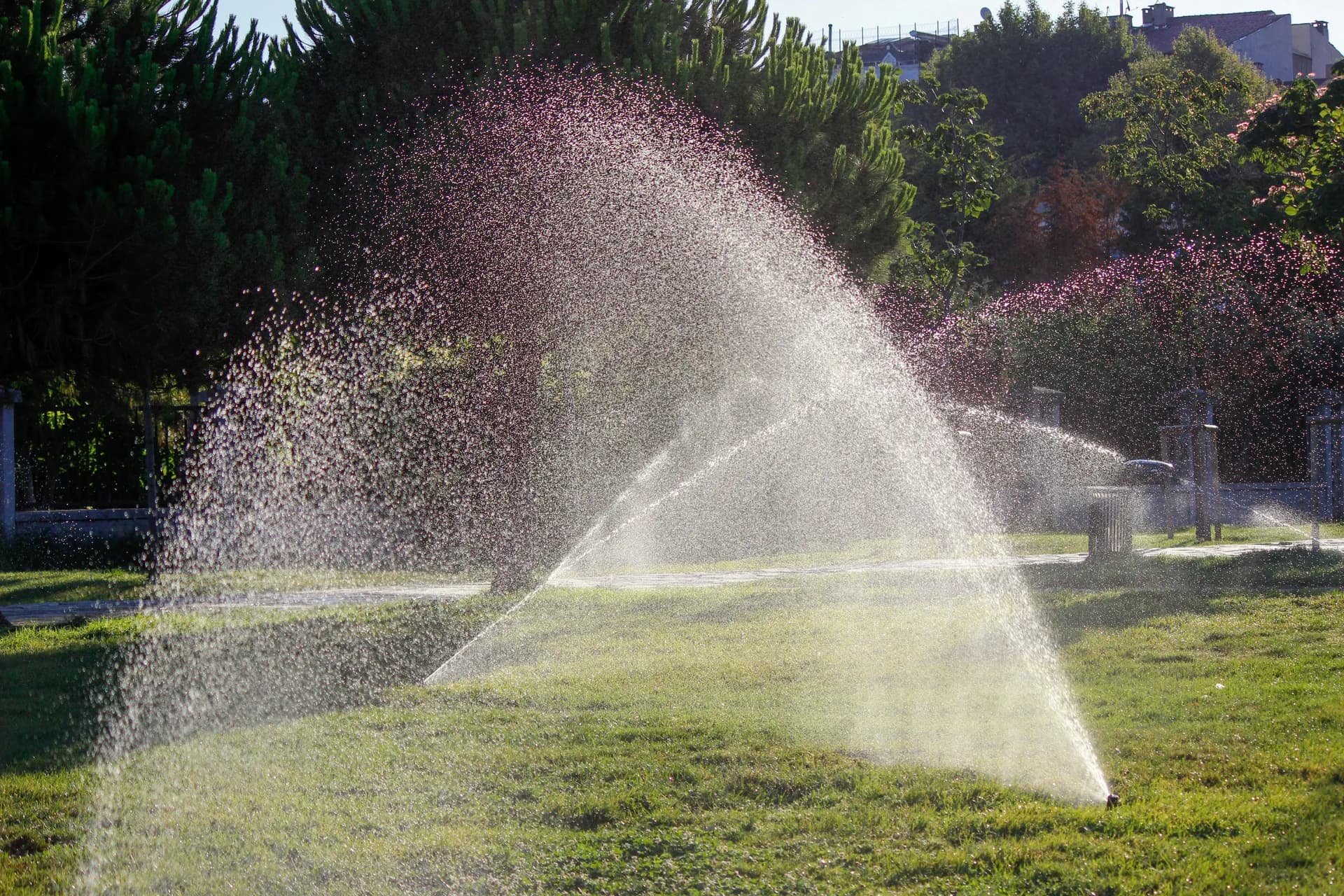
Deep, infrequent watering builds stronger roots than daily light sprinkles. Most warm-season grasses in Middle Georgia need about 1 inch of water per week, including rainfall. Water early in the morning, between 5 and 9 AM, to reduce evaporation and give blades time to dry before nightfall. Wet grass overnight invites fungal disease.
We see too many homeowners in Macon and Warner Robins running their sprinklers for 10 minutes every day. That keeps the surface wet but never pushes moisture deep into the root zone. Shallow watering trains roots to stay near the surface where they dry out fast when the heat really kicks in. Two to three deep soakings per week force roots down into cooler, moister soil layers.
If you have an irrigation system, run each zone for 20 to 30 minutes per session. For hose-end sprinklers, set a timer and move the sprinkler every 30 minutes. Either way, measure your output. Set a tuna can or rain gauge on the lawn while you water. When it hits half an inch, you know one session is delivering the right amount.
Set out a tuna can during irrigation to measure output. One inch of water fills it.
Water 2 to 3 times per week rather than every day.
If your lawn footprints stay visible after walking on it, the grass needs water.
Recognizing Heat Stress
Heat stress shows up as a blue-gray tint in the grass, wilted blades, and slow recovery after foot traffic. Bermuda handles heat well but still struggles during extended drought. Centipede and St. Augustine are more vulnerable and show stress sooner. Do not confuse heat stress with disease, because the treatments are completely different.
The blue-gray color is your earliest warning sign. Walk across your lawn in the afternoon. If the footprints stay visible for more than a few seconds, the grass blades are losing turgor pressure and cannot spring back. That means the plant is running low on water. At this stage, a good deep watering within the next 24 hours usually brings the lawn back.
If heat stress goes untreated for more than a week, bermuda will start going dormant. The grass turns straw-brown and stops growing. This is a survival mechanism, not death. Bermuda can stay dormant for several weeks and recover once water returns. Centipede and St. Augustine do not bounce back as easily. Extended stress on those grass types can kill sections of the lawn permanently.
Summer Fertilization Strategy
Summer is not the time for heavy nitrogen. Pushing growth during peak heat stresses the plant further. A light application of slow-release fertilizer in early June keeps bermuda fed without forcing excessive top growth. Centipede and St. Augustine should get minimal nitrogen in summer. Iron supplements can green up a lawn without the growth surge that nitrogen causes.
Here is the logic. Nitrogen makes grass grow faster. Faster growth means the plant needs more water and burns through energy reserves quicker. In July and August, when Middle Georgia hits 95 to 100 degrees regularly, you want your lawn conserving energy, not sprinting. A slow-release blend applied in early June carries the lawn through the hottest months without that problem.
If your lawn looks pale in mid-summer, reach for iron before reaching for fertilizer. Iron gives bermuda and zoysia a deep green color without triggering a growth surge. You get the look you want without the extra mowing, extra water demand, and extra stress. We use iron supplements on most of our accounts during July and August for exactly this reason.
Iron applications add color without forcing growth.
Avoid fertilizing during drought conditions.
Potassium applications in early summer help with heat tolerance.
Mowing During Peak Heat
Raise your mowing height by half an inch during the hottest months. Taller grass shades the soil, reduces water loss, and keeps root temperatures lower. Mow in the early morning or late afternoon, never during peak heat. Keep blades sharp. Dull mower blades tear grass instead of cutting it, leaving ragged edges that brown out and invite disease.
For bermuda, raise from your normal 1.5 inches to about 2 inches through July and August. Zoysia should go from 2 inches to 2.5 inches. Centipede and St. Augustine already sit higher, but bump them up another half inch too. That extra blade length acts as shade for the soil surface and reduces water evaporation significantly.
Mowing frequency matters just as much as height. During active growth in June, bermuda may need cutting every 4 to 5 days. By August, growth slows and weekly mowing is usually enough. Never remove more than one-third of the blade height in a single cut. Scalping a heat-stressed lawn can send it into dormancy overnight.
Summer Weed Pressures
Summer brings its own weed challenges in Middle Georgia. Nutsedge is the biggest offender from May through September. It thrives in wet, compacted soil and standard broadleaf herbicides do not touch it. Nutsedge requires a sulfonylurea herbicide for effective control. If you see a light green, fast-growing grass-like weed popping up in clusters, that is almost certainly nutsedge.
Crabgrass and spurge also peak in summer. If your spring pre-emergent barrier has broken down, these warm-season annuals fill in any thin or bare areas fast. Post-emergent options exist, but application timing matters. Treat in the morning when temperatures are below 85 degrees. Applying herbicides during afternoon heat can damage your desirable grass just as much as the weeds.
Dealing with Summer Storms
Middle Georgia summers are famous for afternoon pop-up thunderstorms. These can dump an inch or more of rain in 30 minutes, then the sun comes right back out. Adjust your irrigation schedule after heavy rain events. If your lawn got a good soaking from a storm, skip the next scheduled watering. Overwatering is just as damaging as underwatering, especially in our heavy clay soils.
After storms, check for standing water. If puddles remain for more than a few hours, you may have a drainage or compaction issue. Standing water suffocates grass roots and creates ideal conditions for fungal disease. Consider core aeration in the fall to open up compacted areas that hold water after storms.
Insect Problems in Summer
Summer is peak season for lawn-damaging insects in Middle Georgia. Armyworms can devour a bermuda lawn in 48 hours. Chinch bugs target St. Augustine and can wipe out entire sections. Grubs feed on roots below the surface, causing brown patches that pull up like loose carpet.
Watch for birds feeding heavily on your lawn, that is often the first sign of an insect infestation. If you see moths fluttering low over the grass at dusk, check for armyworm caterpillars the next morning. Early detection is the difference between a quick treatment and a full lawn renovation. Insect control is available as an add-on to our weed control and fertilization program.
When to Call for Professional Help
If your lawn is struggling through summer despite proper watering and mowing, the issue may be deeper. Soil compaction, nutrient deficiencies, disease, or insect damage all require specific diagnosis and targeted treatment. Throwing more water or fertilizer at an undiagnosed problem usually makes it worse.
We serve Macon, Warner Robins, Byron, Bonaire, Centerville, Kathleen, and Bolingbroke. Our core program covers weed control and fertilization year-round, with add-ons available for disease control, insect control, and soil conditioning. If your lawn needs help this summer, get a quote.
Key takeaways
What to Remember
Water deeply 2 to 3 times per week, not lightly every day. Deep watering builds stronger, more heat-resistant roots.
Raise mowing height by half an inch during July and August. Taller grass shades soil and reduces water loss.
Skip heavy nitrogen in mid-summer. Use iron supplements for color without the growth surge.
Watch for armyworms, chinch bugs, and nutsedge during peak summer months.
Adjust irrigation after summer storms. Overwatering in clay soil causes as many problems as drought.
If your lawn is declining despite proper care, get a professional diagnosis before the damage spreads.
Common questions
Frequently Asked Questions
How often should I water my lawn in a Georgia summer?
Two to three times per week, delivering about 1 inch of water total. Water early in the morning to minimize evaporation and fungal risk. Avoid daily light watering, which trains roots to stay shallow.
Should I fertilize my lawn in July and August?
Lightly, if at all. Heavy nitrogen in peak summer stresses the lawn. A slow-release blend or iron supplement is a safer option for maintaining color without forcing growth.
Why does my bermuda lawn turn brown in summer?
Bermuda goes dormant during extended drought as a survival mechanism. It turns straw-brown but is still alive at the root level. Resume deep watering and the lawn typically recovers within 2 to 3 weeks.
What is the best mowing height for summer in Georgia?
Bermuda does best at 2 inches in summer, zoysia at 2.5 inches, centipede at 2 to 2.5 inches, and St. Augustine at 3 to 3.5 inches. Raise your normal height by about half an inch during the hottest months.
How do I control nutsedge in my lawn?
Nutsedge requires a sulfonylurea herbicide. Standard broadleaf weed killers do not work on it. Apply in the morning when temperatures are below 85 degrees. Multiple treatments may be needed since nutsedge grows from underground tubers.
Keep reading
Related Resources
More in Seasonal
Written by Tyler Warnock
Founder and owner of Attaboy Lawn Care in Macon, Georgia. Licensed Georgia pesticide applicator (Cat. 24, #22324). Tyler treats lawns across Macon, Warner Robins, and the rest of Middle Georgia, and writes these guides from what the region’s bermuda, zoysia, and centipede yards actually do season to season.
Ready for results?
Get a Custom Quote for Your Lawn
Professional lawn care for Macon, Warner Robins, and Middle Georgia. No contracts, no obligation.