The Best Pre-Emergent for Spring Weed Prevention
Choosing the right pre-emergent for spring can mean the difference between a weed-free lawn and a summer full of crabgrass. Here is what actually works in Middle Georgia.
Prodiamine (Barricade) is the best spring pre-emergent for Bermuda and Zoysia lawns in Middle Georgia, with four to six months of residual activity. Apply it in late February through mid-March, before soil temperatures reach 55°F at a 4-inch depth. If you are applying mid-March or later, switch to Dithiopyr (Dimension). Water granular products in within 24 to 48 hours.
Why Spring Pre-Emergent Applications Matter
Most weed problems in June, July, and August were preventable. The window to stop them was back in late February or early March, before the weeds ever germinated.
Pre-emergent herbicides do not kill existing weeds. They form a chemical barrier in the soil that stops weed seeds from establishing roots after they germinate. Miss that window and no amount of pre-emergent will touch the weeds already growing in your lawn.
In Middle Georgia, warm temperatures and humid summers create ideal conditions for summer annual weeds like crabgrass, goosegrass, and spurge. Getting pre-emergent down at the right time is the single most effective thing you can do to protect a Bermuda or Zoysia lawn from those weeds taking over.
What Pre-Emergent Works Best for Middle Georgia Lawns
Prodiamine (Barricade) is the top choice for most Bermuda lawns in Middle Georgia. It bonds tightly to soil particles, stays active longer, resists being washed out by rain, and covers a wide range of summer annual weeds. For a late-February application in Macon or Warner Robins, this is where we start.
Dithiopyr (Dimension) is a strong alternative when timing slips into mid-March. It has early post-emergent activity, meaning it can stop crabgrass that has barely begun to germinate, a small but valuable window when the calendar is not on your side.
Pendimethalin (Pendulum) is widely available and works well, but it breaks down faster in high heat. For Middle Georgia summers, that shorter residual often means you need a second application to carry through the season.
Always confirm a product is labeled safe for your specific grass type before applying.
Pre-Emergent Herbicide Comparison for Middle Georgia
| Active Ingredient | Brand Example | Residual Length | Early Post-Emergent Activity | Best Use Case |
|---|---|---|---|---|
| Prodiamine | Barricade | 4–6 months | No | Best overall for Bermuda; apply late Feb to mid-Mar |
| Dithiopyr | Dimension | 3–4 months | Yes (early crabgrass) | Best if applying mid-March or slightly later |
| Pendimethalin | Pendulum | 2–3 months | No | Widely available; works best with a split application |
| Oxadiazon | Ronstar | 3–4 months | No | Strong on certain weeds; less common for homeowner use |
What Month Should You Put Down Pre-Emergent
For Middle Georgia (Macon, Warner Robins, Bonaire, Kathleen, and surrounding areas), the target window for spring pre-emergent is late February through mid-March. The goal is to get the product in the ground before soil temperatures hit 55°F at a 4-inch depth, which is when crabgrass and other summer annuals start germinating.
Timing varies more across the region than most people expect. Properties in south Bibb County near the Ocmulgee River tend to warm up faster than yards in north Houston County with heavier clay. If you live on a south-facing slope or near a paved driveway, your soil may hit 55 degrees a full week before your neighbor up the hill.
A soil thermometer takes the guesswork out. Your local University of Georgia Extension office also publishes soil temperature data that can help you track that threshold in real time.
We recommend splitting your application into two rounds. Apply the first in late February, then follow up 8 to 10 weeks later to maintain the barrier through summer.
Target late February to mid-March as your primary application window.
Use a soil thermometer. Apply before the reading at 4-inch depth reaches 55°F.
Split applications, one in late February and a follow-up in late April to early May, give better season-long control.
Do not wait for your lawn to green up. Pre-emergent timing comes before green-up.
Is March Too Late to Apply Pre-Emergent
Early March is still solidly within the window for Middle Georgia. Mid-March is borderline. Late March, in most years, is too late for standard pre-emergents.
If you are applying in early to mid-March, use Dithiopyr (Dimension) rather than Prodiamine. Its early post-emergent activity can still stop crabgrass that has barely started to germinate, extending your effective window by a few days.
If it is late March or April and you have missed the window, shift your focus to post-emergent herbicides that target weeds already emerging. Products containing quinclorac are commonly used for crabgrass control after germination.
Do not skip treatment entirely because you are a couple of weeks late. Early to mid-March is still worth treating. But if April arrives and nothing has gone down, you need a different product and a different strategy.
Which Pre-Emergent Lasts the Longest
Prodiamine is the longest-lasting pre-emergent available for residential lawn use. Applied at the right rate, it remains active in the soil for four to six months, meaning a late-February application can protect your lawn well into summer.
Its longevity comes from how tightly it binds to soil particles. It holds up through Middle Georgia's heat and humidity better than most alternatives.
Rate matters. Applying too little shortens the effective window. Applying too much can harm your turf or create runoff issues. Follow label directions for your soil type and grass variety.
Georgia red clay soils, which are common across Bibb, Houston, and Peach counties, tend to hold pre-emergents longer than sandy soils. That is one advantage of clay when it comes to residual activity.
Even with prodiamine, a split-application strategy is worth it. One application in late February and a follow-up in late April to early May gives you the most consistent protection through crabgrass season.
How to Apply Pre-Emergent the Right Way
Getting the timing right is half the battle. The other half is applying the product correctly so the barrier actually forms.
Granular pre-emergents need moisture to activate. You need at least a quarter inch of rainfall or irrigation within 24 to 48 hours after application to move the product into the soil. A dry application that sits on top of the turf for days loses effectiveness.
Liquid pre-emergents distribute more evenly and activate faster, but they require proper sprayer calibration for consistent coverage.
Avoid applying right before heavy rainfall. An inch or more of rain can push the barrier too deep into the soil, reducing its effectiveness at the germination depth where it is needed.
Do not aerate after applying pre-emergent. Core aeration breaks up the chemical barrier and creates gaps where weeds can establish. If you plan to aerate, do it before the pre-emergent application.
Water in granular pre-emergents within 24 to 48 hours. No moisture means no activation.
Avoid applying before heavy rain events that could push the barrier too deep.
Never aerate after applying pre-emergent. It breaks the protective barrier.
Apply in calm conditions to prevent granule drift or uneven spray coverage.
What Actually Kills Weeds Permanently
No single product kills weeds permanently. Pre-emergents prevent new weeds from establishing. Post-emergents kill weeds already growing. Using both consistently (year after year) is the only approach that keeps weeds from taking over.
The more competitive your lawn is, the less room weeds have. Dense, healthy Bermuda grass that is properly fertilized and mowed at the right height naturally crowds out weeds. A thin, stressed lawn is an open invitation regardless of what you spray. University of Georgia Extension recommends mowing Bermuda at 1 to 1.5 inches and maintaining consistent fertilization through the growing season to keep turf density high.
Pre-emergent in late February through mid-March, post-emergent spot treatments during the growing season, and consistent fertilization to keep the turf thick. That combination is what keeps lawns in Macon and Warner Robins clean through the entire growing season.
If you are dealing with perennial weeds like nutsedge or wild violet, those require different herbicides and often multiple applications over more than one season. Pre-emergent will not touch them because they do not spread by seed the same way annual weeds do.
Let Us Handle the Timing and Products for Your Lawn
Pre-emergent timing is one of the most time-sensitive tasks in lawn care. Miss the window by two weeks and you are looking at a summer of reactive treatments that cost more than prevention.
We take care of pre-emergent applications as part of our weed control program for homeowners across Macon, Warner Robins, Byron, Bonaire, Centerville, Kathleen, and Bolingbroke. We track soil temperatures, apply the right products at the right rates, and follow up with re-treatments if weeds break through.
Flat monthly pricing. No contracts. Cancel anytime. If weeds show up between treatments, we come back at no extra charge. That is our No More Weeds guarantee.
Get Quote and we can have your first treatment scheduled within 24 hours. Call us at (478) 400-9897.
Key takeaways
What to Remember
Apply spring pre-emergent in late February to mid-March, before soil temperatures reach 55°F at a 4-inch depth, not when your lawn greens up.
Prodiamine (Barricade) is the longest-lasting pre-emergent for Middle Georgia Bermuda lawns, with 4 to 6 months of residual activity.
If you are applying in mid-March, switch to Dithiopyr (Dimension). Its early post-emergent activity gives you a slightly longer effective window.
Late March and April applications are typically too late for pre-emergent. Shift to post-emergent products targeting actively growing weeds.
Split applications (late February and a follow-up in late April to early May) provide better season-long protection than a single application.
Dense, well-fertilized turf combined with consistent annual pre-emergent applications is the most effective long-term defense against weeds.
Common questions
Frequently Asked Questions
What pre-emergent works best for Middle Georgia lawns?
Prodiamine (Barricade) is the top choice for most Bermuda and Zoysia lawns in Middle Georgia. It has the longest residual activity (four to six months) and holds up well through hot summers. If you are applying in mid-March or later, use Dithiopyr (Dimension) instead, which offers early post-emergent activity on crabgrass and extends your effective application window slightly.
What is the longest lasting pre-emergent herbicide?
Prodiamine is the longest-lasting pre-emergent available for residential use, with residual activity of four to six months at the proper application rate. It binds tightly to soil particles and resists breakdown from heat and moisture better than most alternatives, making it well suited for Middle Georgia's long, hot growing season. Even so, a split application (late February and a follow-up in late April) gives the most consistent season-long coverage.
What month should you apply pre-emergent in Georgia?
In Middle Georgia, target late February through mid-March for your spring pre-emergent application. The goal is to get the product in the ground before soil temperatures hit 55°F at a 4-inch depth, which is when summer annual weeds like crabgrass begin germinating. Do not wait for your lawn to green up. Pre-emergent timing comes several weeks before visible green-up on Bermuda grass.
Is March too late for pre-emergent?
Early March is still within the effective window for Middle Georgia. Mid-March is borderline. If you are applying then, use Dithiopyr (Dimension) rather than Prodiamine for its early post-emergent crabgrass activity. Late March and April are typically too late for pre-emergent. At that point, shift to post-emergent herbicides targeting weeds that are already growing.
What actually kills weeds permanently?
No product permanently eliminates weeds from a lawn. Pre-emergents prevent new weed seeds from establishing. Post-emergents kill weeds already growing. The most effective long-term approach is a consistent annual program. Spring pre-emergent, in-season post-emergent spot treatments, and regular fertilization to keep turf thick and competitive. Dense, healthy Bermuda grass is your strongest defense against weeds returning season after season.
Should you apply pre-emergent in the fall too?
Yes. In Middle Georgia, fall pre-emergent applications target cool-season weeds like annual bluegrass and henbit. The fall window runs mid-September through mid-October, before soil temperatures drop too far. A two-application strategy (spring and fall) gives you year-round weed prevention coverage and reduces the pressure your lawn faces going into both the summer and winter seasons.
Keep reading
Related Resources
More in Seasonal
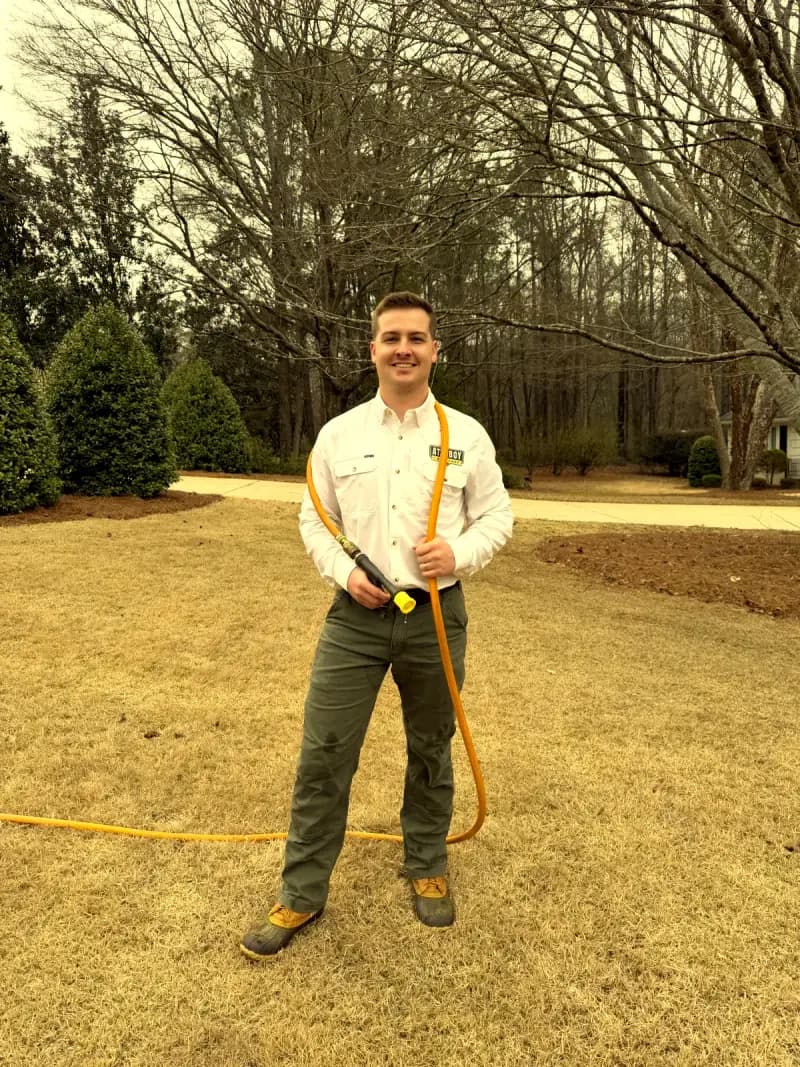
Written by Tyler Warnock
Founder and owner of Attaboy Lawn Care in Macon, Georgia. Licensed Georgia pesticide applicator (Cat. 24, #22324). Tyler treats lawns across Macon, Warner Robins, and the rest of Middle Georgia, and writes these guides from what the region’s bermuda, zoysia, and centipede yards actually do season to season.
Ready for results?
Get a Custom Quote for Your Lawn
Professional lawn care for Macon, Warner Robins, and Middle Georgia. No contracts, no obligation.