
When to Apply Pre-Emergent in Georgia: A Timing Guide
Miss the pre-emergent window and you spend the whole season chasing weeds. Here's exactly when to apply (spring and fall) for Middle Georgia lawns.
In Middle Georgia we apply spring pre-emergent between late February and mid-March, before soil temps reach 55°F, and fall pre-emergent from mid-September through mid-October, before soil temps drop below 70°F. Check soil temperature at a 4-inch depth instead of the calendar, then water granular products into the soil within 24 to 48 hours. If you miss either window, use post-emergent on weeds that are already visible.
Why Timing Makes or Breaks Pre-Emergent Applications
Pre-emergent herbicide does one thing: it stops weed seeds from germinating. It does not kill weeds that are already growing. So if you apply it late, the window is gone and crabgrass, goosegrass, and poa annua are already sprouting in your lawn.
The timing is tied to soil temperature, not the calendar date. That's where most homeowners get it wrong. A date on the bag means nothing if the soil hasn't warmed to the right threshold. In Middle Georgia (Macon, Warner Robins, Bonaire, and surrounding areas) the seasons shift fast. A warm February can fool you into thinking you have more time than you do.
Here's the rule: spring pre-emergent goes down before soil temps hit 55°F. That's the point where crabgrass seeds start to germinate. Once they sprout, pre-emergent is useless against them. You're already behind.
Buy an inexpensive soil thermometer. It takes the guesswork out of timing.
Check soil temp at 4-inch depth, ideally in the morning, for the most accurate reading.
Don't rely on air temperature. Soil temps lag behind air temps by days or even weeks.
Spring Pre-Emergent Timing for Middle Georgia Lawns
In Middle Georgia, the spring pre-emergent window typically opens in late February and closes by mid-March. That's your target zone. If you wait until April, soil temps have already climbed past 55°F and summer annual weeds are already on the move.
This timing aligns with Bermuda grass dormancy. Your lawn is still brown, soil temps are in the 50 to 55°F range, and weed seeds are just starting to stir. That's exactly when you want the herbicide barrier in place, before germination, not after.
One thing to keep straight: pre-emergent timing is not the same as fertilizer timing. Bermuda grass needs soil temps at 65°F before you fertilize, which is typically mid-April to early May in our area. Applying fertilizer too early pushes weak growth. But pre-emergent needs to go down before those temps rise. Two different jobs, two different windows.
If you miss the late February to mid-March window, you have a narrow second shot. Some lawn care programs use a split application. A lighter rate in late February, followed by a second application in late March to early April. This extends the barrier and gives you coverage if the first application wears thin before summer heat sets in.
Aim for late February through mid-March as your primary spring application window.
A split application (late February + late March) gives better season-long coverage than one heavy dose.
Do not skip pre-emergent just because your lawn looks clean. Weed seeds are invisible until they sprout.
Fall Pre-Emergent: The Window Most Homeowners Miss
Most people think about pre-emergent in the spring and completely forget the fall window. That's a mistake. Winter annual weeds (poa annua (annual bluegrass), henbit, chickweed) germinate in fall when soil temps drop back through 70°F on the way down. If you don't have a barrier in place, those weeds spend all winter getting established and explode in late winter and early spring.
In Middle Georgia, the fall pre-emergent window runs from mid-September through mid-October. Soil temps in our area typically fall through the 70°F threshold during that stretch. Hit it on the early side if you can. Waiting until late October means some weed seeds have already germinated.
There's a timing conflict to be aware of: stop fertilizing Bermuda by mid-September. Late nitrogen encourages soft new growth that can't handle the first frost. But pre-emergent can still go down in that same mid-September window. Just don't combine it with a heavy nitrogen application at that point in the season.
Is October Too Late for Pre-Emergent in Georgia?
Early October is not too late, but late October probably is. The difference comes down to where soil temperatures are at that moment. If you're applying in the first two weeks of October and soil temps are still in the 65 to 70°F range, you still have a chance to block poa annua and other winter annuals before they get going.
By late October in Middle Georgia, many of those weed seeds have already germinated. Pre-emergent won't help plants that are already up. At that point you're looking at post-emergent herbicides to address what's growing, and then you plan better for next fall.
October is also a common time people ask about laying new sod. Installing sod in early to mid-October is fine for Bermuda. It gives the grass time to root before dormancy. But here's the conflict: if you just laid sod, do not apply pre-emergent. Pre-emergent works by inhibiting root development, and new sod needs to develop roots aggressively. Give new sod at least 8 to 10 weeks of root establishment before applying pre-emergent.
Target mid-September to early October for fall pre-emergent. Don't wait until the end of the month.
Check soil temps before applying. If you're below 65°F consistently, most winter annual seeds have already germinated.
Never apply pre-emergent to newly laid sod. Wait at least 8 to 10 weeks for roots to establish first.
Wet or Dry Grass: What Actually Matters at Application
This question comes up constantly: do you apply pre-emergent on wet or dry grass? The short answer is that the grass moisture matters less than the soil moisture after application. Most granular pre-emergents need to be watered in within 24 to 48 hours of application. Without water, the herbicide barrier doesn't activate. It just sits on the surface and breaks down.
Applying to damp grass is fine and can actually help granules stick and move into the soil faster. Applying to a soaking wet lawn right after heavy rain is less ideal. You risk runoff, especially on slopes. Wait until standing water clears but the soil is still moist.
Liquid pre-emergent applications follow similar logic. Apply when rain is not imminent for the next few hours so the product bonds to the soil surface before it moves. Then a light rain or irrigation within 24 hours helps activate it.
Bottom line: don't stress about whether the grass blades are wet or dry. Focus on getting water into the soil within 24 to 48 hours after application. If your area isn't expecting rain, plan to irrigate after you apply.
Pre-Emergent Timing at a Glance for Middle Georgia
Here's a straightforward breakdown of target timing, soil temp triggers, and what you're protecting against each season. Use this as your reference before you buy product or schedule a treatment.
Pre-Emergent Application Windows for Middle Georgia (Zone 8a)
| Season | Target Dates | Soil Temp Trigger | Weeds Targeted | Notes |
|---|---|---|---|---|
| Spring (primary) | Late Feb – Mid-March | Before 55°F | Crabgrass, goosegrass, spurge | Apply while Bermuda is still dormant |
| Spring (split/second) | Late March – Early April | 50–60°F | Crabgrass, foxtail | Optional second application for extended coverage |
| Fall | Mid-Sept – Mid-October | Below 70°F | Poa annua, henbit, chickweed | Do not combine with heavy nitrogen fertilization |
| Late October | Not recommended | Below 65°F | Most winter annuals already germinated | Switch to post-emergent if weeds are visible |
When Pre-Emergent Will Not Work, and What to Do Instead
Pre-emergent is not a cure-all. There are specific situations where applying it is either too late, counterproductive, or the wrong tool entirely.
If weeds are already visible and growing, pre-emergent won't touch them. You need a post-emergent herbicide targeting those specific weeds. Crabgrass that's already two inches tall needs a post-emergent treatment. Same goes for any established broadleaf weed in your lawn.
Overseeding and pre-emergent don't mix. If you're overseeding bare spots in your Bermuda lawn, do not apply pre-emergent at the same time. The herbicide prevents all seed germination, including your grass seed. Wait until new grass has been mowed at least two to three times before applying pre-emergent.
Newly seeded or sodded lawns also need time before any pre-emergent goes down. As mentioned above, new sod needs 8 to 10 weeks of root development. New seed needs even longer. Be patient. A short-term weed problem is easier to fix than a lawn that never rooted properly because you applied herbicide too soon.
And finally, don't apply pre-emergent when soil temperatures are already above the germination threshold for the weeds you're targeting. Once crabgrass seeds have germinated, no amount of pre-emergent will reverse that. You're wasting product and money.
Visible weeds mean post-emergent, not more pre-emergent.
Hold off on pre-emergent for at least 8 weeks after laying sod or seeding bare spots.
If you're unsure whether weeds have already germinated, pull one and look at the roots. Germinated seeds have a small root structure visible with the naked eye.
How We Handle Pre-Emergent for Middle Georgia Homeowners
We time our pre-emergent applications around actual soil temperatures in Macon, Warner Robins, Byron, Bonaire, Centerville, Kathleen, and Bolingbroke. Not arbitrary calendar dates. When soil temps start trending toward 55°F in late winter, we start applications. When they drop below 70°F in fall, we do it again.
Our weed control program is built on this rhythm: pre-emergent in the right windows, post-emergent follow-up when something breaks through. After every visit, you get a treatment report so you know exactly what was applied and when.
We offer flat monthly pricing with no contracts. If weeds come back between treatments, we come back and re-treat at no extra charge. That's our No More Weeds guarantee. If you're tired of guessing on timing and chasing weeds all season, we're ready to take that off your plate.
Key takeaways
What to Remember
Apply spring pre-emergent in Middle Georgia between late February and mid-March, before soil temps reach 55°F.
Fall pre-emergent targets winter annual weeds. Apply mid-September through early October before soil temps drop below 70°F.
Early October is still workable for fall pre-emergent. Late October is generally too late in Middle Georgia.
Water granular pre-emergent into the soil within 24 to 48 hours of application. Without water, the barrier never activates.
Never apply pre-emergent to new sod or freshly seeded areas. Wait at least 8 to 10 weeks for root establishment.
Visible weeds require post-emergent treatment. Pre-emergent only stops seeds that haven't germinated yet.
Common questions
Frequently Asked Questions
When should I put down pre-emergent in fall in Georgia?
Mid-September through mid-October is the fall pre-emergent window for Middle Georgia. You're targeting soil temps dropping below 70°F. That's when winter annual weeds like poa annua and henbit start germinating. Earlier in that window is better. Waiting until late October means many seeds have already sprouted.
Is October too late for pre-emergent in Georgia?
Early October is not too late if soil temps are still in the 65 to 70°F range. Late October usually is. By then, most winter annual weed seeds have already germinated in Middle Georgia and pre-emergent won't affect plants that are already growing. If you're past that window, shift to post-emergent herbicides for visible weeds and plan your fall application earlier next year.
When should you not apply pre-emergent?
Don't apply pre-emergent on newly seeded or newly sodded lawns. The herbicide inhibits root development and will damage or kill establishing grass. Also avoid applying after the germination window has passed and weeds are already visible. And skip pre-emergent if you're planning to overseed bare spots within the next few weeks.
Do you put pre-emergent on wet or dry grass?
Applying to damp grass is fine and can actually help granules move into the soil. The key is what happens after application: granular pre-emergent needs to be watered in within 24 to 48 hours to activate the herbicide barrier. Avoid applying right before heavy rain on slopes where runoff could carry the product away. The moisture of the grass blades matters less than getting water into the soil after you apply.
Is it too late for pre-emergent in Georgia right now?
It depends on the date and current soil temperatures. Spring pre-emergent is effective from late February through mid-March. After that, crabgrass seeds are already germinating. Fall pre-emergent is effective mid-September through early October. If you've missed either window, post-emergent herbicide is the next step for weeds that are already visible.
Is October too late to lay sod in Georgia?
Early to mid-October is generally fine for Bermuda sod in Middle Georgia. The grass has time to establish roots before going dormant for winter. Late October and November are riskier. Bermuda won't root aggressively once soil temps fall below 55°F. If you do lay sod in October, hold off on pre-emergent for at least 8 to 10 weeks to let the root system develop.
Keep reading
Related Resources
More in Seasonal
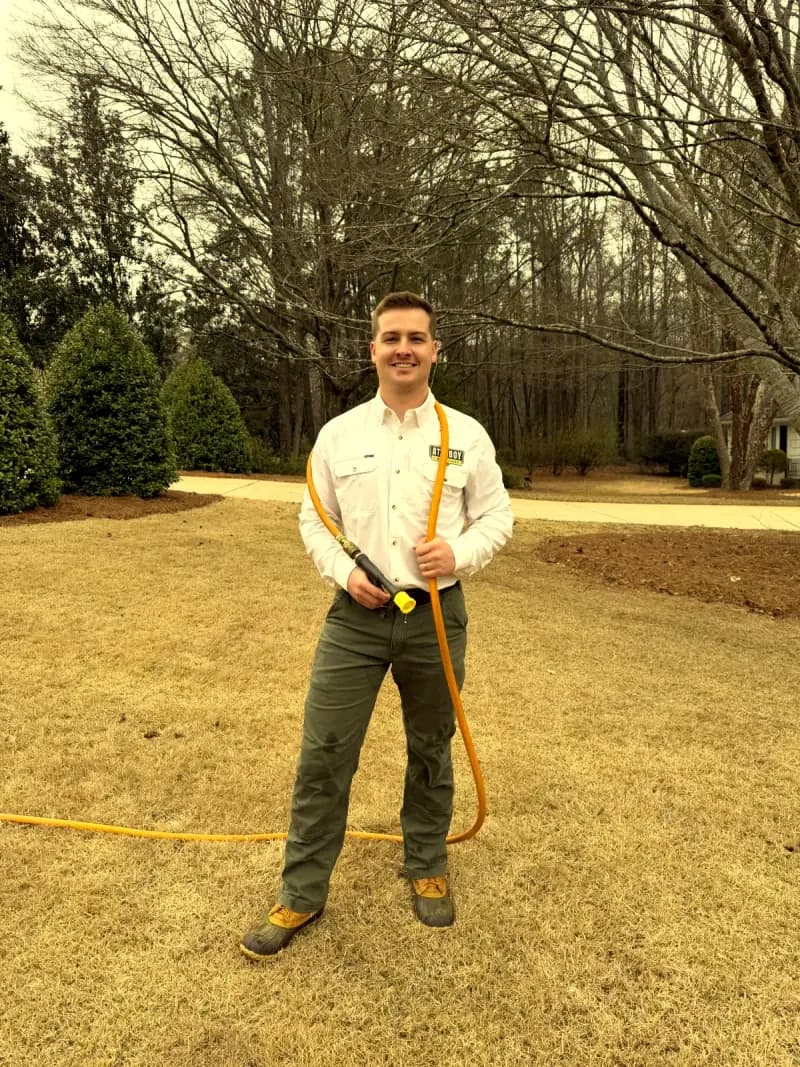
Written by Tyler Warnock
Founder and owner of Attaboy Lawn Care in Macon, Georgia. Licensed Georgia pesticide applicator (Cat. 24, #22324). Tyler treats lawns across Macon, Warner Robins, and the rest of Middle Georgia, and writes these guides from what the region’s bermuda, zoysia, and centipede yards actually do season to season.
Ready for results?
Get a Custom Quote for Your Lawn
Professional lawn care for Macon, Warner Robins, and Middle Georgia. No contracts, no obligation.