When to Apply Spring Weed Control in Middle Georgia
Spring weed control isn't just about what you spray. It's about when. Miss the window and you're chasing weeds all summer. Here's the timing that actually works for Middle Georgia lawns.
In Middle Georgia, spring pre-emergent goes down in late February to mid-March, before soil temperatures cross 55°F. That is when crabgrass starts germinating. If you missed that window, skip pre-emergent and use post-emergent on weeds that are already growing, when air temps run between 60°F and 85°F. We track soil temperatures so applications land in the right window.
The Weed Window Is Smaller Than You Think
Most homeowners think spring weed control means grabbing a sprayer sometime in March or April and calling it done. The problem is, that window is a lot narrower than that. And if you miss it, you're not preventing weeds anymore. You're reacting to them.
In Middle Georgia, the difference between a clean lawn and a lawn overrun with crabgrass comes down to soil temperature, not the calendar date. Once soil temps cross 55°F, crabgrass seeds start germinating. Pre-emergent herbicide has to be down before that happens. After? It's too late for prevention, and you're stuck with post-emergent treatments that work harder and cost more.
The good news is this timing is predictable. Macon, Warner Robins, Bonaire, Kathleen. These areas hit that 55°F threshold consistently between late February and mid-March. You don't need a soil thermometer to get it right. You just need to know the window and act on it.
Pre-Emergent vs. Post-Emergent. Which One Do You Need
These two treatments do completely different jobs. Pre-emergent herbicides stop weed seeds from germinating. They don't kill existing weeds. They create a chemical barrier in the soil that prevents seeds from sprouting. Post-emergent herbicides kill weeds that are already growing.
Pre-emergent is your first line of defense. Apply it before soil temps hit 55°F and you stop crabgrass, goosegrass, and dozens of other warm-season weeds before they ever break the surface. Apply it too late and you've wasted your money. The seeds have already germinated and the window is gone.
Post-emergent is your cleanup crew. Broadleaf weeds like dandelions, clover, and chickweed that survived the winter are still active in early spring. A properly timed post-emergent application handles those while pre-emergent handles what's coming. Most lawns need both, applied at the right time and in the right order.
Pre-emergent goes down in late February to mid-March, before soil temps hit 55°F.
Post-emergent targets actively growing broadleaf weeds. Apply when temps are between 60°F and 85°F for best results.
Never apply pre-emergent after overseeding. It will block your grass seed from germinating too.
Read the label. Some pre-emergents have re-application intervals that matter for thin or bare lawns.
Spring Weed Control Timing for Middle Georgia Lawns
Middle Georgia sits in USDA Zone 8a. Our winters are mild, our springs come fast, and soil temperatures climb earlier than most homeowners expect. That's why the weed control calendar here looks different than what you'd find in a national guide written for Ohio or Colorado.
For Bermuda lawns (which is the majority of what we see in Macon, Warner Robins, and the surrounding area) the pre-emergent window opens around late February and closes by mid-March. Bermuda is still fully dormant at that point, so you can apply pre-emergent without worrying about interfering with green-up. Bermuda doesn't start greening up until soil temps consistently hit 65°F, which usually happens mid-March to early April.
That gap between 55°F and 65°F is your sweet spot. Soil is warm enough for weed seeds to germinate but still cool enough that your Bermuda is sleeping. Hit that window with a quality pre-emergent and you lock out the bulk of your summer weed pressure before the season even starts.
Middle Georgia Spring Weed Control Timing Guide
| Treatment | Target Timing | Soil Temp Trigger | What It Controls |
|---|---|---|---|
| Pre-Emergent (Spring) | Late Feb – Mid-March | Below 55°F | Crabgrass, goosegrass, annual grassy weeds |
| Post-Emergent (Broadleaf) | March – April | 60°F – 85°F air temp | Dandelion, clover, chickweed, henbit |
| Post-Emergent (Grassy) | April – May | After weeds are actively growing | Crabgrass escapes, annual bluegrass |
| Pre-Emergent (Fall) | Mid-Sept – Mid-Oct | Below 70°F and falling | Winter annuals, annual bluegrass |
Is March Too Early, or Already Too Late
This is the question we hear most often. And the honest answer is: it depends on which week of March we're talking about.
Early March is usually fine for pre-emergent if you haven't put it down yet. Soil temps in Middle Georgia typically hover around 50 to 54°F in the first two weeks of March. You still have a shot. But by the third or fourth week of March, soil temps are approaching or crossing 55°F, and crabgrass germination has already started in sunnier, south-facing spots. At that point, pre-emergent is a partial solution at best.
So no, March isn't too early. But late March might already be too late for pre-emergent. If you're reading this in late March or April and haven't applied pre-emergent yet, skip it and move to post-emergent. Applying pre-emergent after germination has started won't stop the weeds you already have. It just ties up money and potentially stresses your lawn.
If you missed the pre-emergent window, don't double down on it. Switch to post-emergent and treat what's there.
Watch for forsythia blooms as a natural indicator. Crabgrass typically germinates around the same time forsythia flowers drop.
A soil thermometer costs about $15 and removes all the guesswork. Worth having.
Pre-emergent applied during Bermuda dormancy (before green-up) won't harm your turf.
What Weeds You're Actually Fighting in Middle Georgia Spring
Not all spring weeds show up at the same time. Some survived the winter as established plants. Others are germinating fresh as temps warm. Knowing which is which changes how you treat them.
Winter annuals like henbit, chickweed, and annual bluegrass germinated back in the fall and have been growing slowly through winter. By early spring they're actively growing and heading toward seed. These are post-emergent targets. You want to knock them out before they drop seed and compound your problem next year.
Summer annuals like crabgrass and goosegrass are just getting started in early spring. Their seeds are in the soil, waiting for the right temperature. These are pre-emergent targets. The plants don't exist yet. You're stopping them before they show up.
Perennial weeds like dandelion and wild violet are a different challenge. They come back from the root year after year. Post-emergent herbicides can suppress them, but complete control often takes multiple applications across multiple seasons. One spray won't eliminate them permanently.
What Actually Kills Weeds Permanently
Let's be honest here. Nothing kills weeds permanently, at least not in any practical sense. Weed seeds blow in from neighboring yards, wash in with rain, and lie dormant in your soil for years. A neighbor's unmaintained lawn can reseed yours every single season.
What you can do is build a lawn that makes it harder for weeds to establish. Dense, healthy turf is the best long-term weed control there is. Weeds need bare soil or thin turf to take hold. A thick Bermuda lawn maintained at the right height, watered correctly, and fertilized on schedule crowds out most weeds before they ever become a problem.
The realistic goal is consistent, year-over-year pressure reduction. Pre-emergent in spring blocks the bulk of summer weeds. Post-emergent cleans up what breaks through. Consistent fertilization keeps your turf dense enough to resist re-invasion. Year one you're fighting. Year two you're managing. Year three you're maintaining. That's what permanent weed control actually looks like.
Fall Weed Control. Is It Worth It
Yes. Fall weed control is absolutely worth doing, and it's one of the most underused tools in lawn care.
The weeds you fight in late winter and early spring (henbit, chickweed, annual bluegrass) all germinated in the fall. They're winter annuals. If you apply pre-emergent in mid-September to mid-October, before soil temps drop below 70°F, you stop those weeds before they ever establish. That means a cleaner lawn through winter and less post-emergent work the following spring.
October isn't too late for fall weed control in Middle Georgia. Our first frost typically doesn't arrive until mid-November, so soil temps stay in the right range through most of October. Post-emergent treatments for broadleaf weeds also work well in fall. The weeds are actively growing and absorbing herbicide efficiently. Skipping fall treatment means you're fighting twice as hard in spring. Doing it right in fall makes spring a lot easier.
Apply fall pre-emergent mid-September to mid-October in Middle Georgia. Don't wait until November.
Post-emergent in fall works well on broadleaf weeds while they're still actively growing before frost.
Fall is also a good time to address perennial weeds. Plants are moving energy toward their roots and herbicide uptake is efficient.
Don't fertilize after mid-September on Bermuda. Late nitrogen creates frost-vulnerable growth. Keep weed control and fertilization on separate schedules.
How We Handle Weed Control for Middle Georgia Lawns
We follow the same timing guidelines we've laid out here, because they work. Pre-emergent goes down before soil temps hit 55°F. Post-emergent handles what's actively growing. We track soil temperatures in the Macon and Warner Robins area so applications land in the right window, not just on a fixed calendar date.
Every treatment gets a report sent to you after the visit. You'll know what was applied, where, and why. If weeds come back between treatments, we re-treat at no charge. That's our No More Weeds guarantee.
We use flat monthly pricing with no contracts. You're not locked into anything. But if you start in late February or early March and stay consistent through the season, you'll see the difference by summer. A clean Bermuda lawn in July is worth the work you put in during March.
Key takeaways
What to Remember
Apply spring pre-emergent in late February to mid-March, before soil temps cross 55°F. This is the window that determines your entire summer.
If you missed the pre-emergent window, switch to post-emergent. Applying pre-emergent after crabgrass has already germinated is wasted effort.
Winter annual weeds like henbit and chickweed are post-emergent targets in early spring. They've been growing since fall and need to be knocked out before they seed.
Fall pre-emergent (mid-September to mid-October) stops winter annuals before they establish. Skipping it means double the work the following spring.
Dense, well-fertilized turf is your best long-term weed control. Weeds don't take hold in a thick, healthy Bermuda lawn.
October is not too late for fall weed control in Middle Georgia. Soil temps stay workable through most of the month.
Common questions
Frequently Asked Questions
When should I apply weed killer in the spring?
For pre-emergent weed killer, apply in late February to mid-March in Middle Georgia, before soil temperatures hit 55°F. That's when crabgrass and other warm-season weeds start germinating. For post-emergent products targeting broadleaf weeds like dandelion and chickweed, apply when those weeds are actively growing and air temps are between 60°F and 85°F, typically March through April.
Is March too early for weed killers?
No, early to mid-March is actually the right time for pre-emergent in Middle Georgia. Soil temperatures are typically still below 55°F during the first two weeks of March, so you're still in the window to stop crabgrass before it germinates. By late March, that window is closing fast. If you're in late March, skip pre-emergent and use post-emergent to treat what's already growing.
What is the first thing you put on your lawn in the spring?
In Middle Georgia, the first application of spring should be pre-emergent herbicide, not fertilizer. Pre-emergent needs to go down before soil temps hit 55°F, which happens in late February to mid-March. Fertilizing too early (before consistent green-up around mid-April to early May) wastes product and can burn a lawn that's still coming out of dormancy. Weed control comes first, then fertilization once you have 50% or more green coverage.
Is October too late to spray for weeds?
No. October is not too late in Middle Georgia. Our first frost typically doesn't arrive until mid-November, so soil temps and air temps stay warm enough for effective herbicide uptake through most of October. Fall pre-emergent should go down by mid-October to stop winter annual weeds. Post-emergent for broadleaf weeds also works well in October while those plants are still actively growing.
Is it worth spraying weeds in the fall?
Yes, and it's one of the highest-value weed control applications you can make. The weeds you fight in late winter and early spring (henbit, chickweed, annual bluegrass) all germinate in fall. A fall pre-emergent application stops them before they ever establish. Post-emergent in fall also works well because weeds are actively transporting energy to their roots, which means better herbicide uptake. Skipping fall treatment means more weeds and more work the following spring.
What actually kills weeds permanently?
Nothing eliminates weeds permanently. Weed seeds blow in constantly from neighboring properties and can stay viable in the soil for years. What you can do is reduce weed pressure year over year through consistent pre-emergent timing, post-emergent follow-up, and building a thick, healthy turf. Dense Bermuda grass is the best natural weed barrier there is. With a consistent program, most homeowners see dramatically cleaner lawns by year two or three.
Keep reading
Related Resources
More in Seasonal
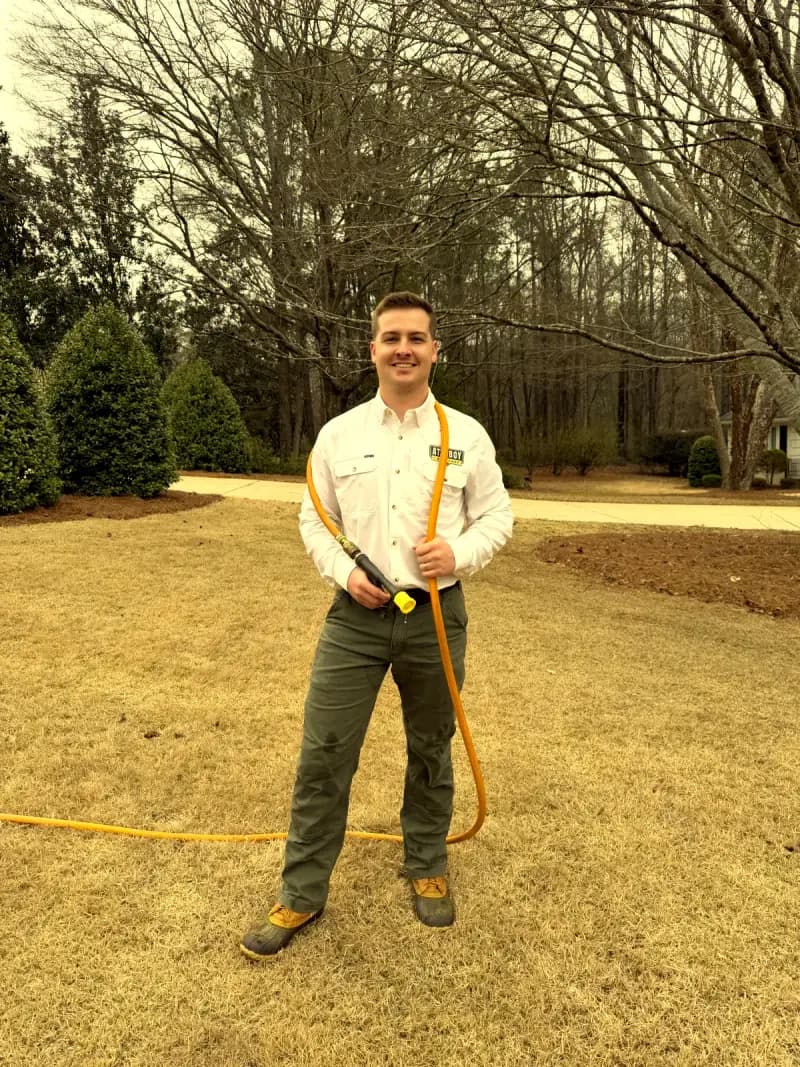
Written by Tyler Warnock
Founder and owner of Attaboy Lawn Care in Macon, Georgia. Licensed Georgia pesticide applicator (Cat. 24, #22324). Tyler treats lawns across Macon, Warner Robins, and the rest of Middle Georgia, and writes these guides from what the region’s bermuda, zoysia, and centipede yards actually do season to season.
Ready for results?
Get a Custom Quote for Your Lawn
Professional lawn care for Macon, Warner Robins, and Middle Georgia. No contracts, no obligation.