
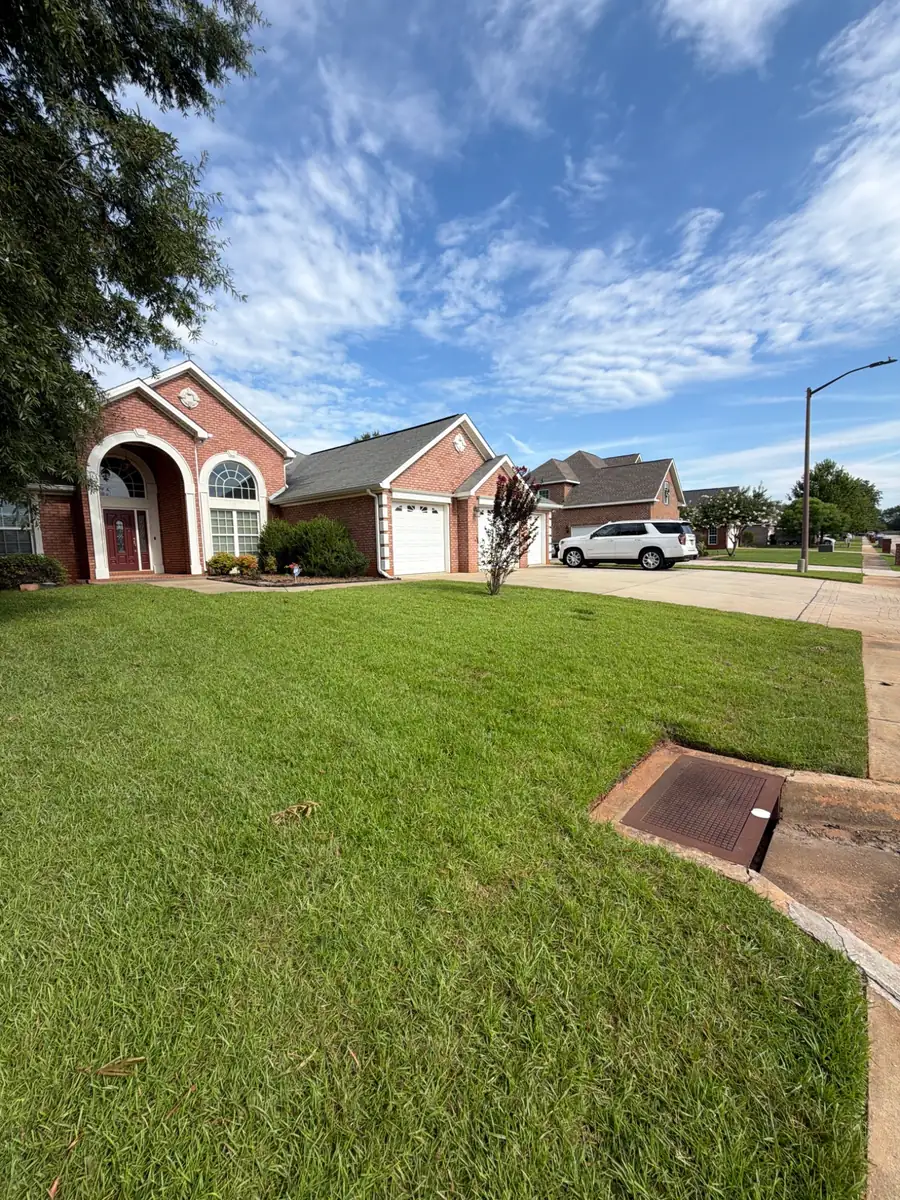
Dormant Bermuda Grass: What to Do and What to Skip
That tan, crunchy lawn isn't dead. It's dormant. Here's what you need to know about dormant Bermuda grass so you don't make a costly mistake this winter or early spring.
Dormant Bermuda is not dead, it is protecting its roots until soil temperatures rise. Check the crown. White means dormant, brown means dead. Skip fertilizer, heavy foot traffic, and anything that covers the lawn. Apply pre-emergent in late February or early March, then start fertilizing once you see consistent green growth in late March to mid-April.
Your Bermuda Lawn Isn't Dead. It's Dormant
Every fall, we get calls from homeowners in Macon, Warner Robins, and Bonaire who are convinced their Bermuda grass died. The lawn has turned tan. The blades crunch underfoot. Nothing is growing. They want to know if they need new sod.
Almost always, the answer is no. Bermuda grass goes dormant when soil temperatures drop below 50°F, and in Middle Georgia, that typically happens between November and early March. The grass isn't dead. It's in survival mode, protecting its root system underground until warmer temperatures return.
Dormancy is a natural, healthy process. A lawn that goes fully dormant in winter is often a sign of well-established grass with a strong root system. The problem comes when homeowners treat dormant Bermuda like it's broken, and that's where real damage happens.
How to Tell If Bermuda Grass Is Dormant or Actually Dead
The color alone won't tell you much. Both dormant and dead Bermuda grass look tan or straw-colored. The real test is what's happening at the crown, the zone right at soil level where the roots meet the blades.
Pull up a small section of turf. If the crown is white or cream-colored and the roots are intact, the grass is dormant. If the crown is brown, mushy, or the roots fall apart easily, you may have dead grass on your hands.
Another method: look for patterns. Dormancy typically affects the entire lawn uniformly. Dead patches often show up in isolated spots (near a tree, along a driveway edge, or where there's been foot traffic damage). If the whole lawn went tan at once, it's almost certainly dormant.
Tug a small plug of turf and check the crown color. White means dormant, brown means trouble.
Look for uniform color change across the whole lawn. Patchy discoloration often signals a disease or pest problem.
Wait until late March before panicking. Bermuda in Middle Georgia typically breaks dormancy between late March and mid-April.
If you're unsure, call us. We can walk your property and tell you exactly what's going on.
How Long Will Bermuda Stay Dormant in Middle Georgia
In Middle Georgia, Bermuda grass is typically dormant for three to five months, roughly from late November through mid-March, sometimes stretching to early April in cooler years.
Dormancy length depends on soil temperature, not air temperature. A few warm days in January won't wake your lawn up. Bermuda needs sustained soil temps above 65°F to come out of dormancy and start actively growing again.
You'll know green-up is happening when you see thin green shoots pushing through the tan blades. That's your signal to shift from dormant-season maintenance to active-season care.
What You Should (and Shouldn't) Do to Dormant Bermuda
Dormancy is not the time to experiment with your lawn. A lot of well-meaning homeowners do things during winter that set their Bermuda back by weeks come spring.
The biggest mistake is heavy foot traffic. Dormant grass doesn't recover the way active grass does. Grinding a path across your dormant lawn (even just from repeated dog runs or parking on it) can kill the crowns in those areas and leave dead stripes that show up in May.
Fertilizing dormant Bermuda is another common error. The grass can't use nutrients it can't absorb, and excess nitrogen sitting in the soil over winter can actually feed weeds while doing nothing for your turf.
Herbicide timing, on the other hand, is a different story, and one worth understanding.
Keep foot traffic minimal until the lawn fully greens up, usually late March to mid-April in Middle Georgia.
Hold off on fertilizer until you see consistent new growth. Premature applications feed weeds, not grass.
Pre-emergent weed control in late winter (February to early March) is one of the best things you can do for a Bermuda lawn.
Don't scalp or dethatch while the lawn is still fully dormant. Wait for green-up.
If your lawn has heavy thatch buildup, schedule core aeration for early spring once the grass starts actively growing.
Will Roundup Kill Dormant Bermuda Grass
This is one of the most common questions we hear, and the answer matters a lot if you're thinking about spot-treating winter weeds.
Glyphosate (Roundup) can be used on fully dormant Bermuda with lower risk than during the growing season, but it is not zero-risk. Research from universities in the Southeast has shown that glyphosate applications to dormant Bermuda can cause injury, particularly if the grass breaks dormancy earlier than expected after a warm spell.
The safest window is during deep dormancy (typically December through early February in Middle Georgia) when soil temps are consistently below 50°F. If temperatures have been swinging warm and cold, skip the glyphosate. A partially active crown is far more vulnerable.
For most homeowners dealing with winter broadleaf weeds, selective herbicides are a better option than glyphosate. They target the weeds without touching the Bermuda at all.
Mowing Dormant Bermuda. The 1/3 Rule Still Applies
Bermuda grass in dormancy doesn't grow, so there's rarely a reason to mow it. But if you have a ryegrass overseeding or if your lawn has some warm-season growth from a mid-winter warm stretch, mowing rules still apply.
The 1/3 rule is simple: never remove more than one-third of the blade height in a single mowing. If your Bermuda is normally mowed at 1.5 inches, don't drop below 1 inch in one pass. Cutting too much at once stresses the crown and slows recovery.
For a dormant lawn with no overseeding, the one practical mowing task is a late-winter scalp, cutting the lawn short before green-up begins. This removes the dead top growth and lets sunlight reach the soil, which helps warm it faster. Do this in late February or early March, before the grass breaks dormancy, not during active spring growth.
Can Bermuda Die While Dormant. Covering and Other Risks
Yes, dormant Bermuda can die, and covering is one of the ways it happens. If you cover a dormant lawn with tarps, pallets, equipment, or even thick mulch for an extended period, you block light and trap moisture. The crowns can rot or suffocate, and you'll end up with dead patches that don't recover.
Extended periods without light are hard on dormant turf even when it's not actively growing. If you're storing materials on your lawn over winter, move them. A few weeks is usually recoverable. Two or three months is not.
Other dormancy risks include ice damage from repeated freeze-thaw cycles, compaction from heavy equipment or vehicle parking, and erosion on bare areas where dormant turf is thin. None of these are disasters on their own, but stacking them creates real problems come spring.
Never leave tarps, wood pallets, or equipment on your dormant lawn for more than a week or two.
Avoid parking vehicles on dormant turf. Crown compaction damage shows up as dead stripes in spring.
After any ice event, stay off the lawn until the ice has fully melted to avoid cracking the frozen crowns.
Thin areas in late dormancy are a good candidate for spot overseeding or sod repair once green-up begins.
Setting Your Bermuda Up for a Strong Spring Green-Up
The work you do in late winter directly affects how fast and how thick your Bermuda comes back in spring. This is not the time to wait and see.
Pre-emergent herbicide applied in late February or early March is your first move. Crabgrass and goosegrass germinate early, and once they're up, pre-emergent won't touch them. Getting ahead of summer annual weeds while Bermuda is still dormant is one of the highest-value treatments on the calendar.
Once the lawn shows consistent green growth, typically late March to mid-April in Macon and Warner Robins, that's when fertilization starts making sense. A soil-temperature-appropriate nitrogen application at green-up kicks the lawn into gear and helps it fill in before summer heat arrives.
If you're in Centerville, Kathleen, Bolingbroke, or anywhere else in Middle Georgia and your Bermuda lawn needs a treatment plan heading into spring, we're ready to help. Our first treatment happens within 24 hours of signup, and there are no contracts.
Dormant Bermuda Care Calendar for Middle Georgia
| Timing | Task | Notes |
|---|---|---|
| Nov – Dec | Stop fertilizing | Grass can't absorb nutrients in dormancy |
| Dec – Feb | Minimize foot traffic | Dormant crowns don't recover like active turf |
| Late Feb – Early Mar | Apply pre-emergent herbicide | Targets crabgrass and goosegrass before germination |
| Late Feb – Early Mar | Scalp mow (optional) | Remove dead top growth to warm soil faster |
| Mar – Apr | Watch for green-up | Soil temps above 65°F trigger active growth |
| Once greening | Begin fertilization program | Nitrogen application after consistent growth appears |
| Once greening | Resume regular mowing | Follow the 1/3 rule: don't cut more than one-third of blade height |
Key takeaways
What to Remember
Dormant Bermuda grass is not dead. Check the crown color (white = dormant, brown = dead) before taking action.
In Middle Georgia, Bermuda stays dormant from roughly late November through mid-March, depending on soil temperatures.
Heavy foot traffic, early fertilization, and covering the lawn are the three most common ways homeowners damage dormant Bermuda.
Glyphosate can be used on dormant Bermuda during deep dormancy, but timing matters. A warming trend makes it risky.
Pre-emergent herbicide applied in late February or early March is the single most effective dormant-season investment for your lawn.
Once you see consistent green shoots, typically late March to mid-April, that's your signal to start your spring fertilization and mowing routine.
Common questions
Frequently Asked Questions
How long will Bermuda stay dormant in Middle Georgia?
Bermuda grass in Middle Georgia is typically dormant for three to five months, from late November through mid-March or early April depending on the year. The grass won't break dormancy until soil temperatures are consistently above 65°F. Air temperature swings in January or February don't count. It's what's happening underground that matters.
Should you cut dormant Bermuda grass?
There's no need to mow a fully dormant Bermuda lawn since it isn't growing. However, a late-winter scalp mow in late February or early March (before green-up begins) can be beneficial. Cutting the dead top growth short allows more sunlight to reach the soil, which helps warm it faster and speeds up spring green-up. Just follow the 1/3 rule when you do mow: never remove more than one-third of the blade height in a single pass.
Will Roundup hurt dormant Bermuda grass?
It can. Glyphosate is lower-risk on dormant Bermuda than on actively growing Bermuda, but it isn't risk-free. The safest window is during deep dormancy (December through early February) when soil temperatures are consistently below 50°F. If the lawn has been exposed to warm mid-winter temperatures, the crowns may be partially active and more vulnerable to injury. For most winter weed situations, selective herbicides that target broadleaf weeds are a safer choice.
Can dormant Bermuda grass be killed if it's been covered?
Yes. Covering dormant Bermuda with tarps, equipment, or heavy materials for more than a week or two can suffocate the crowns and cause dead patches. The grass needs some light exposure even in dormancy. If you've stored items on your lawn over winter, remove them as soon as possible and assess the crowns in spring. Compaction from vehicle parking is another common cause of dormant-season crown damage.
What is the 1/3 rule for Bermuda grass?
The 1/3 rule means you should never cut more than one-third of the grass blade height in a single mowing. For example, if you mow at 1.5 inches, don't let the lawn grow past 2.25 inches before cutting again. Removing more than one-third at once stresses the plant, exposes the crown to heat and sunlight stress, and slows recovery. This rule applies during active growth (in spring, summer, and fall) and also applies if you mow during any warm-season growth spurts in dormancy.
How do you tell if Bermuda grass is dormant vs. dead?
Pull up a small section of turf and examine the crown, the area right at soil level. A dormant lawn will have a white or cream-colored crown with intact roots. A dead lawn will have a brown, mushy, or disintegrating crown. Also look at the pattern: dormancy causes uniform color change across the entire lawn, while dead areas typically appear in isolated patches. If you're unsure, wait until late March. If dormant Bermuda hasn't shown any green shoots by mid-April in Middle Georgia, that's when it's worth investigating further.
Keep reading
Related Resources
More in Seasonal
Written by Tyler Warnock
Founder and owner of Attaboy Lawn Care in Macon, Georgia. Licensed Georgia pesticide applicator (Cat. 24, #22324). Tyler treats lawns across Macon, Warner Robins, and the rest of Middle Georgia, and writes these guides from what the region’s bermuda, zoysia, and centipede yards actually do season to season.
Ready for results?
Get a Custom Quote for Your Lawn
Professional lawn care for Macon, Warner Robins, and Middle Georgia. No contracts, no obligation.