When Does Bermuda Grass Green Up in Georgia
Bermuda green-up in Middle Georgia typically happens between mid-March and mid-April, but several factors affect exactly when your lawn wakes up.
Bermuda grass in Middle Georgia starts showing green in mid-March and reaches full green-up by mid-April. Soil temperature drives it, not the calendar. Growth starts once soil stays above 60 to 65 degrees at 4-inch depth. While you wait, apply pre-emergent, clear debris, and sharpen mower blades. Hold the first fertilizer until the lawn is uniformly green.
Typical Green-Up Timeline
In Middle Georgia, bermuda grass typically begins showing green color in mid-March and reaches full green-up by mid-April. Soil temperature is the trigger. Bermuda starts growing when soil temps consistently stay above 60 to 65 degrees at the 4-inch depth. Air temperature alone is not reliable because warm days followed by cold nights can stall green-up for weeks.
The process is gradual. You will see scattered green blades first, usually in the warmest spots of your yard. Sunny areas near driveways and south-facing slopes lead the way. Over the next 2 to 4 weeks, the green spreads until the entire lawn has transitioned out of dormancy. Do not panic if some areas are green while others are still brown. That uneven look is completely normal during the transition period.
In Bibb and Houston counties, most bermuda lawns hit full green-up between the first and third week of April in a typical year. A warm spring pushes that earlier. A late frost or extended cool spell can delay it into late April. Either way, the timing is driven by soil temperature, not the calendar.
Check soil temperature at 4-inch depth rather than relying on air temperature.
South-facing slopes and areas near pavement green up first due to retained heat.
Shaded areas green up 2 to 3 weeks later than full-sun areas.
Factors That Speed Up or Delay Green-Up
Several factors affect bermuda green-up timing. Sun exposure is the biggest one. Full-sun lawns green up weeks earlier than shaded areas. Soil type matters too. Sandy soils warm faster than heavy clay. A healthy lawn with good thatch management and proper fall nutrition greens up faster than a neglected one. Overseeded ryegrass can actually delay bermuda green-up by competing for sunlight and nutrients.
Thatch thickness plays a role many homeowners overlook. A thick thatch layer acts as insulation, keeping the soil cooler for longer and slowing the warming process. Lawns that were properly aerated in fall tend to green up earlier because the soil can absorb heat more efficiently. Compacted clay soil in Middle Georgia also warms slowly, which is another reason fall aeration pays dividends in spring.
Lawn health heading into dormancy makes a difference too. A bermuda lawn that received proper fall fertilization with potassium has stronger root energy reserves. Those reserves fuel the spring green-up process. A lawn that went into winter stressed, underfed, or damaged will green up slower and thinner even when soil temperatures are right.
What to Do While Waiting
Resist the urge to force green-up with early fertilization. Bermuda cannot use nitrogen while still dormant, and early application feeds weeds. Focus on pre-emergent application, cleaning up debris, and sharpening mower blades. Once you see consistent green growth across the lawn, not just a few patches, that is your signal to start the spring fertilization program.
This waiting period is actually the best time to handle pre-emergent herbicide. Soil temperatures in the 50 to 55 degree range signal crabgrass germination is approaching. You want the pre-emergent barrier in place before the soil hits 55 degrees consistently. In most of Middle Georgia, that means a late February to early March application.
Use the dormant period to sharpen mower blades, check irrigation systems, and address any drainage problems. Clean debris off the lawn so sunlight can reach the soil surface and help it warm up. Remove any leaf accumulation from fall. Every bit of sunlight that reaches the ground speeds up the warming process.
Green-Up Timeline by Area
Green-up timing varies across Middle Georgia more than most homeowners expect. Properties closer to Macon's urban heat island tend to green up a week or more before rural properties in Bonaire or Bolingbroke. Paved surfaces retain heat and radiate it into the surrounding soil, giving nearby lawns a head start.
Properties along the Ocmulgee River corridor in south Bibb County often see earlier green-up due to the slightly warmer microclimate near the water. Higher elevations in north Houston County and Kathleen may lag behind by 5 to 10 days. Your specific yard's sun exposure, soil composition, and elevation all factor into when your bermuda breaks dormancy.
The First Mow After Green-Up
Once bermuda is about 80 percent green and actively growing, it is time for the first mow. Set your mower to 1.5 inches and make a clean pass across the lawn. This first mow removes any remaining brown blade tips and allows more sunlight to reach the new growth at the base of the plant.
Some homeowners scalp their bermuda lawn in early spring to speed up green-up. A spring scalp removes the dead winter canopy and exposes the soil to direct sunlight, which warms it faster. If you scalp, do it before the lawn is more than 30 percent green. Scalping after significant green-up damages the new growth you are trying to encourage. Set the mower to its lowest setting (around 0.5 to 1 inch) for the scalp, bag the clippings, and then raise back to normal height for subsequent mows.
When to Worry About Slow Green-Up
If your neighbors' bermuda lawns are fully green and yours is still brown in late April, there may be an issue. Spring dead spot, winterkill from extreme cold, or grub damage can all prevent green-up in affected areas. These spots need diagnosis and targeted treatment rather than more fertilizer.
Spring dead spot shows up as circular dead patches, usually 6 inches to several feet across, that stay brown while the rest of the lawn greens up. The grass in these patches is dead, not dormant. It will not come back on its own. Spring dead spot is caused by a fungal infection that occurred during the previous fall, so prevention starts the following September with proper fungicide application.
Grub damage looks different. Affected areas feel spongy when you walk on them, and the brown turf peels back from the soil like loose carpet because the roots have been eaten. If you pull back the turf and see white C-shaped grubs in the soil, that confirms the diagnosis. Grub treatment followed by sod repair is the fix.
First Fertilizer After Green-Up
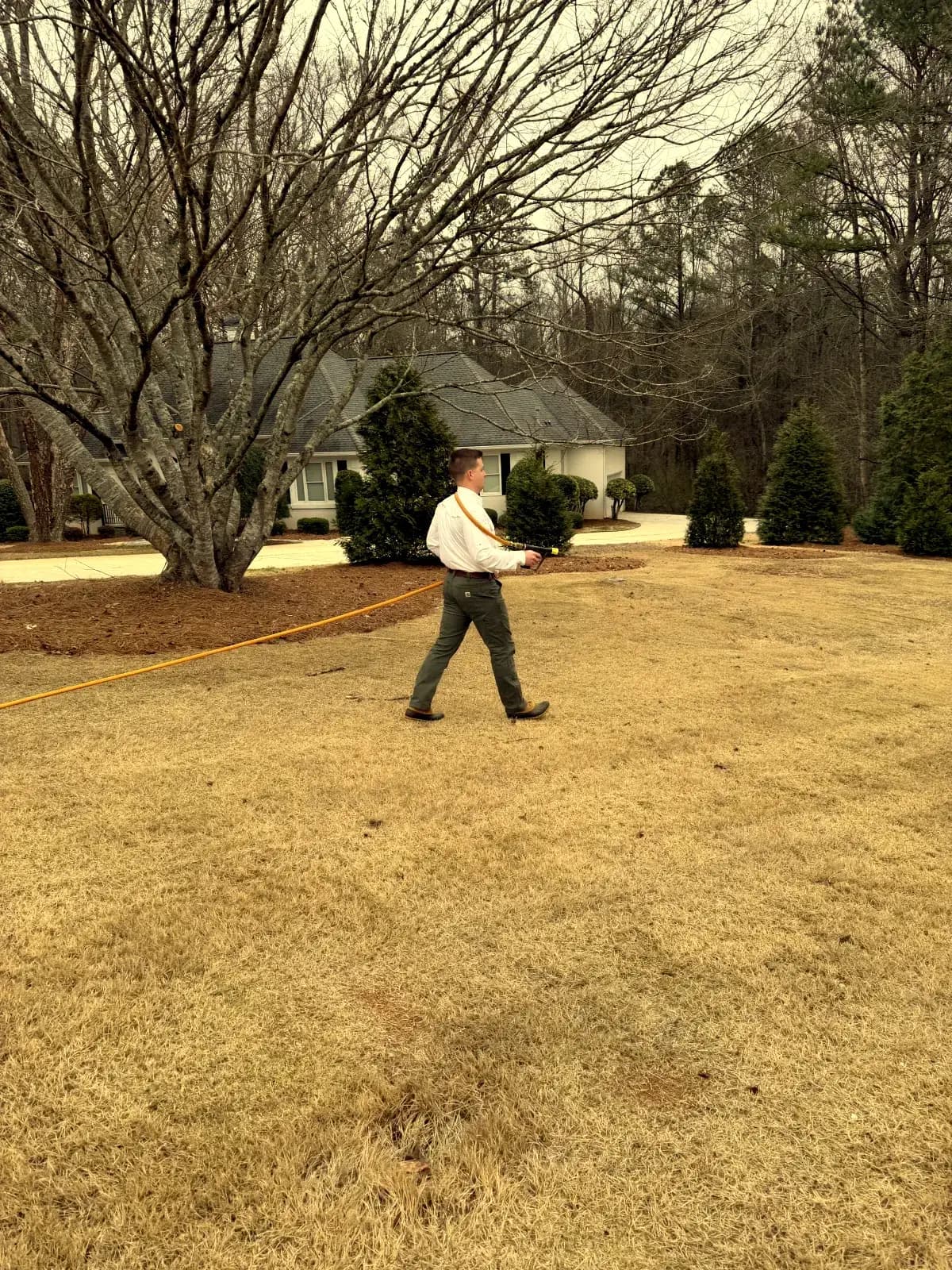
Once your bermuda lawn is fully green and actively growing, typically mid to late April in Middle Georgia, apply the first round of fertilizer. A slow-release nitrogen product like a 16-4-8 works well for the first application. Spread it evenly with a calibrated broadcast spreader and water it in within 24 hours.
Do not rush this step. Applying fertilizer before the lawn is fully out of dormancy puts nitrogen in the soil that only weeds can use. Wait until you see uniform green across the entire lawn, not just patches near warm surfaces. That patience pays off with a stronger, thicker lawn that fills in before summer weed pressure hits.
If you want help dialing in the right timing for your specific yard, we handle this for our customers across Macon, Warner Robins, Byron, Bonaire, Centerville, Kathleen, and Bolingbroke. Get a quote and we will build a custom plan for your lawn.
Key takeaways
What to Remember
Bermuda green-up in Middle Georgia happens between mid-March and mid-April, triggered by soil temps above 60 to 65 degrees at 4-inch depth.
Full-sun areas, south-facing slopes, and properties near pavement green up first. Shaded areas can lag 2 to 3 weeks behind.
Do not fertilize before the lawn is fully green. Early nitrogen feeds weeds, not dormant bermuda.
Spring dead spot and grub damage are the two most common causes of patches that fail to green up.
Apply pre-emergent while the lawn is still dormant to block crabgrass before it germinates.
The first fertilizer application should wait until the lawn is uniformly green, usually mid to late April.
Common questions
Frequently Asked Questions
What temperature does bermuda need to green up?
Bermuda grass begins active growth when soil temperatures consistently stay above 60 to 65 degrees Fahrenheit at 4-inch depth. In Middle Georgia this usually happens between mid-March and mid-April.
Should I fertilize bermuda before it greens up?
No. Fertilizing dormant bermuda wastes product and feeds weeds. Wait until the lawn is fully green and actively growing before applying the first round of fertilizer.
Why is my bermuda still brown when my neighbor's lawn is green?
Several factors cause uneven green-up timing: shade levels, soil type, thatch thickness, and fall lawn care practices all play a role. Lawns with more sun exposure, less thatch, and better fall nutrition green up earlier. If your lawn is still brown in late April, check for spring dead spot or grub damage.
Should I scalp my bermuda lawn in spring?
A spring scalp can speed up green-up by exposing soil to direct sunlight. Do it before the lawn is more than 30 percent green. Set the mower to its lowest setting, bag the clippings, then raise back to normal height for future mowing.
How long does bermuda green-up take from start to finish?
From the first green blades to full green-up typically takes 2 to 4 weeks. The process starts in the warmest spots and spreads across the lawn as soil temperatures rise. Uneven green-up during this transition is completely normal.
Keep reading
Related Resources
More in Seasonal
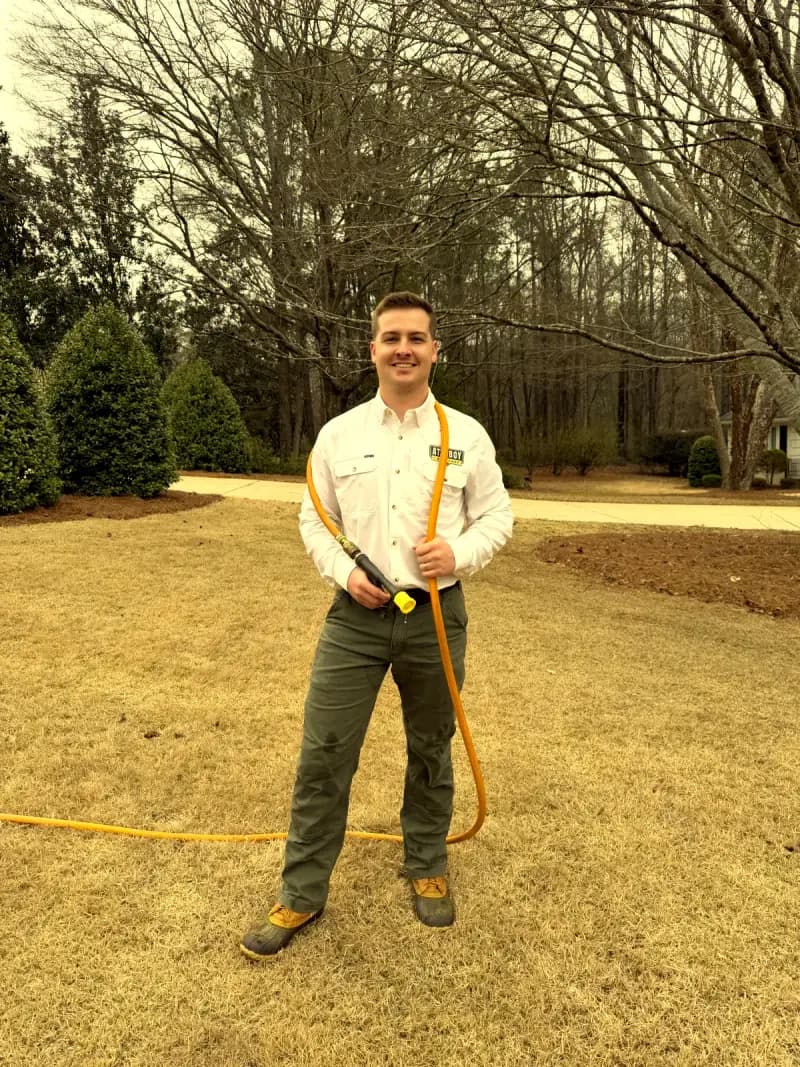
Written by Tyler Warnock
Founder and owner of Attaboy Lawn Care in Macon, Georgia. Licensed Georgia pesticide applicator (Cat. 24, #22324). Tyler treats lawns across Macon, Warner Robins, and the rest of Middle Georgia, and writes these guides from what the region’s bermuda, zoysia, and centipede yards actually do season to season.
Ready for results?
Get a Custom Quote for Your Lawn
Professional lawn care for Macon, Warner Robins, and Middle Georgia. No contracts, no obligation.