
Should You Put Down Pre-Emergent in the Spring?
Spring pre-emergent can be the difference between a clean lawn and a crabgrass nightmare. Timing is everything in Middle Georgia, where soil temps move fast.
Yes. In Middle Georgia, spring pre-emergent works if it goes down between late February and mid-March, before soil temperatures at the 4-inch depth hit 55°F. We time applications to actual soil temperature, not calendar dates. Apply too early and the product breaks down. Miss the window and switch to post-emergent, then prioritize the fall application in mid-September to mid-October.
Yes, Spring Pre-Emergent Is Worth Applying, If You Time It Right
Spring pre-emergent is one of the most effective tools for keeping summer weeds out of a Bermuda lawn. It only works if you apply it before weed seeds germinate. Miss that window and you're reacting to weeds instead of preventing them.
Here in Middle Georgia (Macon, Warner Robins, Bonaire, and surrounding areas), soil temperatures climb faster than most people expect. That application window can close before March is over. So yes, put down pre-emergent in the spring. The question is whether your timing is still good or whether you need a different plan for the season ahead.
Pre-emergent forms a chemical barrier in the soil that stops germinating seeds from establishing roots. It does not kill existing weeds or seeds. It only blocks germination. Get it down before that process starts and you stop weeds before they become a problem.
When Should You Put Pre-Emergent Down in the Spring?
The target window for spring pre-emergent in Middle Georgia is late February to mid-March. The goal is to get it down before soil temperatures at the 4-inch depth hit 55°F consistently. Once the soil crosses that threshold, crabgrass and other warm-season weeds start germinating and pre-emergent loses its effectiveness.
Soil temperatures in the Macon and Warner Robins area typically reach 55°F somewhere between late February and mid-March, depending on the year. Some years that happens fast. A cold snap in early March can buy a few extra days. Watching actual soil temperature (not the air temperature forecast) is the only reliable way to know where you stand.
A practical indicator: when Bradford pear trees bloom in Middle Georgia, your pre-emergent window is either open or about to close. That bloom signals soil temps are warming into the target range. If you haven't applied yet and the pears are flowering, move fast.
Check soil temperature at the 4-inch depth, not the surface. Surface readings run warmer and will mislead you.
Target application when soil temps are in the 50-54°F range, giving the barrier time to set before germination starts.
Water the pre-emergent in within 24-48 hours of application unless rain is expected. Activation requires moisture.
Time your application to soil temperature, not the calendar date. Soil temp is the only accurate trigger.
What Happens If You Put Pre-Emergent Down Too Early?
Earlier is not always better. Pre-emergent products break down over time through heat and microbial activity. Apply too early (in January or the first week of February) and the barrier may degrade before weed seeds begin germinating in late February or March.
Most pre-emergent products provide 60-90 days of residual control under normal conditions. Apply in January and that residual could be nearly spent right when you need it most, leaving a gap in protection during peak crabgrass germination season.
Applying too early also increases runoff risk. If heavy rain hits before the product binds to the soil, it can wash away before providing any protection. The sweet spot is late February to mid-March. Close enough to germination time that the barrier is active when needed, but before seeds start moving.
Is March Too Late for Pre-Emergent, and What If You Miss the Window?
Early March is not too late. Mid-to-late March is pushing it hard in Middle Georgia. By then, soil temps are often above 55°F and crabgrass germination may already be underway. Applying pre-emergent after germination has started will not stop young crabgrass already establishing. It only blocks seeds that haven't yet germinated.
If you're reading this in April or May, the spring pre-emergent window is closed. Your options shift to post-emergent herbicides, which target crabgrass and other warm-season weeds already growing. Some programs use a split application approach (a second pre-emergent dose around mid-May to extend summer coverage), though you should follow individual product label guidance for split applications.
Missing the spring window makes the fall pre-emergent application more important. Cool-season weeds like annual bluegrass and henbit germinate in fall, and a mid-September to mid-October application stops them before winter. A missed spring window is not the end of the season. Get back on track with a solid fall application.
Spring Pre-Emergent Timing Guide for Middle Georgia
| Application Timing | Soil Temp at 2 Inches | Effectiveness | Notes |
|---|---|---|---|
| January – Early February | Below 45°F | Low: product breaks down before weeds germinate | Too early; residual will fade before needed |
| Late February – Early March | 48–54°F | High: ideal window | Target application zone for Middle Georgia |
| Mid-March | 55–58°F | Moderate: borderline | Apply immediately; some weed seeds may have already germinated |
| Late March – April | Above 60°F | Very low: too late for pre-emergent | Switch to post-emergent products |
| May and beyond | Above 70°F | None for spring weeds | Focus on post-emergent and fall pre-emergent prep |
When Not to Use Pre-Emergent on Your Lawn
Pre-emergent is not always the right call. There are specific situations where applying it will waste money or actively harm your lawn.
If you plan to seed or overseed any bare areas, skip the pre-emergent. It does not distinguish between weed seeds and grass seed. It blocks germination across the board. Apply pre-emergent before seeding and you'll get poor germination or none at all. Wait until new grass has been mowed at least two to three times before using any pre-emergent product.
Hold off if your lawn was recently core aerated. Aeration punches holes through the soil barrier pre-emergent creates. If you aerate after applying, you break the protective layer and allow weeds to germinate through those gaps. The correct order: pre-emergent first, or aerate first and wait a full season before reapplying.
Newly sodded lawns in their first 60 days are another exception. New sod needs to root aggressively, and some pre-emergent products can interfere with root establishment depending on the active ingredient and application rate. Check the product label before applying to fresh sod.
Never apply pre-emergent before seeding. It will block your grass seed the same way it blocks weed seeds.
If you core aerated in the fall, wait until the following spring window to apply pre-emergent.
For new sod less than 60 days old, check the product label before applying any pre-emergent.
Skip pre-emergent if heavy rain is forecast within a few hours. The product needs time to bind before runoff risk rises.
What's the First Thing You Should Put on Your Lawn in the Spring?
Pre-emergent is typically the first product on a Bermuda lawn each spring, but only after one step: scalping and cleaning up from dormancy.
For Bermuda grass in Middle Georgia, scalping happens in late February to early March, before green-up. Mow low, remove the dead thatch layer, and let the soil warm evenly. After scalping, pre-emergent goes down before soil temps hit 55°F. Fertilizer comes later, not until you have 50% or more green coverage, which typically falls in mid-April to early May. Fertilizing before green-up is a common mistake that wastes product and can stress the lawn.
The sequence for a Bermuda lawn in Middle Georgia: scalp in late February, apply pre-emergent before soil hits 55°F, let the lawn green up, then start fertilization once you have solid coverage. That order matters. Reversing steps sets you up for weed pressure, thin growth, or product waste.
If your lawn has a persistent broadleaf weed problem from winter (henbit, chickweed, clover), a post-emergent spot treatment in late February or early March, alongside your pre-emergent application, can clean those up while the pre-emergent handles what's still in the soil.
How We Handle Pre-Emergent for Middle Georgia Lawns
We time pre-emergent applications based on actual soil temperatures, not calendar dates. Every year is different. A warm February means earlier applications. A cold snap in early March means we hold until conditions are right. The goal is always to get the product down in that 50-54°F soil temp range so it's active when weeds start germinating.
Our weed control program includes spring pre-emergent as part of a year-round plan. We track each lawn's history, spot-treat any weeds that push through, and back everything with our free re-treatment guarantee. If weeds show up between scheduled visits, we come back at no extra charge.
Flat monthly pricing. No contracts. Cancel anytime. Signing up takes a few minutes, and your first treatment goes on within 24 hours. If you're in Macon, Warner Robins, Byron, Bonaire, Centerville, Kathleen, or Bolingbroke, we cover your area and we know your soil. Call us at (478) 400-9897 or click Get Quote to get started.
Ask your lawn care provider what soil temperature they use as their trigger for pre-emergent. If they say 'calendar date,' that's a red flag.
Keep a record of when pre-emergent was applied each year. Timing patterns in your area will help you plan better over time.
A soil thermometer costs under $15 and takes the guesswork out of timing completely if you're applying yourself.
Key takeaways
What to Remember
Apply spring pre-emergent in Middle Georgia between late February and mid-March, before soil temperatures at the 4-inch depth reach 55°F.
Applying too early (January or early February) risks the product breaking down before weed seeds germinate. Late February is the sweet spot.
Never apply pre-emergent before seeding, immediately after core aeration, or on new sod less than 60 days old.
If you miss the spring window, shift to post-emergent products for existing weeds and prioritize the fall pre-emergent application in mid-September to mid-October.
For Bermuda grass in Middle Georgia: scalp in late February, apply pre-emergent before soil hits 55°F, then fertilize only after 50% or more green coverage in mid-April to early May.
Soil temperature at the 4-inch depth is the only reliable trigger for timing, not air temperature, not the calendar date.
Common questions
Frequently Asked Questions
When should you put pre-emergent down in the spring?
In Middle Georgia, the target window is late February to mid-March. Get the product in the ground before soil temperatures at the 4-inch depth hit 55°F consistently. That's when crabgrass and other warm-season weeds start germinating. Once that threshold is crossed, pre-emergent loses most of its effectiveness. Soil temp is the trigger, not the calendar date.
Is March too late for pre-emergent in Georgia?
Early March is still workable in most years. Mid-to-late March is borderline. Soil temps in the Macon and Warner Robins area are often above 55°F by then, and some weed seeds may already be germinating. If you're in late March, apply immediately and accept that coverage may not be complete. By April, the spring pre-emergent window is closed.
What happens if I put pre-emergent down too early?
The product can break down before weed seeds start germinating. Most pre-emergent products provide 60-90 days of residual control. Apply in January and that protection could be nearly exhausted by the time crabgrass germination peaks in late February and March. You'd spend money on a product that isn't active when you need it most.
What happens if you put pre-emergent down too late?
It won't stop weeds that have already started germinating. Pre-emergent creates a barrier that blocks germination. It doesn't kill seedlings already establishing. If soil temps are above 55°F and you're seeing young crabgrass, you need a post-emergent herbicide instead. Pre-emergent applied after germination begins is largely wasted product.
When should you NOT use pre-emergent?
Skip pre-emergent if you're planning to seed or overseed. It will block your grass seed the same way it blocks weed seeds. Also avoid applying it immediately after core aeration, since the holes break the protective barrier. New sod less than 60 days old is another situation where you should check product labels before applying anything.
What is the first thing you put on your lawn in the spring?
For Bermuda grass in Middle Georgia, scalping comes first in late February to early March. After that, pre-emergent goes down before soil hits 55°F. Fertilizer is the last step, only after you have 50% or more green coverage, which usually falls in mid-April to early May. Fertilizing before green-up wastes product and can stress the lawn.
Keep reading
Related Resources
More in Seasonal
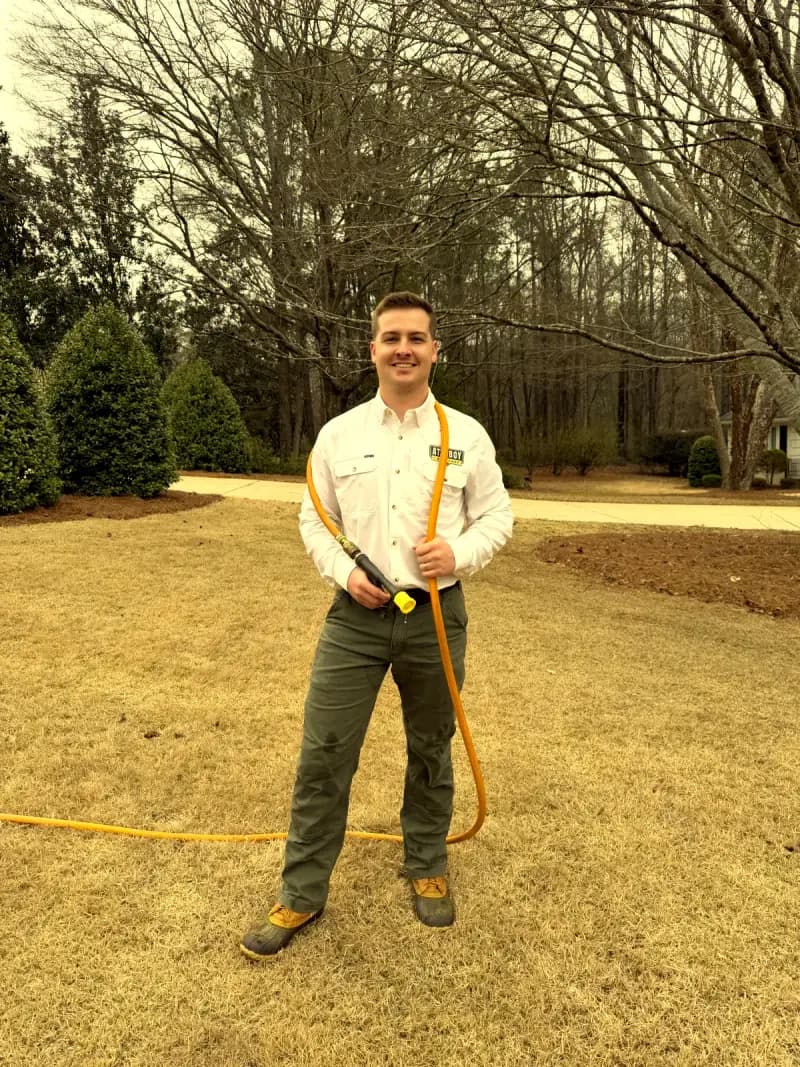
Written by Tyler Warnock
Founder and owner of Attaboy Lawn Care in Macon, Georgia. Licensed Georgia pesticide applicator (Cat. 24, #22324). Tyler treats lawns across Macon, Warner Robins, and the rest of Middle Georgia, and writes these guides from what the region’s bermuda, zoysia, and centipede yards actually do season to season.
Ready for results?
Get a Custom Quote for Your Lawn
Professional lawn care for Macon, Warner Robins, and Middle Georgia. No contracts, no obligation.