
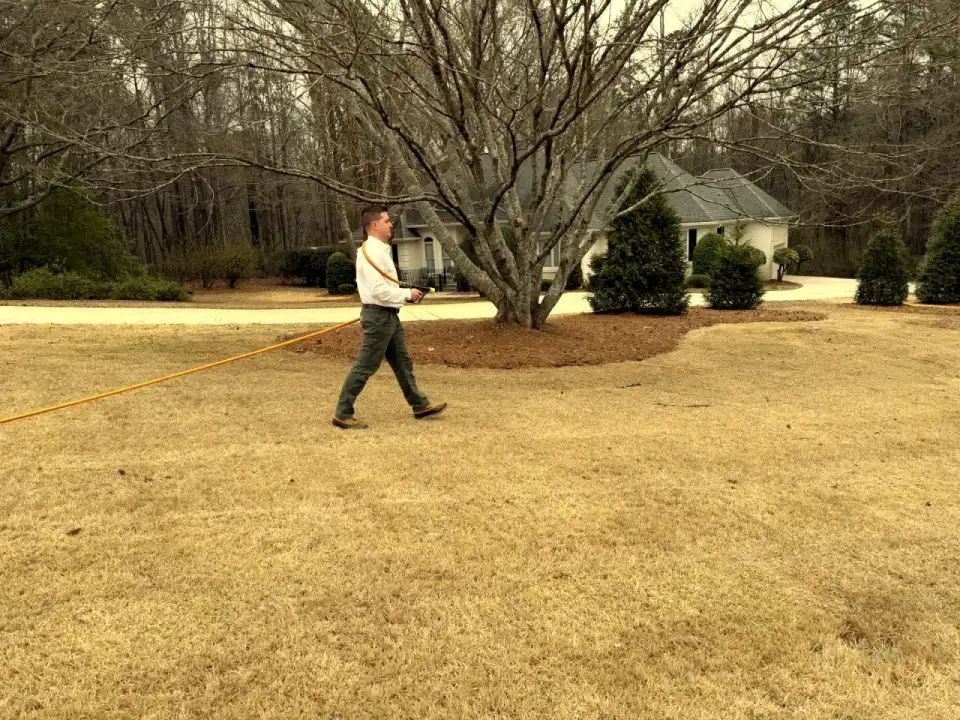
Bermuda Grass Care in Middle Georgia
Bermuda grass is the most common lawn type in Middle Georgia. It's aggressive, heat-tolerant, and resilient. But it still needs the right care to look its best.
Bermuda basics
What Makes Bermuda Grass Thrive in Georgia
Bermuda grass dominates Middle Georgia lawns for good reason. It handles heat well, spreads aggressively to fill in bare spots, and recovers quickly from damage. But it needs full sun, regular mowing, and consistent nutrition to stay thick and healthy.
Without proper care, bermuda gets thin, weedy, and dormant-looking even during the growing season.
Bermuda Quick Facts
Mow at 1-2 inches
Full sun required
Aggressive spreader
Dormant in winter
Most common in Middle Georgia
Seasonal schedule
Bermuda Grass Care by Season
Spring
March - May
- Green-up begins as soil temps hit 65°F
- First mow of the season. Set blade to 1-1.5 inches
- Pre-emergent application window (before crabgrass germinates)
- Light fertilization as active growth starts
Summer
June - August
- Peak growth. Mow frequently to maintain 1-2 inch height
- Heavy fertilization period. Bermuda is hungry during summer
- Watch for armyworms and grub activity
- Water deeply but infrequently, 1 inch per week
Fall
September - November
- Growth slows as temperatures drop
- Last fertilization before dormancy
- Pre-emergent for winter annual weeds (henbit, chickweed)
- Raise mowing height slightly as growth slows
Winter
December - February
- Bermuda goes dormant (turns brown, stops growing)
- Avoid heavy foot traffic on dormant turf
- Minimal maintenance needed
- Post-emergent spot treatments for active winter weeds
Common issues
Problems That Affect Bermuda in Georgia
Large Patch
Brown, circular patches in spring and fall when soil temps are 60-75°F. Bermuda recovers faster than other grasses, but untreated patches can still thin the lawn significantly.
Armyworms
Surface-feeding caterpillars that can strip bermuda bare in days. Most destructive in late summer. Fast treatment is critical.
Scalping
Cutting bermuda too short exposes stems and stresses the plant. Keep your blade at 1-2 inches and never remove more than one-third of the blade.
Winter Weed Invasion
When bermuda goes dormant, weeds like henbit, chickweed, and poa annua move in. Pre-emergent in fall is the best defense.
Expert service
How Attaboy Keeps Your Bermuda Healthy
Our treatment programs are built around bermuda's seasonal needs in Middle Georgia. We handle the fertilization, weed control, disease prevention, and insect protection. You just enjoy the lawn.
Guides
Bermuda Grass Treatment Guides
Get started
Give Your Bermuda the Treatment It Deserves
Bermuda grass is tough, but it still needs professional care to reach its full potential. Get a custom treatment plan started within 24 hours.