
Spring Lawn Care Checklist for Georgia
Spring is when your lawn sets the tone for the rest of the year. Here is a step-by-step checklist to get your Middle Georgia yard off to a strong start.
Spring lawn care in Middle Georgia runs in a set order. Pre-emergent first, then fertilizer, then mowing and watering. Put down pre-emergent when soil hits 55 degrees at 4-inch depth, usually late February to mid-March, and follow up in mid-April. Wait to fertilize until the lawn is fully green, mid-April for bermuda. Raise your mowing height for the first cuts.
Pre-Emergent Timing Is Everything
In Middle Georgia, soil temperatures hit the 55-degree threshold sometime in late February to mid-March. That is your window for the first round of pre-emergent herbicide. Apply too early and it breaks down before crabgrass germinates. Apply too late and seeds have already sprouted. Soil thermometers are cheap insurance. Check temps at 4 inches deep for the most accurate reading.
Timing varies across the region more than most people expect. Properties in south Bibb County near the Ocmulgee River tend to warm up faster than yards in north Houston County with heavier clay. If you live on a south-facing slope or near a paved driveway, your soil will hit 55 degrees a full week before your neighbor up the hill.
The safest strategy for most Middle Georgia lawns is a split application. Put down the first round in late February, then follow up with a second round in mid-April. This extends the pre-emergent barrier through late spring when goosegrass and spurge start germinating. One heavy application cannot cover that entire window.
Target soil temps of 55 degrees at 4-inch depth for pre-emergent application.
A split application (February and April) gives longer-lasting coverage than one heavy dose.
Do not aerate after applying pre-emergent. It breaks the chemical barrier.
First Fertilizer Application
Wait until your warm-season grass is fully green and actively growing before fertilizing. For bermuda in Middle Georgia, that usually means mid-April. For centipede, wait even longer, usually late April or early May. Fertilizing dormant or semi-dormant grass wastes product and can feed weeds instead. A balanced slow-release nitrogen fertilizer works best for the first round.
The color of your lawn tells you when it is ready. If you still see brown patches mixed with green, the grass has not fully broken dormancy. Applying nitrogen at this stage forces partial growth that looks uneven and stressed. Be patient. A lawn that greens up on its own schedule builds a stronger root system than one pushed with early fertilizer.
For bermuda lawns in the Macon and Warner Robins area, a 16-4-8 or similar slow-release blend works well for the first application. Centipede lawns need less nitrogen, so look for a 15-0-15 or centipede-specific formula. The iron content matters more than nitrogen for centipede color.
Bermuda can handle more nitrogen than centipede. Centipede lawns burn easily if over-fertilized.
Apply fertilizer to dry grass and water it in within 24 hours.
Never fertilize before the lawn has fully greened up.
Month-by-Month Spring Task Checklist
Spring lawn care in Middle Georgia is not a single event. It is a sequence of tasks spread across three months, each one timed to what the grass actually needs at that moment. Doing things in the right order makes each step more effective.
Rushing the schedule is one of the most common mistakes we see. Homeowners who fertilize in March because the calendar says "spring" end up feeding weeds and burning money. The table below gives you a realistic timeline based on what we see in Bibb and Houston County lawns year after year.
Spring Lawn Care Timeline for Middle Georgia
| Month | Key Tasks | Watch For |
|---|---|---|
| Late February | First pre-emergent application, sharpen mower blades, clean up winter debris | Soil temps approaching 55 degrees |
| March | Monitor green-up progress, spot-treat active winter weeds, check irrigation system | Crabgrass germination in warm spots near pavement |
| Mid-April | First fertilizer (bermuda only), second pre-emergent round, begin regular mowing | Spring dead spot in bermuda, slow green-up in shaded areas |
| Late April to May | Fertilize centipede and zoysia, address bare spots with sod, post-emergent weed treatment | Dollar spot fungus in humid conditions, over-fertilization burn |
Mowing Height and Frequency
Raise your mowing height for the first few cuts of spring. Taller grass shades out weed seedlings and helps the root system recover from winter dormancy. Bermuda does well at 1.5 to 2 inches. Zoysia prefers 2 to 2.5 inches. Centipede should stay at 1.5 to 2 inches. Never remove more than one-third of the blade height in a single mowing.
Most homeowners start mowing too low and too early. Your first mow of spring should be slightly higher than your summer maintenance height. Drop down gradually over the next few weeks. This gives the crown of the plant time to harden off before you start cutting aggressively.
Frequency matters as much as height. In March and early April, you might mow every 10 to 14 days. By late April, bermuda is growing fast enough to need weekly cutting. If you let it get too tall between mowings and then scalp it back, you stress the plant and open the door for weeds.
Sharpen mower blades before the first spring cut. Dull blades tear grass and leave brown tips.
Mow when the grass is dry to get a clean cut and prevent clumping.
Bermuda benefits from lower heights (1 to 1.5 inches) once fully established in late spring.
Inspect for Winter Damage
Walk your yard and look for bare spots, dead patches, or areas where the grass did not come back. Thinned-out areas are prime real estate for weeds. Spring dead spot is common in bermuda lawns that had heavy thatch going into winter. Address bare spots early with targeted overseeding or sod patches before weeds colonize those areas.
Pay close attention to areas under tree canopy and along the north side of your house. These spots get less sun, stay cooler longer, and are the last to green up. Do not assume they are dead until late April. Bermuda in heavy shade may simply be slow to wake up.
If you find circular dead patches 6 inches to 3 feet across in bermuda, that is likely spring dead spot. This fungal disease does its damage in fall and winter, but you do not see the results until spring green-up reveals the dead rings. These areas need core aeration, reduced nitrogen in fall, and sometimes fungicide treatment the following season.
Watering and Irrigation Check
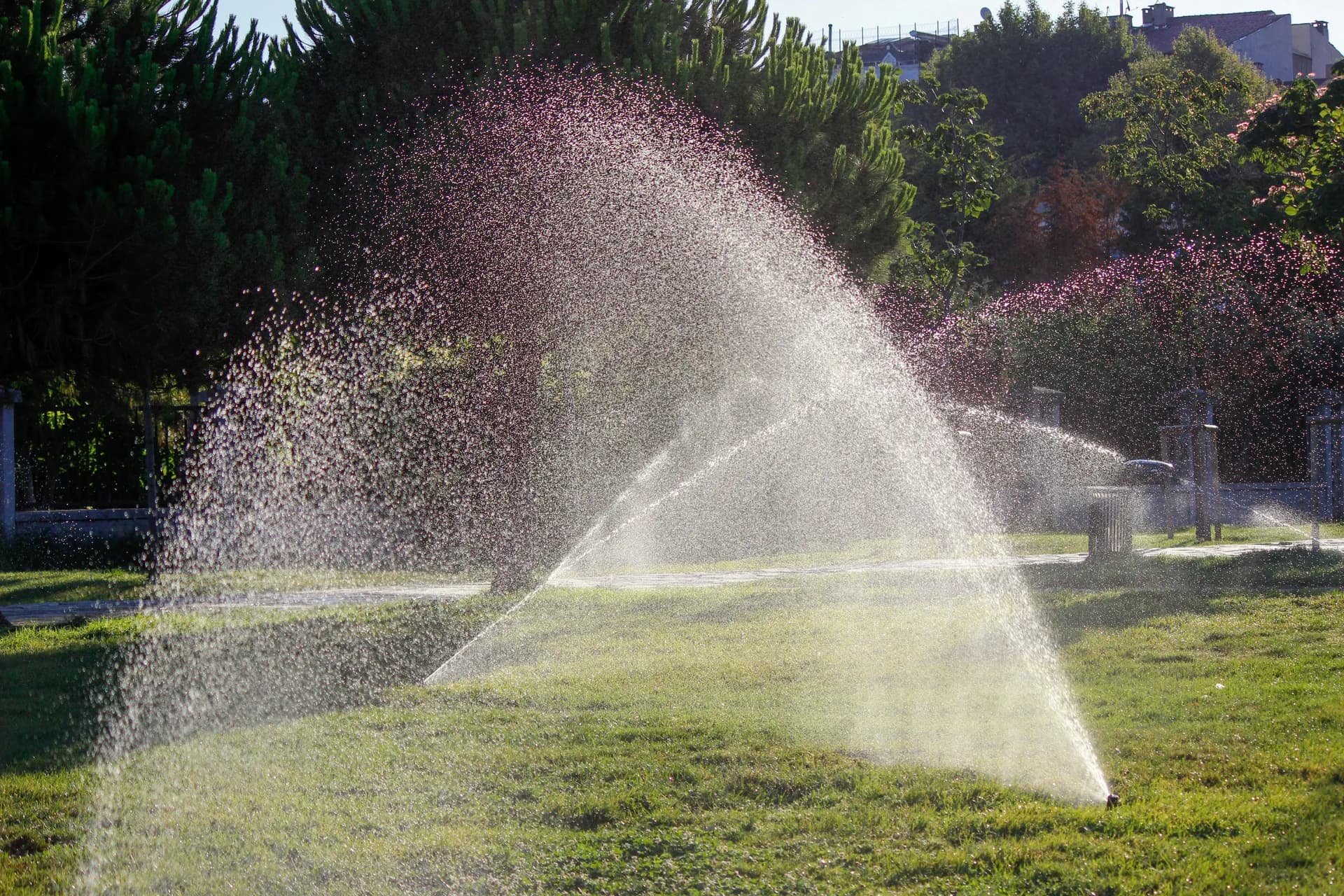
Early spring is the right time to audit your irrigation system before you actually need it. Run each zone manually and walk the yard while it runs. Look for broken heads, misaligned sprinklers spraying the sidewalk, and dry spots where coverage does not overlap.
In Middle Georgia, spring rainfall is usually enough to keep lawns hydrated through April. You should not need to run your irrigation regularly until late April or May when temperatures climb and rain becomes less consistent. Over-watering in spring promotes shallow roots and creates conditions for fungal disease, especially large patch in zoysia and St. Augustine.
When you do start irrigating, target 1 inch per week total (including rainfall). Water deeply 2 to 3 times per week rather than a little bit every day. Deep watering pushes roots down into the soil profile, which pays off when summer heat arrives.
Run each irrigation zone for 2 minutes to check for leaks and broken heads before the season starts.
Do not water daily in spring. Most lawns need supplemental irrigation only in dry stretches.
Set your controller to skip watering after rainfall of half an inch or more.
Post-Emergent Weed Control
Pre-emergent stops weed seeds from germinating, but it does nothing for weeds that are already growing. If you see clover, henbit, dandelions, or chickweed actively growing in your spring lawn, those need a post-emergent herbicide to knock them out.
For broadleaf weeds in warm-season lawns, a three-way herbicide (2,4-D, dicamba, and mecoprop) handles most of what shows up in Middle Georgia. Apply on a calm day when temperatures are between 60 and 85 degrees. Avoid treating during a heat wave or when the lawn is drought-stressed, because the herbicide can damage the turf along with the weeds.
Timing your post-emergent application is straightforward: treat weeds when they are small and actively growing. A small clover plant in March takes one application to kill. That same clover in May, after it has spread and matured, might take two rounds and a lot more product.
When to Call a Professional
Spring lawn care involves chemicals, timing windows, and equipment that can be hard to get right on your own. Pre-emergent products need precise application rates. Too little and you get no weed barrier. Too much and you risk damaging the turf. Professional applicators calibrate their equipment for the exact coverage your lawn needs.
If your lawn has chronic issues like spring dead spot, persistent weed pressure, or uneven growth, a professional can diagnose the root cause instead of just treating symptoms. We see a lot of lawns where homeowners have been fighting the same problems for years because the underlying soil compaction or pH imbalance was never addressed.
At Attaboy Lawn Care, our core program covers weed control and fertilization on the right schedule for your grass type and location in Middle Georgia. We handle the timing so you do not have to guess. Get a quote and we will have your first treatment down within 24 hours of signing up.
Key takeaways
What to Remember
Apply pre-emergent when soil temperature hits 55 degrees at 4-inch depth, usually late February to mid-March in Middle Georgia.
Do not fertilize until your lawn is fully green and actively growing. For bermuda, that means mid-April at the earliest.
Raise your mowing height for the first few spring cuts, then gradually lower it over several weeks.
Audit your irrigation system in early spring before you need it. Over-watering in spring invites fungal disease.
Address bare spots and winter damage early, before weeds fill in those open areas.
A split pre-emergent application (February and April) provides better coverage than a single heavy dose.
Common questions
Frequently Asked Questions
When should I start spring lawn care in Georgia?
Start monitoring soil temperatures in late February. Pre-emergent should go down when soil hits 55 degrees at 4-inch depth. Fertilization waits until the lawn is fully green, usually mid-April for bermuda.
Can I aerate in spring?
Yes, but only if you have not applied pre-emergent. Aeration breaks the pre-emergent barrier. If you plan to aerate, do it before the pre-emergent application or wait until fall for the best results.
What is the best fertilizer for spring in Middle Georgia?
For bermuda, use a balanced slow-release fertilizer like 16-4-8 for the first application. Centipede lawns need less nitrogen, so a 15-0-15 or iron-heavy formula works better. Always wait until the grass is fully green before applying.
How often should I mow in spring?
Start with every 10 to 14 days in March and early April as growth is slow. By late April and May, bermuda grows fast enough to need weekly mowing. Never remove more than one-third of the blade height at once.
Should I water my lawn in spring?
Middle Georgia usually gets enough spring rain to keep lawns healthy through April. Start supplemental irrigation in late April or May when temperatures rise and rain becomes less reliable. Target 1 inch per week total.
How do I know if I have spring dead spot?
Spring dead spot shows up as circular dead patches 6 inches to 3 feet across in bermuda lawns. The grass around the patches greens up normally, but the affected areas stay brown. This disease does its damage during fall and winter, so you do not see it until spring.
Keep reading
Related Resources
More in Seasonal
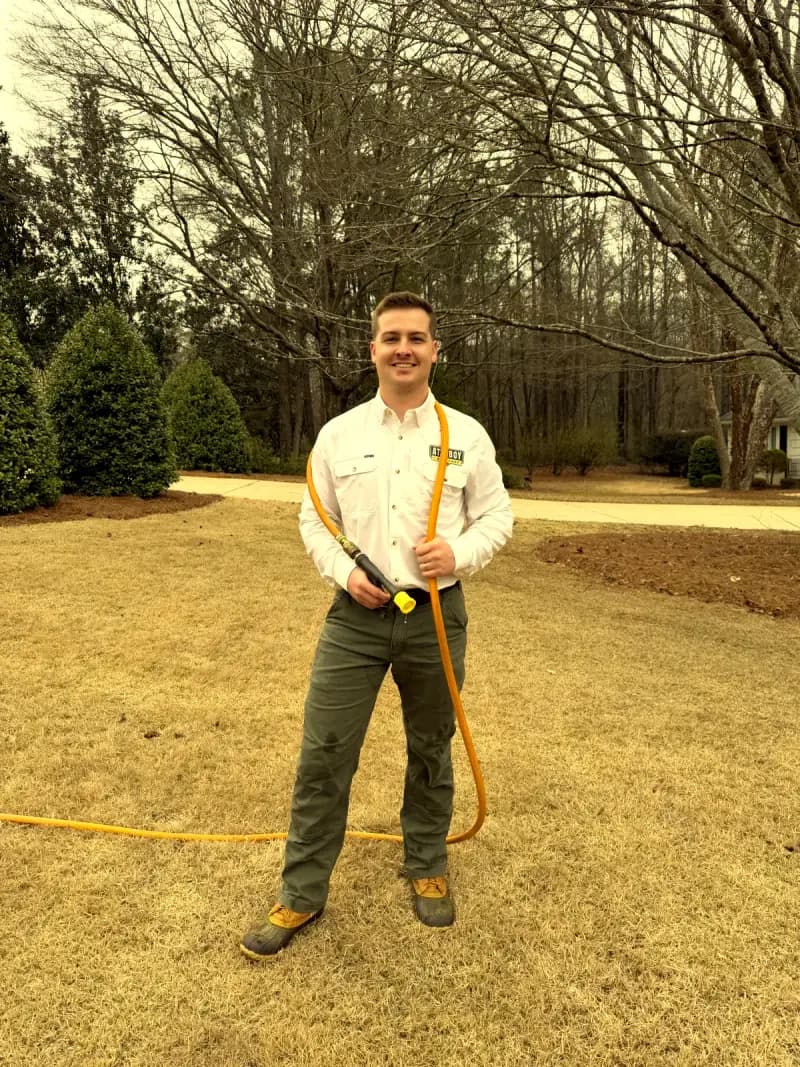
Written by Tyler Warnock
Founder and owner of Attaboy Lawn Care in Macon, Georgia. Licensed Georgia pesticide applicator (Cat. 24, #22324). Tyler treats lawns across Macon, Warner Robins, and the rest of Middle Georgia, and writes these guides from what the region’s bermuda, zoysia, and centipede yards actually do season to season.
Ready for results?
Get a Custom Quote for Your Lawn
Professional lawn care for Macon, Warner Robins, and Middle Georgia. No contracts, no obligation.