Fall Lawn Preparation Guide for Georgia
Fall is the most underrated season for lawn care in Georgia. What you do now determines how your lawn looks next spring.
Fall is the season that decides how your Middle Georgia lawn looks next spring. Aerate in September when the soil is moist, then apply potassium-heavy fertilizer and lime into the holes within 1 to 2 weeks. Apply pre-emergent after aeration, before soil temperatures drop below 70 degrees. Lower mowing height gradually over 3 to 4 sessions heading into dormancy.
Why Fall Is the Most Important Season
Most homeowners think spring is the big lawn care season. In Middle Georgia, fall is where the real work happens. Everything you do from September through November sets the stage for how your lawn comes out of winter dormancy. Skip fall treatments and you spend all spring playing catch-up.
Fall is when you build root reserves, control winter weeds before they germinate, relieve compaction from summer traffic, and harden the grass against cold. The grass is still actively growing in September and early October, which means it can absorb nutrients and recover from aeration. By November, growth slows and your window closes.
Fall Task Timeline
Fall lawn prep in Middle Georgia spans roughly three months. Each task has an ideal window, and the order matters. Here is the timeline we follow for Bibb and Houston County properties.
Fall Lawn Prep Timeline for Middle Georgia
| Timing | Task | Notes |
|---|---|---|
| Early September | Fall pre-emergent application | Targets winter annual weeds before germination |
| Mid-September | Core aeration | Soil must be moist. Schedule after a rain event. |
| Late September | Fall fertilizer (potassium-heavy) | Apply within 1 to 2 weeks after aeration for best absorption |
| Early October | Large patch fungicide (if history of disease) | Preventive application before soil temps drop below 70 |
| October | Lime application (if soil test calls for it) | Apply into aeration holes for faster pH correction |
| October to November | Lower mowing height gradually | Drop half an inch per mowing over 3 to 4 sessions |
| November | Final mow and cleanup | Remove leaves and debris before dormancy |
Fall Aeration Window
Early fall is the ideal time to aerate warm-season lawns in Middle Georgia. The grass is still actively growing but temperatures are dropping, which means less heat stress during recovery. Core aeration pulls small plugs from the soil, breaking up clay compaction and opening channels for water and nutrients to reach the root zone. For best results, aerate in September or early October while bermuda and zoysia are still growing.
Timing aeration right after a good soaking rain makes a big difference. Dry Middle Georgia clay is nearly impossible to penetrate, and the aerator will skip over the surface without pulling full-depth plugs. Water the lawn thoroughly the day before if rain has not done the job. You want the soil moist 3 to 4 inches down but not muddy.
After aeration, leave the plugs on the lawn. They break down within 2 to 3 weeks and deposit a thin layer of organic matter that feeds the soil surface. This is also the best time to apply lime, fertilizer, or soil conditioner because the aeration holes give these amendments a direct path to the root zone.
Aerate when soil is moist but not saturated. Dry clay is too hard for proper plug depth.
Leave the cores on the lawn. They break down naturally and return nutrients to the soil.
Apply lime and fertilizer within a week after aeration for maximum benefit.
Fall Pre-Emergent for Winter Weeds
Georgia does not get a weed break in winter. Cool-season weeds like henbit, chickweed, and annual bluegrass germinate in fall and grow through winter. A fall pre-emergent application in mid-September to early October creates a barrier that stops these seeds from taking root. This is separate from the spring pre-emergent. Both are necessary for year-round control.
The fall pre-emergent window is tighter than spring. You need to apply before soil temperatures drop below 70 degrees, which is when cool-season weed seeds start germinating. In most years, early September is the right time for Middle Georgia. If you wait until late October, the weeds have already sprouted and a pre-emergent will not help.
One important note: if you plan to aerate, apply the pre-emergent after aeration, not before. Aeration punches holes through the chemical barrier and reduces its effectiveness. Schedule aeration first, then apply pre-emergent a few days later.
Final Fertilizer Application
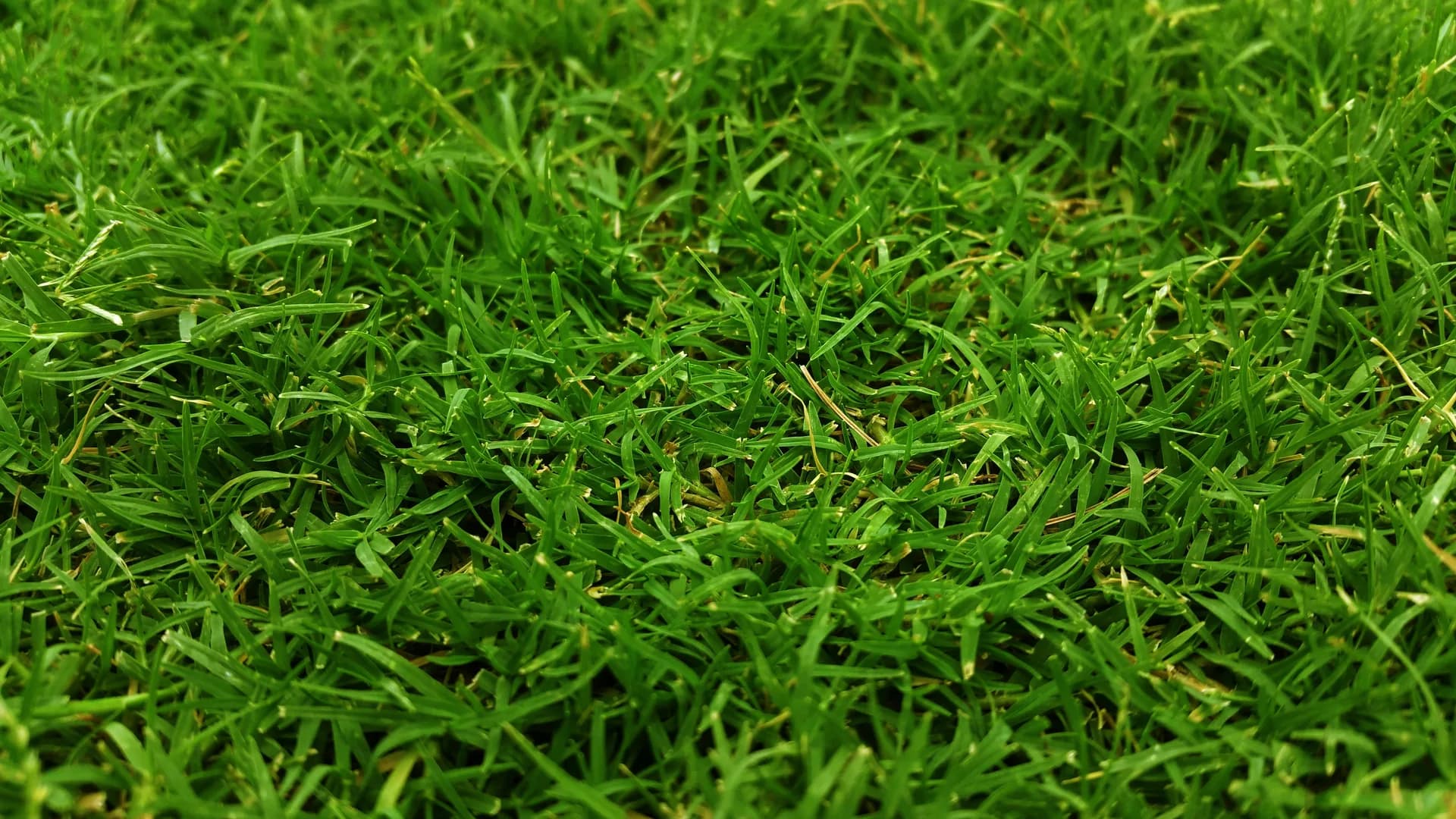
A fall fertilizer application with higher potassium content strengthens cell walls and improves cold hardiness. Apply in late September or early October while the grass can still take up nutrients. This is not the time for heavy nitrogen. You want to harden off the grass, not push new growth heading into dormancy.
Look for a fertilizer where the third number on the bag (potassium) is higher than or equal to the first number (nitrogen). A 12-0-12 or 15-0-15 blend works well for fall application on bermuda and zoysia. Centipede lawns should get minimal fertilizer in fall, or skip it entirely if the lawn is healthy.
Apply the fall fertilizer within 1 to 2 weeks after core aeration. The aeration holes allow the product to reach the root zone directly instead of sitting on the soil surface. This combination of aeration plus fall fertilizer is one of the highest-value treatments for Middle Georgia lawns.
Choose a fertilizer with a higher potassium number (the third number on the bag).
Apply 4 to 6 weeks before the first expected frost.
Do not fertilize after the lawn begins going dormant.
Large Patch Prevention
Fall is when large patch disease begins its infection cycle. The fungus activates when soil temperatures drop between 50 and 70 degrees and moisture is present. If your lawn has a history of large patch (circular dead patches that showed up in spring), a preventive fungicide application in late September or early October can stop the disease before it takes hold.
Reducing excess nitrogen in fall is one of the best cultural controls for large patch. Heavy nitrogen creates tender, lush growth that the fungus exploits. That is another reason why the fall fertilizer should be potassium-heavy rather than nitrogen-heavy.
Lower Mowing Height Gradually
As growth slows in October and November, gradually lower your mowing height over several cuts. This reduces thatch buildup heading into winter and exposes the crown of the plant to sunlight. Do not scalp the lawn in one pass. Drop the height by half an inch per mowing session until you reach the lower end of the recommended range for your grass type.
For bermuda, you can bring the height down to 1 inch for the final winter mow. Zoysia should finish at about 1.5 inches. Centipede and St. Augustine should not be cut below 1.5 inches because their crown sits higher and scalping can cause lasting damage.
Leaf removal matters in fall too. A thick layer of fallen leaves blocks sunlight and traps moisture against the grass, creating conditions that favor fungal disease. Mulch small amounts of leaves into the lawn with your mower, but rake or blow heavy accumulations off the turf.
Key takeaways
What to Remember
Fall is the most important season for lawn care in Middle Georgia. Everything you do now determines spring green-up quality.
Aerate in September when soil is moist, then apply fall fertilizer and lime into the aeration holes.
Apply fall pre-emergent in early September before winter weeds germinate. Do not wait past early October.
Use potassium-heavy fertilizer in fall, not heavy nitrogen. Potassium hardens the grass for winter.
If your lawn has large patch history, apply preventive fungicide when soil temps drop below 70 degrees.
Lower mowing height gradually over 3 to 4 sessions heading into dormancy.
Common questions
Frequently Asked Questions
When should I apply fall pre-emergent in Georgia?
Apply fall pre-emergent in early September before soil temperatures drop below 70 degrees. This targets winter annuals like annual bluegrass and henbit before they germinate.
Should I fertilize my lawn in fall?
Yes. A potassium-heavy fall application strengthens root systems before winter dormancy. Avoid heavy nitrogen after early October in Middle Georgia.
Can I aerate and apply pre-emergent at the same time?
Aerate first, then apply pre-emergent a few days later. Aeration punches holes through the pre-emergent barrier, so applying before aeration reduces the effectiveness.
When should I stop mowing in fall?
Keep mowing until the grass stops growing, usually late November in Middle Georgia. Gradually lower the height over several sessions rather than stopping abruptly at summer height.
Should I remove leaves from my lawn in fall?
Yes. A thick layer of leaves blocks sunlight and traps moisture, promoting fungal disease. Mulch light amounts with your mower. Rake or blow heavy accumulations off the turf.
Keep reading
Related Resources
More in Seasonal
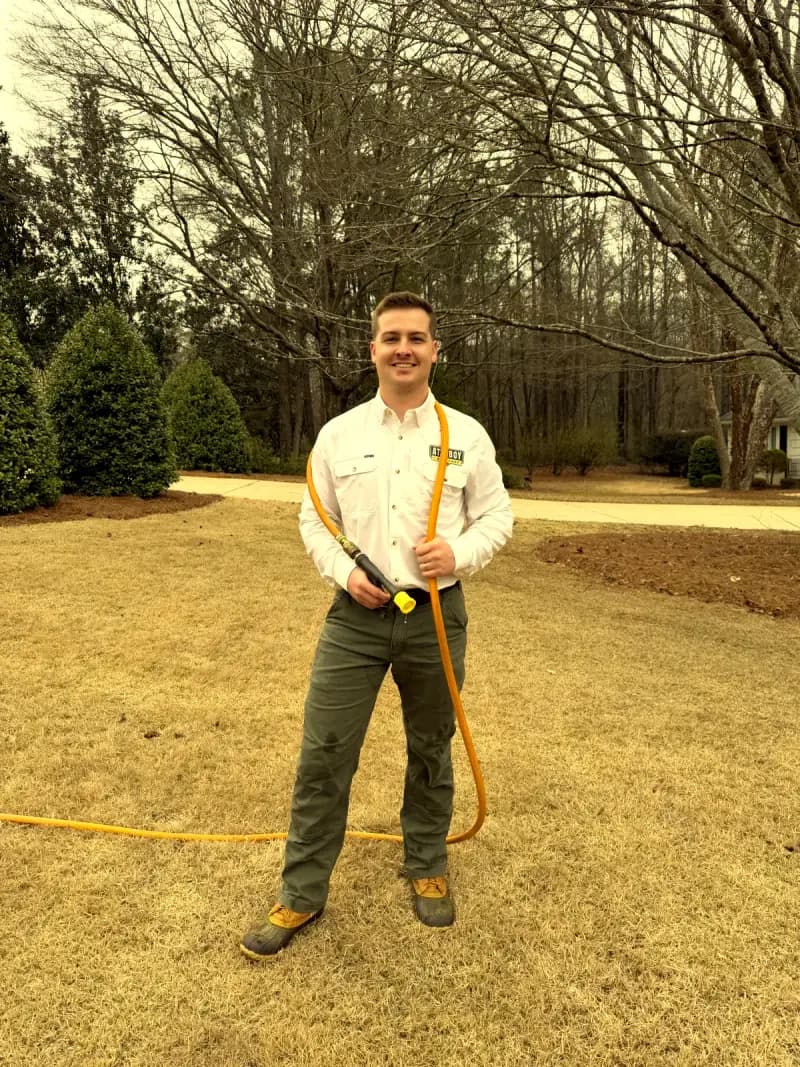
Written by Tyler Warnock
Founder and owner of Attaboy Lawn Care in Macon, Georgia. Licensed Georgia pesticide applicator (Cat. 24, #22324). Tyler treats lawns across Macon, Warner Robins, and the rest of Middle Georgia, and writes these guides from what the region’s bermuda, zoysia, and centipede yards actually do season to season.
Ready for results?
Get a Custom Quote for Your Lawn
Professional lawn care for Macon, Warner Robins, and Middle Georgia. No contracts, no obligation.