
How Often Should You Water Your Lawn in Georgia
Overwatering is just as damaging as underwatering in Georgia. Here is a practical guide to getting your irrigation schedule right.
Most Middle Georgia lawns need about 1 inch of water per week, rain included, delivered in 2 to 3 deep sessions instead of a daily sprinkle. Water between 5 and 9 AM so the blades dry before dark. Track rainfall with a rain gauge and adjust for your soil and grass type. On clay soil, use a cycle and soak approach to prevent runoff.
The One-Inch Rule
Most warm-season grasses in Middle Georgia need about 1 inch of water per week during the growing season. That includes rainfall. Many homeowners water on autopilot without accounting for natural precipitation, which leads to overwatering. A simple rain gauge in your yard tells you exactly how much nature is providing so you can supplement the rest.
One inch per week is a starting point, not an absolute rule. Sandy-clay soils in Houston County drain faster and may need slightly more. Heavy Bibb County clay holds moisture longer and may need less. Your grass type matters too. Bermuda is more drought-tolerant than centipede or St. Augustine. Pay attention to what your lawn is telling you rather than running a fixed schedule all season.
Place a rain gauge in an open area of your yard.
Subtract weekly rainfall from your 1-inch target to determine supplemental irrigation needs.
Sandy soils may need slightly more water. Clay soils hold moisture longer.
Watering Schedule by Season
Your irrigation schedule should change with the seasons. The table below gives you a realistic framework for Middle Georgia lawns. Adjust based on your soil type, grass type, and actual rainfall.
Seasonal Watering Guide for Middle Georgia Lawns
| Season | Frequency | Amount Per Session | Notes |
|---|---|---|---|
| Spring (March to May) | 1 to 2 times per week | 0.3 to 0.5 inches | Rainfall usually supplements. Start irrigation in late April. |
| Summer (June to August) | 2 to 3 times per week | 0.3 to 0.5 inches | Full irrigation effort. Watch for drought stress signs. |
| Fall (September to November) | 1 to 2 times per week | 0.3 to 0.5 inches | Reduce as temperatures cool and growth slows. |
| Winter (December to February) | Every 2 to 3 weeks if dry | 0.5 to 1 inch | Dormant lawns need minimal water. Prevent root desiccation only. |
Frequency and Depth Matter
Water deeply and infrequently rather than lightly every day. Deep watering encourages roots to grow deeper into the soil, which makes the lawn more drought-tolerant. Shallow daily watering keeps roots near the surface where they dry out fast. Two to three watering sessions per week, delivering about a third of an inch each time, beats daily sprinkles every time.
Here is a simple test to see if you are watering deep enough. An hour after watering, push a screwdriver into the soil. It should slide in easily to at least 4 to 6 inches. If it stops at 2 inches, you are not applying enough water per session. Increase your run time rather than adding more watering days.
On Middle Georgia clay soil, water applied too fast runs off before it can soak in. If you see runoff during irrigation, try a cycle-and-soak approach: run each zone for 10 minutes, wait 30 minutes for absorption, then run again. Two shorter cycles absorb better than one long one on clay.
Best Time of Day to Water
Water between 5 AM and 9 AM. Morning watering gives the lawn time to absorb moisture before afternoon heat increases evaporation. It also allows grass blades to dry before nightfall. Wet grass overnight creates ideal conditions for fungal diseases like large patch and dollar spot. Evening watering is the number-one cultural cause of lawn disease in Middle Georgia.
We see the effects of evening watering constantly in Macon and Warner Robins. A lawn that is on a solid fertilization program but watered at 7 PM will develop disease problems that a morning-watered lawn avoids entirely. Changing your irrigation timer from evening to morning is one of the simplest, highest-impact changes you can make.
Set your irrigation timer for early morning, between 5 and 9 AM.
Evening watering promotes fungal disease. It is the most common watering mistake.
Midday watering wastes water to evaporation but will not harm the lawn.
Signs Your Lawn Needs Water
Your lawn tells you when it is thirsty if you know what to look for. The first sign is a blue-gray color shift. Healthy bermuda is bright green. When it starts to stress from drought, the color shifts toward a dull blue-gray. Walk across the lawn and check if your footprints stay visible for more than a few seconds. Healthy, hydrated grass springs back immediately. Drought-stressed grass folds and stays flat.
Wilted leaf blades are another indicator. Bermuda blades curl inward along their length when moisture is low. Centipede and St. Augustine blades fold in half lengthwise. If you see either of these signs, water immediately. Catching drought stress early means the lawn recovers in a day or two. Waiting until the grass turns brown means recovery takes a week or more.
Signs You Are Overwatering
Overwatering is more common than underwatering in Middle Georgia because so many homes have automated irrigation systems running on a fixed schedule. The most obvious sign of overwatering is mushrooms or fungal growth in the lawn. Spongy, constantly wet soil is another giveaway. If your shoes get wet walking across the lawn hours after irrigation stopped, you are applying too much.
Overwatering promotes shallow roots, which makes the lawn less drought-tolerant over time. It also creates conditions for fungal disease and encourages nutsedge, which thrives in waterlogged soil. If you have a nutsedge problem, check your irrigation before reaching for herbicide. Fixing the moisture issue often controls the nutsedge naturally.
Yellow patches in an otherwise green lawn can indicate overwatering in low-lying areas where water pools. These areas stay saturated longer, suffocating roots and inviting disease. Check for irrigation head overlap that creates double coverage in certain zones.
Irrigation System Tips
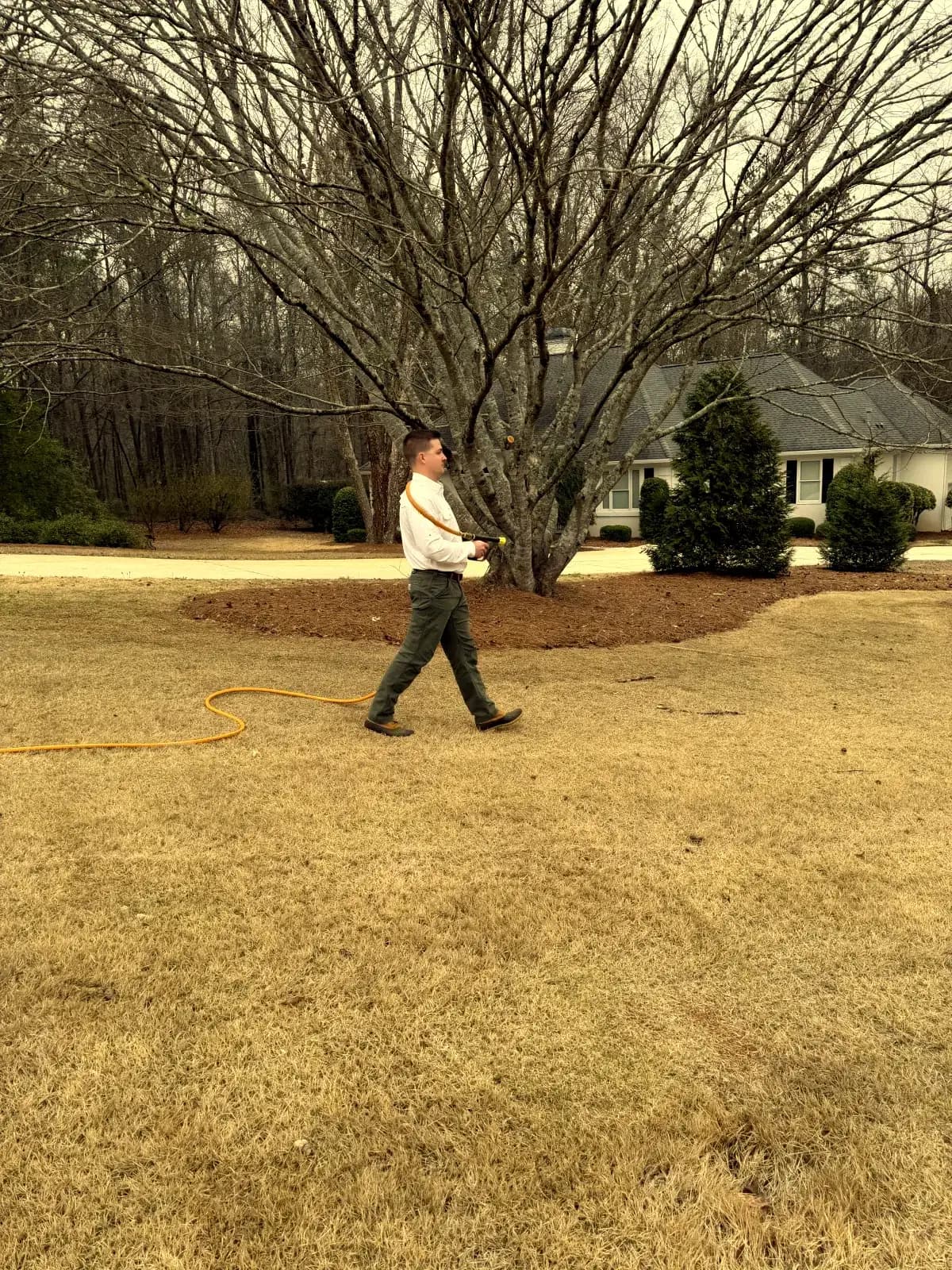
Audit your irrigation system at the start of every season. Run each zone for 2 to 3 minutes and walk the yard while it operates. Look for broken heads, misaligned spray patterns, heads blocked by plant growth, and dry spots where coverage does not overlap.
Place tuna cans or straight-sided cups in several spots across each zone and run the system for 15 minutes. Measure the water in each can to check for even distribution. If some cans have twice as much water as others, you have a coverage problem that wastes water and creates uneven turf.
Install a rain sensor if your system does not have one. A $25 rain sensor prevents your irrigation from running during and after a rainstorm. That alone can reduce water waste by 20 to 30 percent over a season.
Key takeaways
What to Remember
Target 1 inch of water per week total, including rainfall. Use a rain gauge to track natural precipitation.
Water deeply 2 to 3 times per week, not lightly every day. Deep watering builds drought-tolerant roots.
Water between 5 and 9 AM. Evening watering is the number-one cultural cause of lawn disease in Middle Georgia.
On clay soil, use a cycle-and-soak approach to prevent runoff and improve water absorption.
If your footprints stay visible in the grass and the color is blue-gray, the lawn needs water now.
Install a rain sensor on your irrigation system to prevent watering during and after rainfall.
Common questions
Frequently Asked Questions
Can you overwater a lawn in Georgia?
Yes. Overwatering suffocates roots, promotes fungal disease, and wastes water. Waterlogged soil also compacts more easily, especially in Middle Georgia clay.
How do I know if my lawn needs water?
Walk across your lawn. If footprints remain visible for more than a few seconds and the grass has a blue-gray tint, it needs water. Healthy grass springs back immediately.
Should I water my lawn every day in summer?
No. Daily light watering keeps roots shallow and promotes disease. Water deeply 2 to 3 times per week instead. This builds deeper roots and a more drought-tolerant lawn.
How long should I run my sprinklers?
Run each zone long enough to deliver about a third of an inch of water per session. The exact time depends on your sprinkler output. Place a tuna can in the zone and time how long it takes to collect a third of an inch.
Should I water a dormant winter lawn?
Only during extended dry periods. One deep soaking every 2 to 3 weeks prevents root desiccation. Dormant grass does not need regular irrigation.
Keep reading
Related Resources
More in Lawn Tips
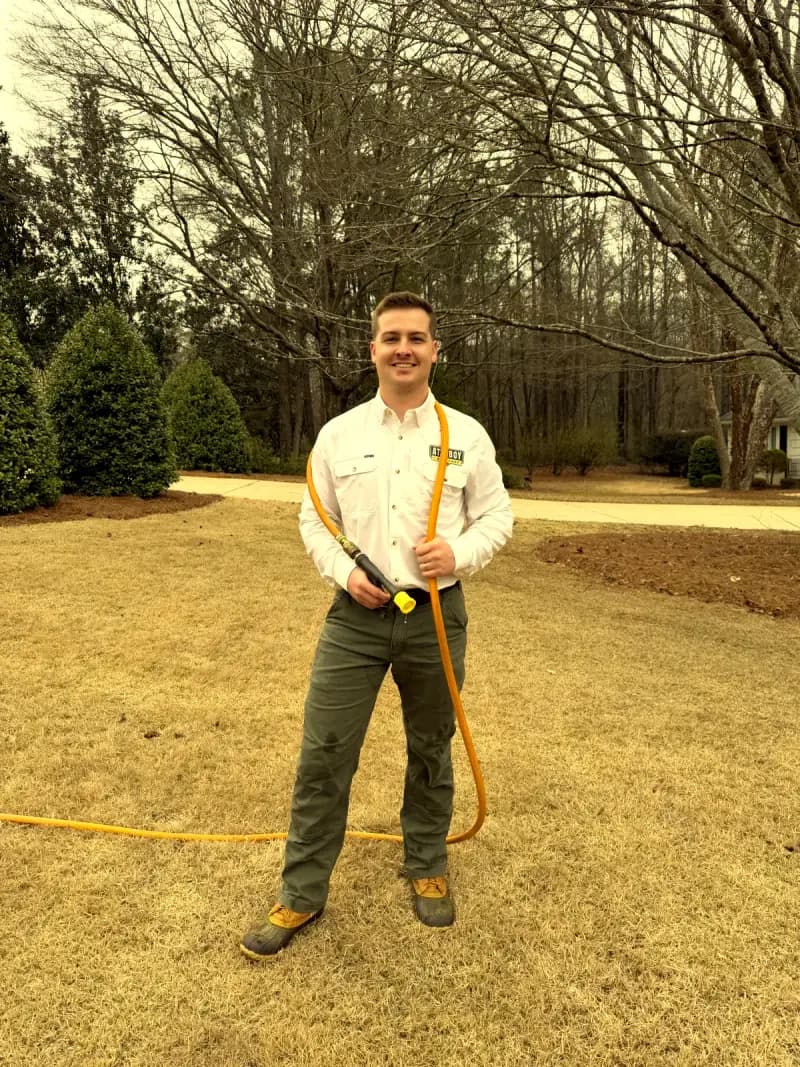
Written by Tyler Warnock
Founder and owner of Attaboy Lawn Care in Macon, Georgia. Licensed Georgia pesticide applicator (Cat. 24, #22324). Tyler treats lawns across Macon, Warner Robins, and the rest of Middle Georgia, and writes these guides from what the region’s bermuda, zoysia, and centipede yards actually do season to season.
Ready for results?
Get a Custom Quote for Your Lawn
Professional lawn care for Macon, Warner Robins, and Middle Georgia. No contracts, no obligation.