Why Your Lawn Turns Brown in Summer
Brown grass in summer has several possible causes. The fix depends on identifying the right one. Here is how to figure out what is actually going on.
Summer browning in Middle Georgia usually comes from heat stress and too little water, but insects, fungal disease, and mowing too short look the same. Water a brown area for 3 to 5 days. If it greens up, the cause was drought. If it stays brown, check for grubs, chinch bugs, or armyworms, then look for disease patterns.
Heat Stress and Drought
The most common cause of summer browning in Middle Georgia is simple heat stress combined with insufficient water. When soil moisture drops and temperatures stay above 90 degrees for extended periods, warm-season grass slows growth and can lose color. Bermuda handles this better than centipede or St. Augustine. Consistent deep watering, not daily sprinkles, is the primary fix.
In Bibb and Houston County, July and August routinely bring 2 to 3 weeks of temperatures above 95 degrees with little rainfall. During those stretches, even well-maintained lawns can lose their green color. The grass is not dead. It is redirecting energy from blade growth to root survival. This is a natural defense mechanism that warm-season grasses developed to handle Southern summers.
The key to preventing heat stress browning is building deep roots before summer hits. That means proper watering habits in spring, correct fertilization timing, and avoiding soil compaction that restricts root growth. A lawn with roots 6 inches deep handles drought far better than one with roots sitting in the top 2 inches of clay.
Insect Damage Mimics Drought
Grubs, chinch bugs, and armyworms all cause browning that looks like drought stress. The key difference: insect-damaged grass does not recover with watering. Grub damage feels spongy and turf pulls up easily. Chinch bug damage concentrates in sunny, hot areas. Armyworm damage appears suddenly and spreads fast. If watering does not green things up within a few days, inspect for insects.
We see armyworm outbreaks in the Macon and Warner Robins area every summer, usually starting in late June. They can chew through a lawn in 48 hours. Grubs do their damage underground where you cannot see it until the turf starts dying in patches. Chinch bugs tend to hit St. Augustine lawns hardest, especially along sidewalks and driveways where reflected heat creates a hot zone.
Grubs: turf pulls up like carpet, spongy feel underfoot.
Chinch bugs: browning along sidewalks and driveways (hot edges).
Armyworms: rapid browning with visible caterpillars in early morning.
If watering does not help within 3 to 5 days, inspect for pests.
Fungal Disease
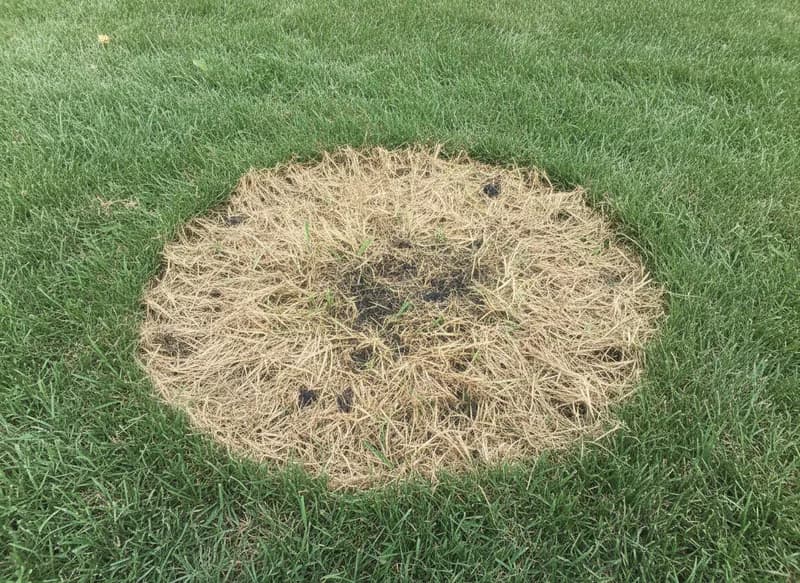
Dollar spot, pythium blight, and other summer diseases can brown out sections of your lawn. Dollar spot creates small straw-colored patches 2 to 6 inches across. Pythium shows up as greasy, wilted patches that appear overnight in hot, humid conditions. Disease-related browning often has distinct patterns or textures that differ from even drought stress.
Middle Georgia humidity creates prime conditions for fungal outbreaks. Evening watering makes it worse by leaving grass blades wet overnight. If you see circular patches, rings, or spots with distinct edges, disease is likely the cause. A healthy lawn with proper fertility and air circulation resists most fungal infections. When disease does take hold, targeted fungicide applications stop it from spreading.
Improper Mowing Practices
Cutting grass too short in summer removes the canopy that shades the soil and protects roots from heat. Scalped lawns brown out fast. Mowing with dull blades tears grass instead of cutting it, creating ragged brown tips across the entire lawn. Raise your mower height in summer and sharpen blades regularly.
Each grass type has a specific summer mowing height. Bermuda should stay at 1.5 to 2 inches. Centipede at 1.5 to 2 inches. St. Augustine at 3 to 4 inches. Zoysia at 1.5 to 2.5 inches. Cutting below these ranges in July or August practically guarantees browning within a week. Follow the one-third rule: never remove more than one-third of the blade height in a single mow.
How to Tell the Difference
The fix for summer browning depends entirely on the cause. Water a brown patch for 3 to 5 days. If it greens up, the problem was drought stress. If it stays brown, check for insects by pulling on the turf and looking in the thatch layer. If the turf is firmly rooted and no insects are present, disease is the most likely cause.
Location gives you clues too. Browning in full-sun areas near pavement points to heat stress or chinch bugs. Browning in shaded, humid areas suggests disease. Browning that appears overnight across large sections is almost always armyworms. Random spongy patches that pull up easily are grub damage. Pattern recognition saves time and gets you to the right solution faster.
Take photos and compare them day to day. Drought stress is gradual and uniform. Disease tends to spread in patterns, circles, rings, or streaks. Insect damage is patchy and irregular. Having a visual record helps you (or your lawn care provider) make the right call.
When to Water and When to Wait
If your lawn goes brown from heat stress, you have two options: water it consistently to keep it green, or let it go dormant and protect the roots with minimal irrigation. Both work. What does not work is watering inconsistently, going heavy for a few days, then stopping for a week, then soaking it again.
Dormant grass needs about half an inch of water every 10 to 14 days just to keep the roots alive. Active grass needs about 1 inch per week split into 2 to 3 sessions. Morning watering between 5 and 9 AM is best. It gives blades time to dry before nightfall and reduces disease risk. Never water in the evening during summer. Wet grass overnight in 80-degree weather is a fungal outbreak waiting to happen.
Building a Lawn That Resists Summer Browning
The best defense against summer browning starts months before the heat arrives. A spring fertilization program builds the nutrient reserves grass needs to push through July and August. Pre-emergent weed control prevents weeds from stealing water and nutrients. Core aeration in spring or early fall reduces compaction so roots can grow deeper.
Soil health is the foundation. Middle Georgia clay compacts easily and holds water near the surface while staying dry below. That shallow moisture zone keeps roots shallow too. A soil conditioning program breaks up compaction over time and improves the soil structure that roots depend on. Healthy soil means deeper roots, and deeper roots mean a lawn that stays green longer into summer.
We build our weed control and fertilization programs around the Middle Georgia growing calendar. Each application is timed to give your lawn what it needs before the next stress event hits. If you want a lawn that handles summer heat without turning into a brown field, the work starts in February. Get a quote.
When to Call a Professional
If your lawn has been brown for more than 2 weeks and watering has not helped, it is time to get a professional diagnosis. Continued decline despite irrigation usually means insects, disease, or a soil problem that needs targeted treatment. The longer you wait on these issues, the more turf you lose.
Attaboy Lawn Care serves Macon, Warner Robins, Byron, Bonaire, Centerville, Kathleen, and Bolingbroke. Our insect control and disease control add-on programs catch problems early and treat them before they wipe out large sections of your lawn. Get a quote on keeping your lawn green through the worst of Georgia summer.
Key takeaways
What to Remember
Heat stress is the most common cause of summer browning in Middle Georgia, but insects and disease can look identical.
If watering does not green up brown patches within 3 to 5 days, the cause is not drought. Check for insects or disease.
Never water your lawn in the evening during summer. Wet grass overnight invites fungal disease.
Each grass type has a specific summer mowing height. Cutting below it in July or August guarantees browning.
Deep roots built through proper spring care are the best defense against summer heat stress.
Professional diagnosis saves time and turf when browning persists despite consistent watering.
Common questions
Frequently Asked Questions
Is my brown lawn dead or dormant?
Pull a small section of grass. If the roots are firm and white, the lawn is dormant and will recover. If roots are brown and mushy, that section is dead. Dormant warm-season grass in Middle Georgia typically recovers once temperatures cool and moisture returns.
Should I water a brown lawn in summer?
If dormant, water lightly once every 10 to 14 days to protect roots without forcing the lawn out of dormancy. If you want to keep it green, commit to 1 inch per week split across 2 to 3 morning sessions. Inconsistent watering does more harm than no watering at all.
Why is my lawn brown even though I water it?
Brown grass that does not respond to watering is usually caused by insect damage, fungal disease, or soil compaction preventing water from reaching the roots. Check for grubs by pulling on the turf. Look for disease patterns like circles or rings. If the soil is hard and water runs off instead of soaking in, compaction is the issue.
Can I fertilize a brown lawn in summer?
Do not apply nitrogen fertilizer to a stressed or dormant lawn. It forces blade growth the roots cannot support and can burn already-struggling turf. Wait until the lawn recovers and is actively growing before resuming fertilization. A fall application after the heat breaks is the safer option.
When will my dormant lawn green up again?
Dormant warm-season grass in Middle Georgia typically starts recovering in mid-September when nighttime temperatures drop below 80 degrees and fall rains return. Full green-up takes 2 to 4 weeks once conditions improve. Bermuda recovers fastest. Centipede and St. Augustine take longer.
Keep reading
Related Resources
More in Lawn Tips
Written by Tyler Warnock
Founder and owner of Attaboy Lawn Care in Macon, Georgia. Licensed Georgia pesticide applicator (Cat. 24, #22324). Tyler treats lawns across Macon, Warner Robins, and the rest of Middle Georgia, and writes these guides from what the region’s bermuda, zoysia, and centipede yards actually do season to season.
Ready for results?
Get a Custom Quote for Your Lawn
Professional lawn care for Macon, Warner Robins, and Middle Georgia. No contracts, no obligation.