Armyworm Alert for Georgia Lawns This Season
Armyworms can destroy a healthy lawn in 48 hours. Here is how Middle Georgia homeowners can identify an infestation early and act fast.
Fall armyworms hit Middle Georgia lawns from August through October, and they can chew a healthy yard down to soil in 48 hours. Walk your lawn every few days, watch for bird flocks and sudden brown patches, and run the soapy water flush test. Two or more caterpillars per square foot means treat the same day, then follow up 7 to 10 days later.
What Are Armyworms and Why Georgia Gets Hit Hard
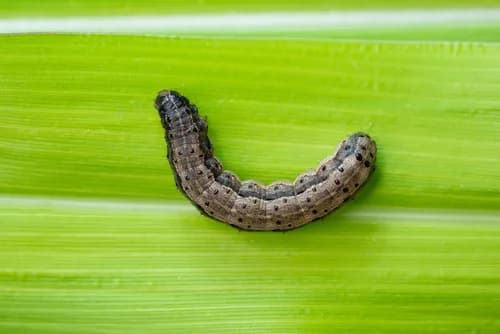
Fall armyworms are caterpillars that feed on grass blades, chewing lawns down to the soil surface. They migrate north from tropical regions each year and hit Georgia between August and October. Middle Georgia's warm, humid conditions accelerate population growth, and an infestation can go from invisible to devastating in less than 48 hours.
The scientific name is Spodoptera frugiperda. The adult moth lays eggs in clusters of up to 200 on grass blades or nearby surfaces. Those eggs hatch in 2 to 4 days, and larvae start feeding immediately. In their early stages they are tiny and nearly invisible. By the time most homeowners notice them, the caterpillars are in their final growth stage, eating nonstop before pupating. One generation can produce the next within 30 days, so multiple waves can hit the same lawn in a single season.
Middle Georgia towns including Macon, Warner Robins, Byron, Bonaire, Centerville, Kathleen, and Bolingbroke sit directly in the path of fall armyworm migration. Warm nights and afternoon thunderstorms create ideal conditions for moth flight and egg laying. Lawns next to agricultural fields or open land face higher risk because armyworms move from crop stubble into residential turf. Armyworms arrive in Georgia every year. The only variable is how hard your neighborhood gets hit.
Egg-laying moths are drawn to lush, actively growing turf. A well-irrigated lawn in late summer is a prime target. Yards adjacent to sod farms, cornfields, or overgrown lots tend to see pressure first. Moths also follow weather fronts moving in from the Gulf Coast, so an incoming storm system is a reason to check your lawn the next morning.
Check your lawn the morning after a warm, humid night in August or September. Moths lay eggs overnight.
Yards bordering open fields or agricultural land face higher armyworm pressure.
Lush, irrigated turf attracts egg-laying moths. Do not slack on monitoring just because your lawn looks healthy.
Sign up for University of Georgia Extension armyworm alerts for Middle Georgia during peak season.
First Signs of Armyworms: What to Look For
The first sign is often increased bird activity on your lawn. Starlings, grackles, and robins flock to yards with armyworms and feed on the caterpillars. If you see birds working over a section of your lawn, walk out and look closely at the grass line. That is your earliest warning.
Grass develops brown patches that spread rapidly and look scalped. Check the edge of damaged areas in early morning or late evening when armyworms are most active. They hide in thatch during the heat of the day. A soapy water flush test confirms their presence within 5 minutes.
Armyworm damage has a distinct pattern. It starts at one edge of the yard and moves across in a front. That is where the name comes from. The feeding front can cover 10 feet or more per day. Behind it, grass is chewed to the soil. Ahead of it, grass still looks normal. A sharp line between healthy and destroyed turf is a strong armyworm indicator.
The timing is another giveaway. Armyworm damage appears suddenly. Your lawn can look fine on Monday and be half gone by Wednesday. Drought stress and disease develop gradually over weeks. If brown patches show up overnight or expand by the hour, check for caterpillars immediately. Do not assume it is heat stress and wait. By the time you realize it is armyworms, they may have crossed the entire yard.
Mix 2 tablespoons of dish soap in a gallon of water and pour over a 2-foot square area at the edge of damage.
Armyworms surface within 5 minutes if present. Count what you find per square foot.
Two or more caterpillars per square foot means treat now.
Check during early morning or evening when caterpillars are actively feeding at the surface.
Increased bird activity on your lawn is often the first visible sign of infestation. Do not ignore it.
The Armyworm Life Cycle and Treatment Timing
Understanding the armyworm life cycle lets you time your response correctly. Adult moths arrive in Middle Georgia on weather fronts from the Gulf Coast starting in late July. They lay eggs on grass blades, fences, and building walls near turf areas. Eggs hatch in 2 to 4 days depending on temperature.
Larvae go through six growth stages over about 14 days. The first few stages cause minimal damage because the caterpillars are small. Most destruction happens in the final two stages when larvae reach 1 to 1.5 inches and consume large amounts of grass. After feeding, they burrow into the soil to pupate. Adult moths emerge about 10 days later and start the cycle again.
In Middle Georgia, two to three generations typically occur per season. The first wave in August is often light and goes unnoticed. The second wave in September is usually the worst because populations have multiplied. A third wave in October can catch homeowners off guard after they assume the threat has passed. Monitoring cannot stop until the first frost.
The table below maps each life stage to the Georgia season so you know when to act and when to watch.
Armyworms complete their life cycle and pupate regardless of treatment, but your lawn will not recover on its own if populations are high. A single wave of caterpillars in their final feeding stage can strip bermuda down to bare dirt before they finish. Waiting them out is not a strategy.
Fall Armyworm Life Cycle Timeline: Middle Georgia
| Life Stage | Duration | Peak Months in Georgia | Damage Level |
|---|---|---|---|
| Egg | 2–4 days | August – October | None |
| Early larvae (stages 1–3) | 5–7 days | August – October | Low: small caterpillars, minor feeding |
| Late larvae (stages 4–6) | 7–10 days | August – October | Severe: rapid defoliation |
| Pupa (in soil) | 10–14 days | August – November | None |
| Adult moth | 7–10 days | July – October | None (lays next generation eggs) |
What Kills Armyworms: Treatment Options That Work
Speed is everything with armyworms. Once you confirm them, treat the same day. Professional-grade insecticides containing bifenthrin or chlorantraniliprole provide fast knockdown. Apply in the late afternoon when armyworms begin feeding. Water the product in lightly (about 0.1 inches) to move it into the thatch layer where caterpillars hide during the day.
Liquid insecticide applications give faster results than granular products for active infestations. A follow-up application 7 to 10 days after the first catches any larvae that hatch from eggs laid before initial treatment. Skipping the follow-up is the most common mistake homeowners make, and it leads to a second round of damage.
Over-the-counter products containing permethrin or carbaryl work on small areas when you catch an infestation early. Apply at the labeled rate, water it in, and reapply on schedule. The problem is scale. By the time most homeowners notice damage, armyworms have spread across a large portion of the yard, and consumer-grade products often cannot cover that ground at an effective rate. If you are seeing damage spreading across more than 500 square feet, call us at (478) 400-9897 before another day passes.
Natural predators (parasitic wasps, ground beetles, and birds) provide some control, but they cannot keep pace once populations explode. In a full infestation, biological pressure alone will not save your lawn. Factor predators in when deciding whether to treat unaffected areas, not as your primary defense when damage is already visible.
For severe infestations, professional treatment is the right call. We cover an entire yard with the correct product at the correct rate in one visit. Our insect control add-on targets armyworms along with other lawn pests through the full season. Contact us to get a quote.
Apply insecticide in late afternoon. Armyworms feed at the surface after 5 PM.
Water in the treatment lightly after application to push product into the thatch.
Schedule a follow-up treatment 7 to 10 days after the first application to catch newly hatched larvae.
Do not mow right after treatment. Give the product 24 hours to work before cutting.
Recovery After Armyworm Damage and Prevention Going Forward
Bermuda grass recovers well from armyworm damage if the root system and stolons are intact. Water consistently (1 inch per week split into two or three sessions) and apply a balanced fertilizer about a week after the last treatment. Full recovery for bermuda typically takes 3 to 4 weeks under good conditions. Centipede and zoysia recover more slowly, often 6 to 8 weeks. If damage reached the crown of the plant, re-sodding may be necessary in the worst areas.
Do not push nitrogen during recovery. Heavy fertilization produces fast but weak growth and raises the risk of large patch as temperatures drop in the fall. Mow at the correct height, 1 to 1.5 inches for bermuda. Avoid heavy foot traffic on damaged sections until the grass fills back in. If sections remain bare after 4 to 6 weeks of consistent care, plan to re-sod those areas.
St. Augustine, which some homeowners in Bonaire and Kathleen grow, carries the highest risk for permanent damage. It grows slowly and does not spread as aggressively as bermuda. Zoysia falls in between. Centipede has a shallow root system that makes it more vulnerable even though armyworms find it less appealing than bermuda.
You cannot prevent armyworm moths from arriving. They fly in on weather systems. What you can control is how quickly you detect them and how healthy your lawn is when they arrive. A well-fertilized lawn with strong root density recovers faster even when armyworms hit. Walk your yard every few days from late July through October and look for the warning signs: bird flocks, fresh brown patches, caterpillars at the grass line.
Reducing thatch buildup with fall core aeration improves insecticide penetration and gives caterpillars less cover during the day. Our insect control add-on includes monitoring and treatment for armyworms during peak season. When pressure is high in the area, we apply preventive treatments before your lawn takes visible damage. Get a quote to add insect control to your program.
Water damaged areas 1 inch per week in two or three sessions, not daily shallow watering.
Wait one week after the last insecticide treatment before applying fertilizer.
Keep mowing height at 1 to 1.5 inches for bermuda during recovery. Do not scalp recovering turf.
Reduce thatch with fall core aeration to improve future insecticide penetration.
Mark bare sections after 6 weeks. If they have not filled in, plan to re-sod those spots.
Key takeaways
What to Remember
Armyworms can destroy a lawn in 48 hours. Early detection and same-day treatment are the only reliable defense.
Walk your lawn every few days from late July through October and watch for bird flocks, sudden brown patches, and caterpillars at the grass line.
The soapy water flush test confirms armyworm presence in 5 minutes. Mix 2 tablespoons of dish soap per gallon and pour over a 2-foot square at the damage edge.
Two or more caterpillars per square foot means treat now.
A follow-up treatment 7 to 10 days after the first application catches newly hatched larvae. Skipping it is the most common reason damage returns.
Bermuda recovers in 3 to 4 weeks with consistent watering and balanced fertilizer. Centipede, zoysia, and St. Augustine recover more slowly and may need re-sodding in severely damaged areas.
Common questions
Frequently Asked Questions
Are there armyworms in Georgia every year?
Yes. Fall armyworms migrate into Georgia from the Gulf Coast every year between late July and October. The severity varies by season, but Middle Georgia homeowners in Macon, Warner Robins, and surrounding areas should monitor every year without exception. Warm, wet summers tend to produce heavier pressure.
What are the first signs of armyworms in my lawn?
The first sign is usually a flock of birds working over a section of your lawn. They are feeding on the caterpillars. After that, look for small brown patches that expand rapidly and a sharp line between healthy and chewed-down grass. Check the edge of damage in early morning or evening when caterpillars are at the surface. The soapy water flush test (2 tablespoons of dish soap per gallon poured over a 2-foot square) confirms their presence within 5 minutes.
What kills armyworms instantly?
Professional-grade insecticides containing bifenthrin or chlorantraniliprole work within hours of contact. Apply in the late afternoon, water in lightly, and schedule a follow-up treatment 7 to 10 days later to catch newly hatched larvae. Over-the-counter products with permethrin or carbaryl work on small, early infestations but rarely provide enough coverage for a full-yard outbreak.
Will armyworms go away on their own?
They complete their life cycle and eventually pupate regardless of treatment, but your lawn will not survive a heavy infestation untreated. Caterpillars in their final feeding stages can strip bermuda down to bare dirt in two to three days. Waiting them out means re-sodding instead of recovering naturally.
Can a lawn recover from armyworm damage?
Bermuda grass usually recovers fully within 3 to 4 weeks if the root system and stolons are intact. Water 1 inch per week in two or three sessions and apply a balanced fertilizer about a week after the last treatment. Centipede and St. Augustine recover more slowly and may need re-sodding in heavily damaged areas. If bare patches remain after 6 weeks of consistent care, plan to re-sod.
What keeps armyworms away from my lawn?
You cannot stop moths from arriving, but you can limit damage. Monitor your lawn every few days from late July through October, reduce thatch with fall core aeration to improve insecticide penetration, and add professional insect control to your lawn care program. Early detection and same-day treatment are more reliable than any preventive product used alone.
When is armyworm season in Georgia?
August through October is peak armyworm season in Middle Georgia. Infestations can appear earlier in warm years. Start monitoring in late July. A third wave in October catches homeowners off guard after they assume the season is over. Monitor until the first frost.
Should I fertilize after armyworm damage?
Yes, but wait about a week after the last insecticide treatment. Apply a balanced fertilizer to support regrowth. Avoid overloading nitrogen. Pushing too much growth too fast weakens recovering turf and raises the risk of large patch as fall temperatures arrive in Middle Georgia.
Keep reading
Related Resources
More in Pest & Disease Alerts
Written by Tyler Warnock
Founder and owner of Attaboy Lawn Care in Macon, Georgia. Licensed Georgia pesticide applicator (Cat. 24, #22324). Tyler treats lawns across Macon, Warner Robins, and the rest of Middle Georgia, and writes these guides from what the region’s bermuda, zoysia, and centipede yards actually do season to season.
Ready for results?
Get a Custom Quote for Your Lawn
Professional lawn care for Macon, Warner Robins, and Middle Georgia. No contracts, no obligation.