Signs of Grub Damage in Georgia Lawns
White grubs feed on grass roots below the surface, causing damage that looks like drought stress. Here is how to tell the difference and take action.
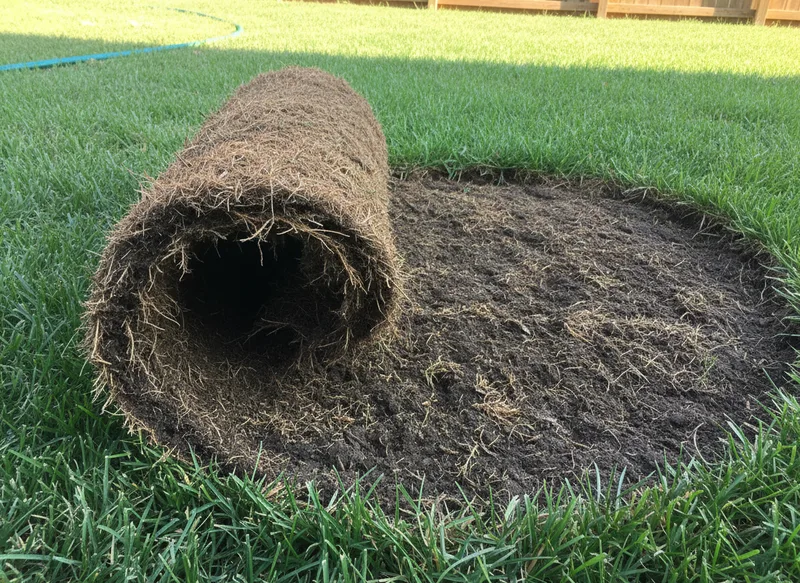
Grub damage shows up as irregular brown patches that do not respond to watering, turf that feels spongy and peels up like carpet, and animals digging for larvae. Do the tug test. Pull back a 1-foot square section of damaged turf and count white C-shaped grubs in the top 2 to 3 inches. More than 5 per square foot means treat.
What Grubs Do to Your Lawn
White grubs are the larval stage of Japanese beetles, June beetles, and masked chafers. They live in the soil and feed on grass roots, severing the connection between the plant and its water supply. The damage looks like drought stress because that is essentially what is happening: the grass cannot take up water anymore. Grub damage typically shows up in late summer through fall when larvae are largest and feeding most aggressively.
In Middle Georgia, the most common grub species come from Japanese beetles and masked chafers. Adult beetles lay eggs in the soil during June and July. Those eggs hatch into tiny larvae that begin feeding on roots immediately. By August and September, the larvae have grown to about an inch long and are eating constantly. This is when the visible damage appears.
A single grub does not cause noticeable harm. The problem is density. When 8, 10, or 15 grubs occupy one square foot of soil, they sever enough roots to kill the grass above them. Homeowners across Macon, Warner Robins, Byron, and Centerville deal with grub damage every fall, often mistaking it for drought until the turf starts peeling up.
How to Identify Grub Damage
Grub-damaged grass feels spongy underfoot and pulls up easily, like loose carpet. If you can peel back a section of turf and see white C-shaped larvae in the top 2 to 3 inches of soil, you have grubs. More than 5 grubs per square foot is the treatment threshold for most warm-season grasses. Irregular brown patches that do not respond to watering are a strong indicator.
The "tug test" is the simplest diagnostic. Grab a handful of brown grass at the edge of a damaged area and pull. If the turf lifts up with almost no resistance, the roots are gone. Healthy grass resists pulling because the root system anchors it. Grub-damaged grass comes up like a rug because there is nothing holding it down.
Watch for secondary signs too. Armadillos, skunks, raccoons, and flocks of birds digging in your yard are hunting grubs. If you wake up to torn-up patches of turf, the animals are telling you something. They can smell grubs in the soil and will tear your lawn apart to get to them. The animal damage is often worse than the grub damage itself.
Pull back a 1-foot square section of damaged turf and count visible grubs.
More than 5 per square foot warrants treatment.
Grub-damaged turf peels up like a carpet because roots are severed.
Animals digging in your lawn (armadillos, skunks, birds) are hunting grubs.
Grub Damage vs Drought Stress
Grub damage and drought stress look almost identical from a distance. Both cause brown, wilted patches. Both show up in late summer when temperatures are high. The difference is how the grass responds to water. Drought-stressed turf recovers within a day or two of deep watering. Grub-damaged turf does not recover no matter how much you water, because the roots are gone.
Location is another clue. Drought stress usually appears first in the sunniest, most exposed areas and follows a somewhat uniform pattern. Grub damage shows up in irregular patches that do not follow sun exposure patterns. You might see a dead spot in the middle of an otherwise healthy, well-watered section of lawn. That randomness points to grubs.
If you have been watering consistently and brown patches keep expanding, stop guessing and do the tug test. Pull up a section of damaged turf and look for the white C-shaped larvae. Five minutes of investigation saves weeks of wasted water and frustration.
The Grub Life Cycle in Middle Georgia
Understanding when grubs are most vulnerable helps you time treatment for maximum results. Adult beetles emerge from the soil in late May through June in Middle Georgia. They mate, feed on landscape plants for a few weeks, then lay eggs in the soil. Japanese beetles prefer well-watered turf for egg laying because the moist soil keeps eggs from drying out.
Eggs hatch in about two weeks, usually by mid-July. The tiny first-instar larvae start feeding on roots near the soil surface. They grow through three larval stages over the next 6 to 8 weeks. By September, they are in their third instar, fully grown, and causing the most damage. As soil temperatures drop in late October and November, grubs burrow deeper, sometimes 8 to 12 inches down, to overwinter.
They return to the root zone the following spring to feed briefly before pupating and emerging as adult beetles. This spring feeding window is short and usually does not cause visible damage. The fall feeding period is what destroys lawns.
Grub Treatment Timing
Preventive grub treatment applied in late spring or early summer targets newly hatched larvae when they are small and close to the surface. Products containing imidacloprid or chlorantraniliprole provide season-long control. Curative treatments for active infestations use faster-acting products like trichlorfon. Curative applications work best in late summer when grubs are still feeding in the top soil layer.
Timing matters more than product choice. The best preventive window in Middle Georgia is June through early July, before eggs hatch. Products applied during this window sit in the soil waiting for larvae. When grubs hatch and start feeding, they ingest the product immediately. This is far more effective than trying to kill large, well-established grubs in September.
If you missed the preventive window and are seeing damage now, curative treatment still works. The key is applying while grubs are in the top 2 to 3 inches of soil. Once they burrow deep for winter, no product will reach them. In Middle Georgia, the curative window runs from August through mid-October. After that, you are waiting until next year for prevention.
Professional Grub Treatment vs DIY
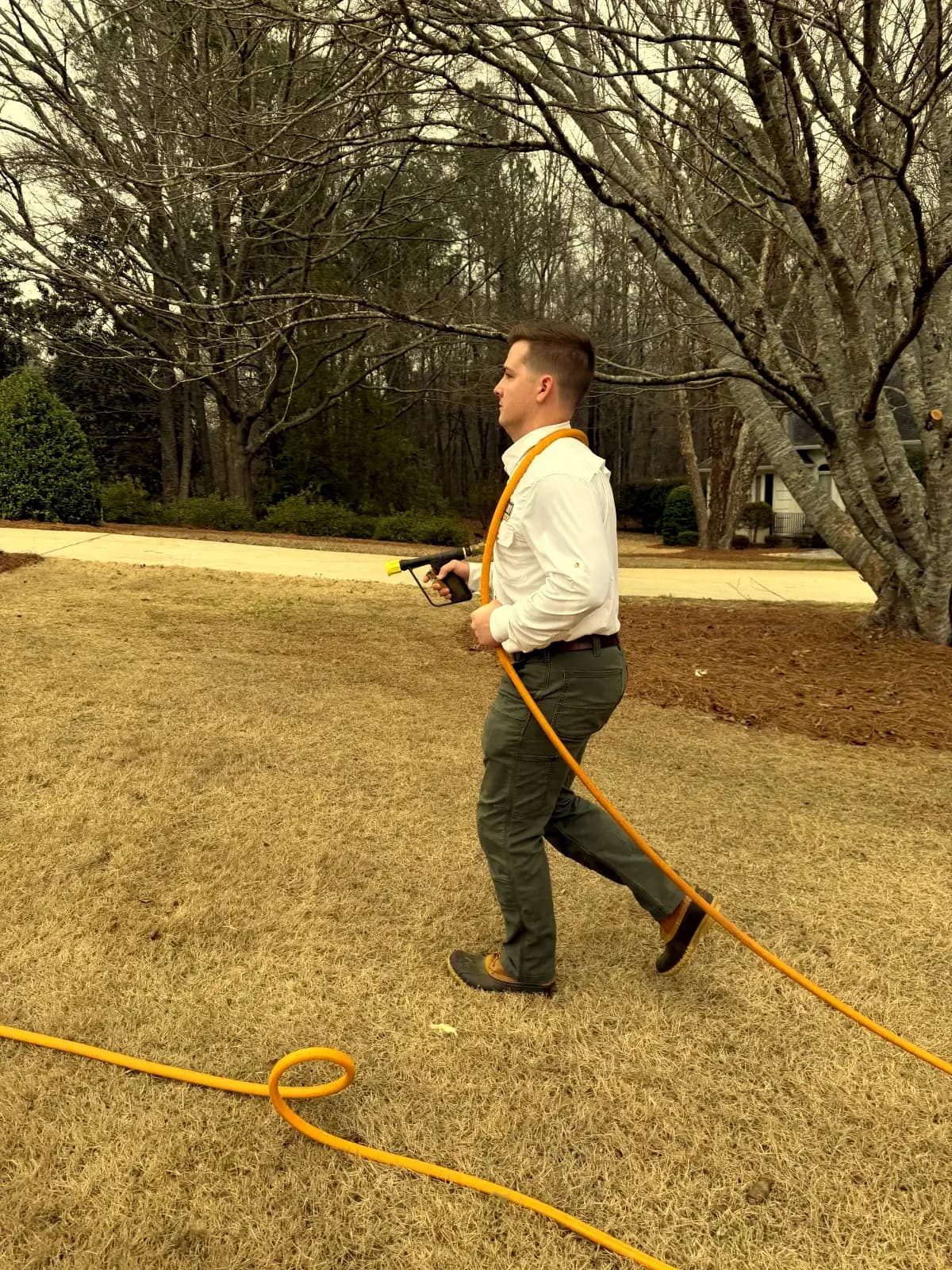
Homeowners can buy grub control products at any garden center. For prevention, granular products containing imidacloprid or chlorantraniliprole work well when applied at the correct rate and watered in properly. The catch is that most homeowners underestimate how much product they need or do not water it in within the required timeframe.
Grub control products must reach the root zone to work. That means watering the product in with at least half an inch of irrigation within 24 hours of application. Spreading granules on dry soil and hoping for rain is not enough. Professional applicators know the exact rate for your soil type and grass species, and we make sure the product gets where it needs to go.
Our insect control add-on covers grub prevention as part of a broader pest management approach. We apply preventive treatment during the optimal window for Middle Georgia and monitor for breakthrough activity through the fall. If you are tired of guessing or have dealt with grub damage before, get a quote to add insect control to your program.
Preventing Future Grub Problems
A healthy, well-maintained lawn tolerates low grub populations without visible damage. Proper fertilization, watering, and soil health give your grass the root density to withstand some feeding. Annual preventive insecticide applications during peak egg-laying season (June through July in Middle Georgia) provide the most reliable protection.
Healthy turf can handle 5 to 8 grubs per square foot without showing damage. The root system is dense enough that losing a few roots does not matter. A weak, thin lawn shows damage at much lower grub counts. This is why our core program of weed control and fertilization is the foundation. Strong turf resists pest damage better than stressed turf.
Avoid overwatering your lawn during June and July. Adult beetles prefer moist soil for egg laying. Lawns that receive heavy irrigation during peak egg-laying season attract more beetles and end up with higher grub counts. Water deeply but less frequently, and let the soil surface dry between sessions.
Repairing Grub-Damaged Turf
Once grubs are controlled, the damaged areas need help recovering. Bermuda grass fills in bare spots relatively quickly if surrounding turf is healthy. Water the damaged areas consistently and apply a balanced fertilizer to support regrowth. You should see new stolons creeping into bare areas within 2 to 3 weeks during the growing season.
For larger bare patches, overseeding is not an option with warm-season grasses. Bermuda, centipede, and zoysia do not establish well from seed in most home lawn situations. Sod or plugs are the fastest path to filling in dead areas. Install sod as soon as grubs are confirmed dead, water daily for the first two weeks, then transition to a normal watering schedule.
If grub damage occurred in October or November, you may be better off waiting until spring to repair. Laying sod in late fall gives the grass very little time to root before winter dormancy. The sod can dry out and die over the winter. Spring sodding, once soil temperatures are consistently above 65 degrees, gives the new turf the entire growing season to establish.
Key takeaways
What to Remember
Grub damage looks like drought stress, but the turf does not recover with watering. Do the tug test: if grass pulls up like carpet, check for grubs.
More than 5 white grubs per square foot is the treatment threshold. Count them by pulling back a 1-foot square section of damaged turf.
Preventive treatment in June or July is far more effective than curative treatment in September. Timing is everything.
Animals tearing up your lawn, including armadillos, skunks, and birds, are hunting grubs. Their digging is a reliable early warning sign.
A well-fertilized lawn tolerates low grub populations without visible damage. Strong roots are your best natural defense.
Water grub control products into the soil within 24 hours of application. Product sitting on dry soil does not reach the larvae.
Common questions
Frequently Asked Questions
How do I check for grubs in my lawn?
Pull back a one-square-foot section of turf in the damaged area. If you find more than five white grubs in that space, treatment is recommended.
When is grub treatment most effective in Georgia?
Preventive treatment in June or July stops grubs before they cause damage. Curative treatment works from August through mid-October while grubs are still near the surface. After October, they burrow too deep for products to reach.
What animals dig up lawns looking for grubs?
Armadillos, skunks, raccoons, and birds all dig for grubs. If you see torn-up patches of turf in the morning, animals are likely hunting grubs beneath the surface. The animal damage often looks worse than the grub damage itself.
Can my lawn recover from grub damage on its own?
Bermuda grass recovers well if the surrounding turf is healthy and grubs are eliminated. Larger bare patches may need sod. Centipede and zoysia recover more slowly. In all cases, consistent watering and fertilization speed up the process.
Why does my lawn have brown patches even though I water regularly?
If brown patches do not improve with consistent watering, the roots may be severed by grubs. Do the tug test. Grab a handful of brown grass and pull. If it lifts with no resistance, grubs have destroyed the root system and watering alone will not fix it.
Keep reading
Related Resources
More in Pest & Disease Alerts
Written by Tyler Warnock
Founder and owner of Attaboy Lawn Care in Macon, Georgia. Licensed Georgia pesticide applicator (Cat. 24, #22324). Tyler treats lawns across Macon, Warner Robins, and the rest of Middle Georgia, and writes these guides from what the region’s bermuda, zoysia, and centipede yards actually do season to season.
Ready for results?
Get a Custom Quote for Your Lawn
Professional lawn care for Macon, Warner Robins, and Middle Georgia. No contracts, no obligation.