How to Prevent Large Patch Disease
Large patch is the most common fungal disease in Middle Georgia warm-season lawns. Prevention starts with understanding what triggers it.
Large patch starts in fall when soil temperatures drop below 70 degrees, so prevention happens months before you see the damage. Apply preventive fungicide in mid to late September and again 4 weeks later. Cut fall nitrogen, reduce thatch with core aeration, improve drainage in spots where water pools, and water early in the morning instead of the evening.
What Is Large Patch Disease
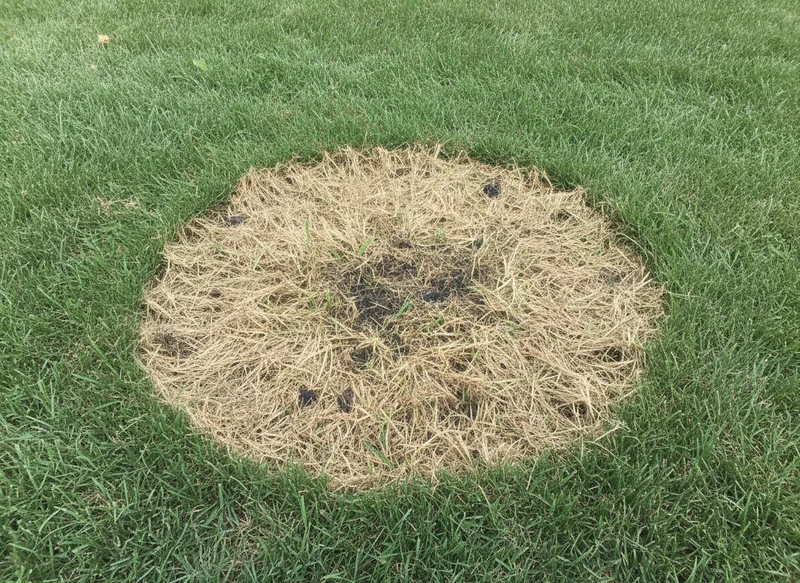
Large patch (Rhizoctonia solani) is a fungal disease that affects warm-season grasses including bermuda, zoysia, centipede, and St. Augustine. It is often mistakenly called brown patch, but brown patch is a different disease that targets cool-season grasses. In Middle Georgia, large patch is the correct diagnosis. The fungus attacks the leaf sheath at the soil level, causing circular patches of yellowing and thinning grass that can range from a few feet to several yards across.
The naming confusion causes real problems. When homeowners search for "brown patch treatment" and follow advice written for cool-season grasses, they apply the wrong products at the wrong time. That is why getting the name right matters. If you have bermuda, zoysia, centipede, or St. Augustine in Middle Georgia, the disease you are dealing with is large patch.
Zoysia and St. Augustine are the most susceptible to large patch in our area. Bermuda can get it too, but bermuda recovers faster because of its aggressive growth habit. Centipede is vulnerable, especially lawns that have been over-fertilized with nitrogen.
When Large Patch Is Most Active
Large patch is most active when soil temperatures are between 50 and 70 degrees Fahrenheit, which means fall and spring in Middle Georgia. The disease actually starts in fall, progresses through winter, and continues into spring before going dormant in summer heat. Many homeowners first notice it in spring when grass greens up everywhere except the affected patches.
Here is what makes large patch tricky: the damage you see in spring actually started 4 to 6 months earlier. By the time you notice the dead circles in April, the fungus has been working since October. That is why preventive treatment in fall is so much more effective than trying to cure it in spring.
In a typical Middle Georgia year, the infection window opens in mid-September when soil temps drop below 70 and closes in late November when temps drop below 50. The second window opens in late February and runs through April. The fall window is when the disease establishes. The spring window is when it finishes off weakened turf.
Fall and spring are peak infection periods in Middle Georgia.
Soil temps between 50 and 70 degrees combined with moisture trigger outbreaks.
The disease goes dormant in summer when soil temperatures exceed 80 degrees.
How to Identify Large Patch
Large patch creates circular or irregular patches of yellowing, thinning grass. The edges of the patch are the active infection zone, where you will see a ring of orange-brown grass transitioning from healthy to affected turf. Pull a blade from this edge and check where it attaches to the stolon. If it pulls out easily and the base is dark and rotted, that confirms large patch.
Patches start small, sometimes just a foot or two across, and expand outward over weeks and months. In severe cases, patches can grow to 10 feet or more in diameter. The center of older patches may start to recover while the edges continue spreading, creating a ring pattern rather than a solid dead circle.
Do not confuse large patch with other circular patterns. Spring dead spot (a different fungal disease in bermuda) creates similar-looking patches but kills the grass completely, including roots and stolons. Grub damage can also create irregular dead areas but feels spongy underfoot and the turf peels back like carpet. Large patch leaves the root system mostly intact.
Cultural Prevention Practices
The best prevention is reducing conditions that favor the fungus. Avoid excess nitrogen in fall because it creates tender growth that the fungus exploits. Improve drainage in areas where water pools. Reduce thatch buildup through aeration. Water in the morning so grass dries before evening. Avoid mowing wet grass and clean mower blades between sections to prevent spreading spores.
Thatch management is especially important for large patch prevention. A thatch layer thicker than half an inch creates a consistently moist environment at the soil surface where the fungus thrives. Core aeration in early fall reduces thatch and improves air circulation at the crown of the plant.
Watering habits matter more than most homeowners realize. The fungus needs sustained moisture at the soil surface to infect the leaf sheath. Morning watering allows blades to dry by midday. Evening watering keeps the grass wet overnight, giving the fungus exactly what it needs. If you only make one change to prevent large patch, switch your irrigation timer to early morning.
Reduce fall nitrogen applications. Potassium is safer in fall.
Improve soil drainage and reduce thatch through core aeration.
Water early in the morning, never in the evening.
Clean mower blades between affected and healthy areas to avoid spreading spores.
Fungicide Treatment Options
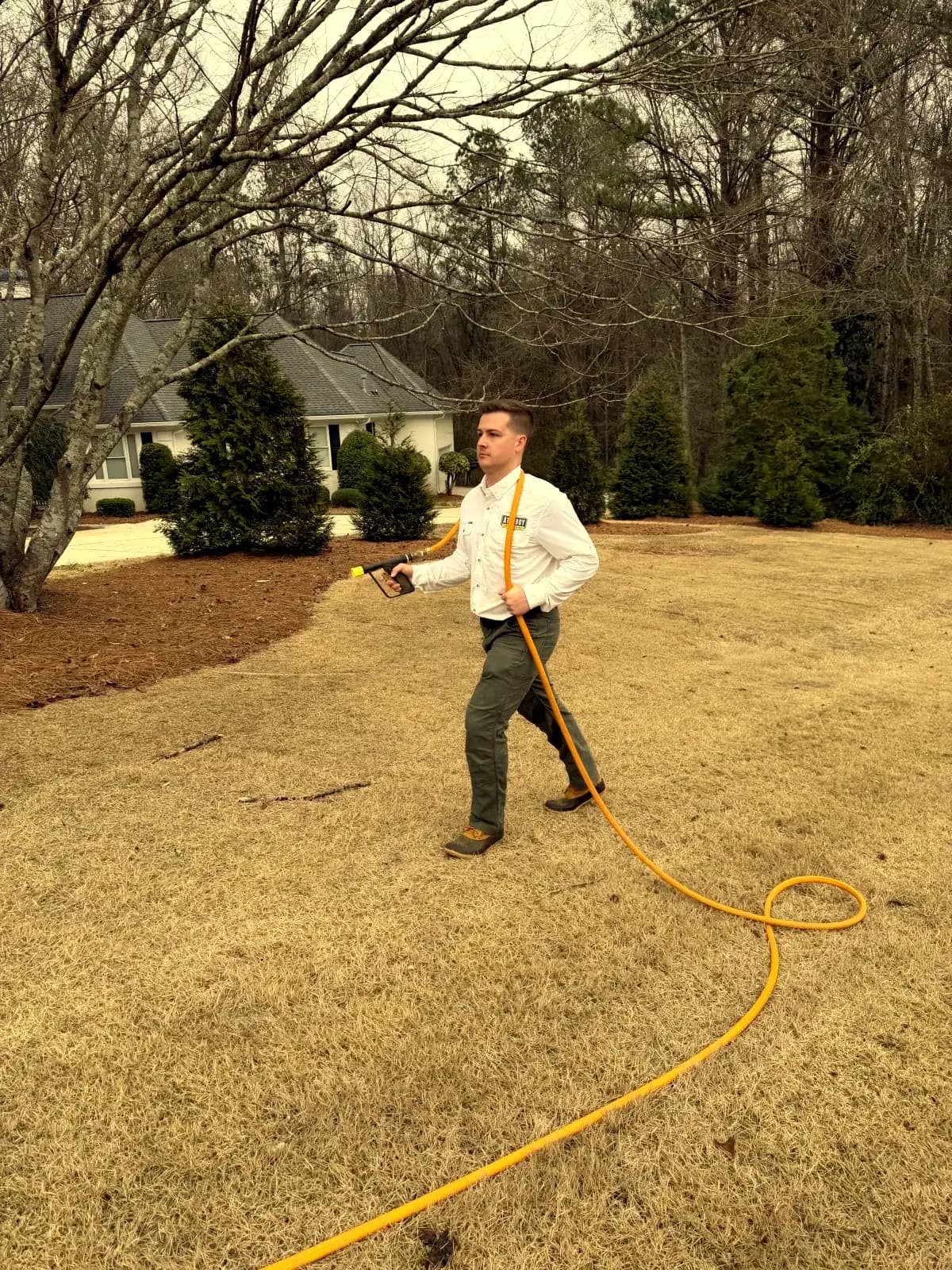
Preventive fungicide applications in September and again in October are far more effective than treating active infections. Products containing azoxystrobin or propiconazole target the Rhizoctonia fungus directly. Curative applications can slow the spread but cannot reverse existing damage. Affected areas typically fill back in once the grass resumes active growth in spring or summer.
Timing the first preventive application is straightforward: apply when soil temperatures drop below 70 degrees in fall. In Middle Georgia, that is usually mid to late September. A second application 4 weeks later extends protection through the peak fall infection window.
For lawns with a history of large patch, preventive fungicide is worth the investment. Treating an active infection costs more, requires more product, and does not save the grass that is already damaged. Prevention costs less and actually works. Professional disease control programs include properly timed fungicide applications as part of the overall treatment plan.
Recovery After Large Patch Damage
The good news about large patch is that it rarely kills the entire plant. The fungus attacks the leaf sheath but usually leaves the stolons and root system alive. Once soil temperatures exceed 80 degrees in summer, the disease goes dormant and the grass can recover.
Help recovery along by applying a balanced fertilizer once the grass is actively growing in late spring. Light, frequent watering encourages stolon growth into the damaged areas. Avoid heavy nitrogen, which can create conditions for reinfection the following fall. If patches have not filled in by midsummer, you may need to plug or sod those areas.
The most important recovery step is preventing reinfection. If your lawn had large patch this spring, plan a preventive fungicide program for next fall. Without treatment, the same areas will likely get infected again because the fungus remains in the soil.
Key takeaways
What to Remember
Large patch and brown patch are different diseases. In Middle Georgia warm-season lawns, the correct name is large patch.
The disease starts in fall when soil temps drop below 70 degrees. Damage you see in spring began months earlier.
Preventive fungicide in September and October is far more effective than treating active infections.
Switch irrigation to early morning. Evening watering creates ideal conditions for large patch.
Reduce fall nitrogen and manage thatch through core aeration to limit disease conditions.
Large patch rarely kills the root system. Most lawns recover during summer active growth.
Common questions
Frequently Asked Questions
Is large patch the same as brown patch?
No. Brown patch affects cool-season grasses. Large patch affects warm-season grasses like bermuda, zoysia, and centipede. The pathogens are related but the diseases, hosts, and timing are different. In Middle Georgia, large patch is the correct term.
Will my lawn recover from large patch?
Usually yes. Large patch damages the leaf sheath but often leaves the root system and stolons intact. Affected areas typically fill back in during summer when the grass is actively growing. Severe cases may need targeted renovation with sod or plugs.
When should I apply fungicide for large patch?
Apply the first preventive fungicide in mid to late September when soil temperatures drop below 70 degrees. A second application 4 weeks later extends protection through the fall infection window.
Why does my lawn get large patch every year?
The fungus lives in the soil and reinfects susceptible grass each fall when conditions are right. Without preventive fungicide, cultural changes (less nitrogen, better drainage, morning watering), or both, reinfection is likely in the same areas.
Which grass types are most susceptible to large patch?
Zoysia and St. Augustine are the most vulnerable in Middle Georgia. Centipede is also susceptible, especially when over-fertilized. Bermuda can get large patch but recovers faster than other grass types.
Keep reading
Related Resources
More in Pest & Disease Alerts
Written by Tyler Warnock
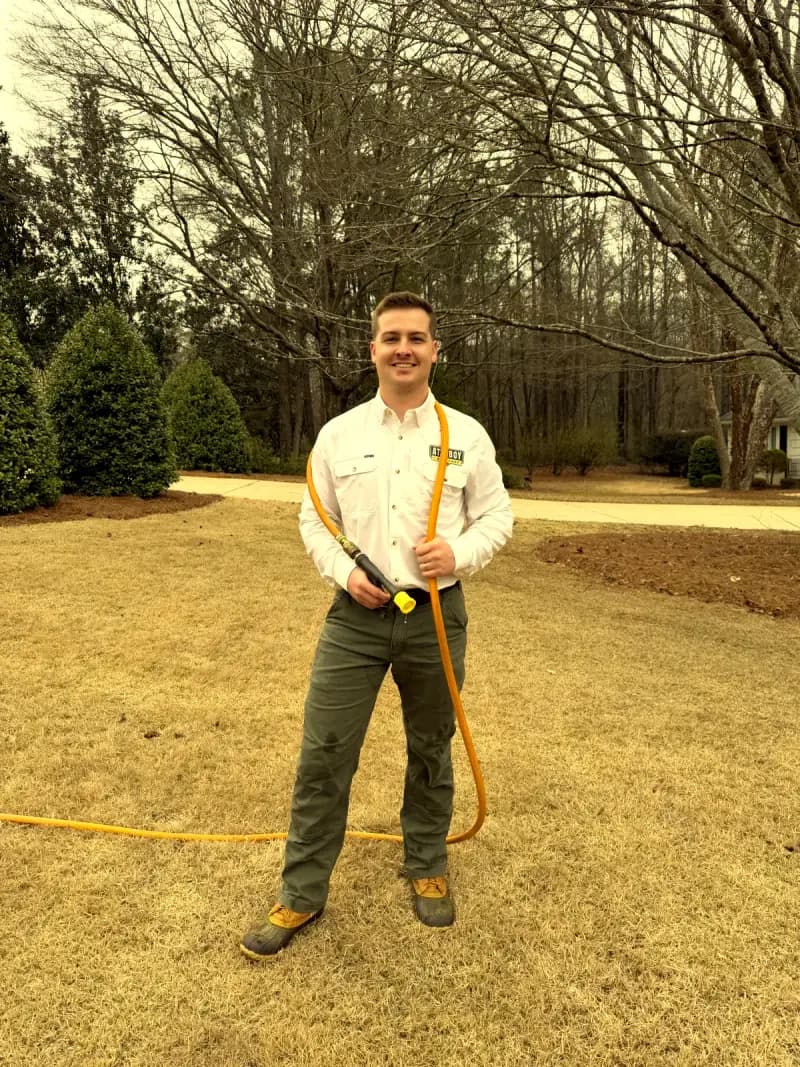
Founder and owner of Attaboy Lawn Care in Macon, Georgia. Licensed Georgia pesticide applicator (Cat. 24, #22324). Tyler treats lawns across Macon, Warner Robins, and the rest of Middle Georgia, and writes these guides from what the region’s bermuda, zoysia, and centipede yards actually do season to season.
Ready for results?
Get a Custom Quote for Your Lawn
Professional lawn care for Macon, Warner Robins, and Middle Georgia. No contracts, no obligation.