Pre-Emergent for Bermuda: When to Apply in Middle Georgia
Pre-emergent works on Bermuda only if it is down before the weed seed wakes up. Here is the year we run in Macon and Warner Robins, window by window, and what we do when a wet spring pushes the schedule.
Put pre-emergent on Bermuda twice in spring and once in fall. The first spring application goes down late February to mid-March, before soil at the 4-inch depth reaches 55F. Follow it with a second round late May into June, because one application does not hold through a Middle Georgia summer. The fall application runs mid-September to mid-October for winter weeds.
What Actually Drives Pre-Emergent Timing in Middle Georgia
Soil temperature runs this calendar, not the date on the wall. Crabgrass seed germinates when soil at the 4-inch depth sits in the 53 to 58F range, so the spring barrier has to be down and watered in before that reading hits 55F. In Macon and Warner Robins, that lands late February to mid-March. The fall barrier goes down mid-September to mid-October.
That reading does not arrive on the same day across the region. A south-facing slope, or a strip of turf running along a paved driveway, warms ahead of a shaded yard sitting on heavier clay. We read soil at the 4-inch depth, the measurement UGA Extension uses for crabgrass germination, and we treat on the early edge of the window.
A pre-emergent does not kill a weed you can see. It sits in the top layer of soil and stops seed from establishing after it sprouts. Once crabgrass has two leaves and you can pick it out from the Bermuda, that barrier is too late for that plant. UGA Extension makes the same point in Prevent Crabgrass: the herbicide has to be in place before germination.
A warm week in early February does not move the barrier date by itself, and a cold snap in March does not buy three extra weeks. If you want the reasoning behind our dates spelled out, we keep it on our page about when to apply pre-emergent in Georgia.
Mid-September to Mid-October: The Fall Application
Fall pre-emergent goes down on Bermuda mid-September to mid-October, aimed at winter annuals: annual bluegrass, henbit, chickweed. Those seeds germinate as soil cools, and they do it while your Bermuda is slowing down and losing the density to crowd them out. Miss this window and you spend January looking at a tan lawn speckled green.
This is also the month fertilizer stops. We quit nitrogen on Bermuda by mid-September, because late feeding pushes tender growth straight into dormancy, which runs roughly November through February here. Pre-emergent in fall, no nitrogen after mid-September. Those two go together.
Water it in after application. Rain handles that for us most falls in Middle Georgia, and if it stays dry we tell homeowners to run their irrigation. Keep pets and kids off the lawn until it's dry. We text you when the visit is done and what we applied, and you get a treatment report after every visit.
Bag or blow leaves off before a fall application so the product reaches soil, not a leaf pile.
Do not fertilize Bermuda after mid-September, even if the lawn looks hungry.
If you plan to overseed with ryegrass, tell us first. Pre-emergent stops ryegrass seed the same way it stops annual bluegrass.
Keep mowing at 1 to 1.5 inches until growth stops, so winter weeds get less light.
November through February: Dormant Bermuda, Weeds in Plain View
Dormant Bermuda is the easiest time of year to see what got past you. The turf goes tan from roughly November through February, and every green patch in it is a weed. There is no pre-emergent window in here. This is spot post-emergent work on whatever the fall barrier missed.
One winter job still matters for weed control: scalping. Late February to early March, before green-up, we take the canopy down and pull the winter debris out. That gets soil warming evenly and clears the way for the spring barrier to reach dirt instead of thatch.
Late February to Mid-March: Get Ahead of Crabgrass
This is the application that decides your summer. Late February to mid-March, before soil at the 4-inch depth reaches 55F, the spring pre-emergent goes down on Bermuda. Crabgrass, goosegrass, and summer annual broadleaves all germinate off this window. Get it right and July looks like turf. Get it late and July looks like a hay field with a mower line in it.
Bermuda is still dormant or barely breaking at that point, and that is fine. Pre-emergent is not aimed at your grass. Green-up runs on a separate trigger, 65F soil, which usually lands mid-March to early April in Middle Georgia, and the first fertilization waits until the lawn is more than half green, mid-April to early May.
Product class matters less than timing. UGA lists the pre-emergent options labeled for Bermuda lawns in Weed Control in Home Lawns, and the label governs everything about how a product is used. Georgia regulates commercial application through the Georgia Department of Agriculture, and Tyler holds a Georgia commercial pesticide applicator license, Category 24, Ornamental and Turf Pest Control, license #22324.
One caution homeowners miss. Pre-emergent stops rooting at the nodes, so it slows Bermuda from filling a bare patch by runner. If you are trying to close a thin area or lay sod this spring, that spot needs a different plan, which is part of why we walk the lawn before we treat rather than blanketing everything the same way. Read more on crabgrass if you want to know what you are fighting.
Scalp first, then apply. Product sitting on old thatch is not a barrier.
Do not aerate right after a spring pre-emergent application. Punching holes breaks the barrier.
Hold off on new seed or sod in any area you treat.
Water it in after application if rain does not come.
Late May into June: Why the Second Round Holds
Bermuda in Middle Georgia needs a second pre-emergent application late May into June. One February or March round does not carry a lawn through the summer, because heat, rain, and irrigation break the barrier down. The second application goes down before summer germination pressure peaks, and it is the biggest difference between a clean July lawn and a weedy one.
Late June, on Bermuda lawns across Macon and Warner Robins, we watched crabgrass break through, except where we had already put the second round down. Those lawns held. On the yards running one spring application, crabgrass came up in the thin, sunny strips first, usually along driveways and street edges where the soil bakes.
Mowing and watering back this up. Bermuda cut at 1 to 1.5 inches and watered 1 inch a week, deep and infrequent, 2 to 3 times a week, grows dense enough to shade seed out. Daily sprinkling does the opposite. It keeps the surface wet, which is what germinating crabgrass wants.
July and August: Cleanup on What Escaped
By July the pre-emergent work is done and the job turns to post-emergent cleanup. Whatever germinated has to be treated as a growing plant, in the heat, when Bermuda is already stressed. That is slower and less certain than prevention, which is the whole argument for the calendar above. The difference between the two approaches is laid out on our pre-emergent vs post-emergent comparison.
Spurge took over Macon lawns in July wherever the barrier was weak or missing, and we saw it move fast on thin, sun-baked turf. It runs flat, roots at every contact point, and by the time it is obvious it has already seeded. Nutsedge is the other July regular. It grows from tubers rather than seed, so no pre-emergent touches it, which is why we treat yellow nutsedge separately with its own product and its own visit.
Our No More Weeds guarantee covers this situation. If weeds come back between visits, or your lawn isn't improving, we come back and re-treat at no charge. If our tech spots weeds a regular application won't handle, we schedule a cleanup visit ourselves, at no charge.
Your Bermuda Pre-Emergent Year at a Glance
Here is the whole sequence in one place. Three pre-emergent windows, one trigger each, plus the cleanup and dormant-season work in between. None of these are dates you set once and forget, because soil temperature moves year to year, but the order never changes and the windows are narrow enough to plan around.
We run 6 to 8 treatments a year, about every 6 to 8 weeks, which is what it takes to keep a barrier in place and catch escapes between rounds. UGA publishes month-by-month schedules for each warm-season grass in its Lawn Calendars for Georgia.
Bermuda pre-emergent and weed control windows, Middle Georgia
| Window | What goes down | What triggers it |
|---|---|---|
| Late Feb to mid-Mar | Scalp (late Feb to early Mar), then spring pre-emergent | Before soil hits 55F at the 4-inch depth |
| Mid-Mar to early Apr | Nothing new, monitor green-up | Soil reaching 65F |
| Mid-Apr to early May | First fertilization | 50 percent or more green coverage |
| Late May into Jun | Second pre-emergent application | Summer germination pressure |
| Jul to Aug | Post-emergent cleanup on escapes | Weeds you can see |
| Mid-Sep to mid-Oct | Fall pre-emergent, no more nitrogen | Cooling soil, winter annual germination |
| Nov to Feb | Spot post-emergent on dormant turf | Green weeds against tan Bermuda |
Wet Springs, Cold Snaps, and What Slips the Schedule
A wet or cold year moves the windows, and pretending otherwise is how lawns get weedy. Heavy spring rain shortens how long a barrier lasts, so the second application matters more, not less. A cold March delays soil warming and gives a little room on the front end. A warm February closes the window early, and that is the year people get burned waiting for the calendar.
Our answer to both is the same. We watch soil temperature at the 4-inch depth, we treat on the early edge of a window rather than the late edge, and we come back between visits when something breaks through. On the lawns we run two spring applications on, a rainy May costs us density, not control.
If you want this handled on schedule instead of guessed at, that is our core program: weed control and fertilization, built around these windows. Plans start at $39 a month. No contract, no sign-up fee required, cancel any time. Sign up and your lawn is treated within 24 hours. If you want a number first, tap Get Quote and we reply within 24 hours. We treat Bermuda lawns across Macon, Warner Robins, Byron, Bonaire, Centerville, Kathleen, and Bolingbroke, plus the surrounding areas in Middle Georgia. See the full approach on our Bermuda grass weed control page or reach us at (478) 400-9897.
Track soil temperature at the 4-inch depth, not air temperature and not a surface reading.
In a wet spring, plan on the second application late May into June. Do not skip it.
If you missed the spring window entirely, do not wait it out. Treat the escapes now and get the mid-September barrier down on time.
Key takeaways
What to Remember
Spring pre-emergent goes on Bermuda late February to mid-March, before soil at the 4-inch depth reaches 55F.
One spring application does not hold here. Reapply late May into June.
Fall pre-emergent runs mid-September to mid-October for annual bluegrass, henbit, and chickweed, and nitrogen stops by mid-September.
Pre-emergent stops seed, not plants you can already see, and it also slows Bermuda from filling bare spots by runner.
Nutsedge grows from tubers, so no pre-emergent controls it. It needs its own treatment.
Bermuda mowed at 1 to 1.5 inches and watered 1 inch a week, 2 to 3 times a week, crowds out weeds the barrier misses.
Common questions
Frequently Asked Questions
What is the best pre-emergent for Bermuda grass?
Timing beats product choice. Several pre-emergents are labeled for Bermuda lawns, and UGA Extension lists the options in Weed Control in Home Lawns. Any of them fail if they go down after soil passes 55F at the 4-inch depth, and any of them work if the barrier is in place first and watered in. Follow the product label. Tyler holds a Georgia commercial pesticide applicator license, Category 24, license #22324.
When should I put pre-emergent on Bermuda?
In Middle Georgia, late February to mid-March for the spring application, before soil at the 4-inch depth reaches 55F. Then again late May into June, because heat and rain break the first barrier down. Then mid-September to mid-October for winter annuals. That is three applications a year on a Bermuda lawn in Macon or Warner Robins.
Will pre-emergent keep Bermuda from spreading?
It can slow it. Pre-emergent stops rooting at the nodes, which is how Bermuda fills bare ground with runners. On an established, dense lawn that does not matter. If you are trying to close a thin patch, lay sod, or seed this season, that area needs a different plan, and we walk the lawn before treating for exactly this reason.
What kills weeds but not Bermuda grass?
Selective post-emergent herbicides labeled for Bermuda turf. Bermuda tolerates a wider range of products than centipede does, which is why a centipede lawn and a Bermuda lawn next door get treated differently. Read the label for the grass species listed on it. Nonselective products like glyphosate kill Bermuda too, so they belong in cracks and beds, not lawns.
What really kills weeds permanently?
Nothing kills weeds permanently, and there is no ten minute fix. Seed blows in, birds drop it, and nutsedge tubers survive underground. What gets you a clean lawn is a barrier down before germination, twice in spring and once in fall, plus dense turf from mowing at 1 to 1.5 inches and watering deep. That is maintenance, not a cure.
I missed the spring window. Is fall pre-emergent still worth it?
Yes. The fall application targets a different set of weeds, mostly annual bluegrass, henbit, and chickweed, and it goes down mid-September to mid-October regardless of what happened in March. Treat the summer escapes you can see now, get the fall barrier in on time, and set an early alarm for late February.
Keep reading
Related Resources
More in Lawn Tips
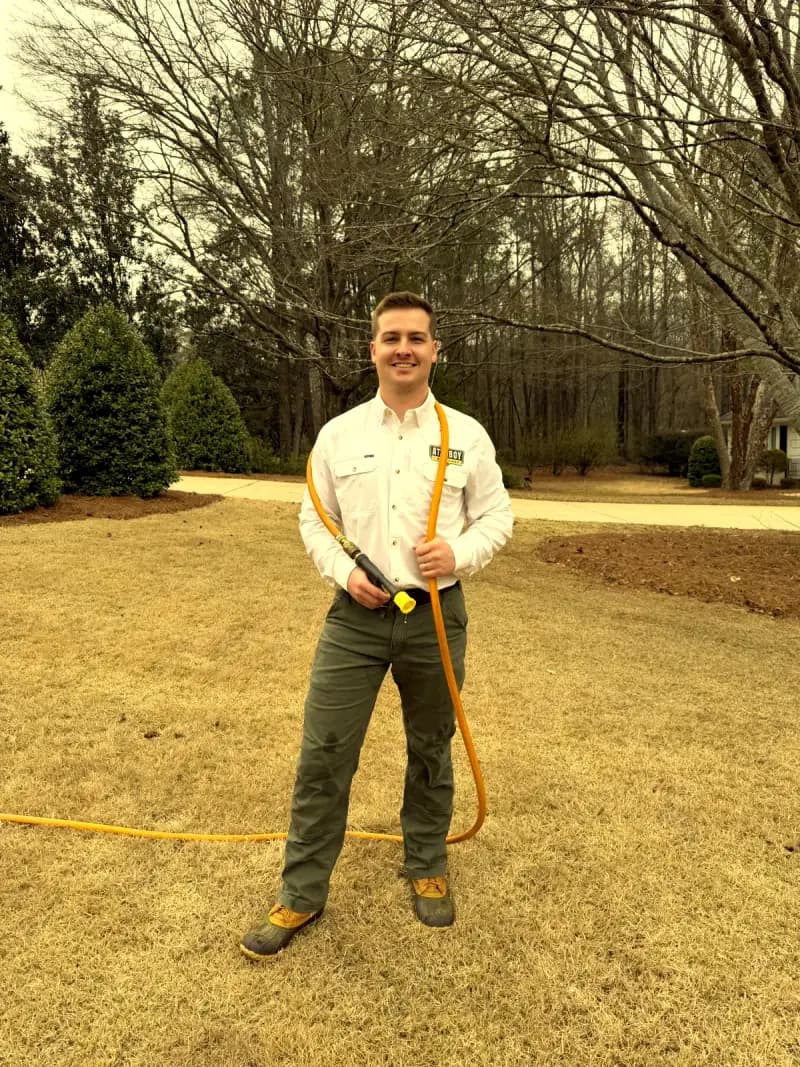
Written by Tyler Warnock
Founder and owner of Attaboy Lawn Care in Macon, Georgia. Licensed Georgia pesticide applicator (Cat. 24, #22324). Tyler treats lawns across Macon, Warner Robins, and the rest of Middle Georgia, and writes these guides from what the region’s bermuda, zoysia, and centipede yards actually do season to season.
Ready for results?
Get a Custom Quote for Your Lawn
Professional lawn care for Macon, Warner Robins, and Middle Georgia. No contracts, no obligation.