
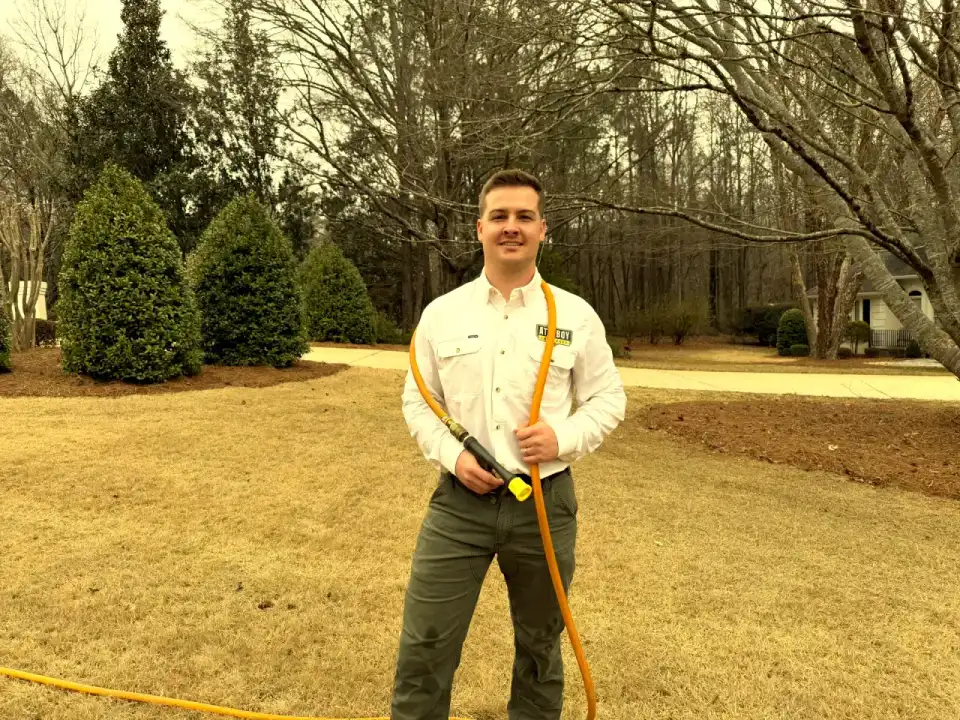
When to Apply Pre-Emergent in Georgia
Pre-emergent herbicide is the most effective weed prevention tool available. But the timing window in Middle Georgia is narrow. Miss it, and you are fighting weeds all season.
Overview
What You Will Learn
Pre-emergent herbicides work by creating a chemical barrier in the top layer of soil that prevents weed seeds from germinating. They do not kill existing weeds. They stop new ones from ever sprouting. That means timing is everything. Apply too early and the product breaks down before weed season peaks. Apply too late and weeds have already germinated. In Middle Georgia, the timing is driven by soil temperature, not the calendar.
Soil Temperature Is the Trigger
Forget calendar dates. Pre-emergent timing in Georgia is based on soil temperature. Crabgrass, the primary summer annual weed, germinates when soil temperatures at a 4-inch depth reach 55°F for three or more consecutive days. In Middle Georgia (Macon, Warner Robins, Byron, and surrounding areas), this typically happens between mid-February and early March, but it varies year to year. You can track soil temperatures through the University of Georgia weather monitoring network or by using a simple soil thermometer in your yard.
Check soil temperature at a 4-inch depth. Surface temperature is misleading.
Use the UGA weather network for real-time soil temperature data in your county.
Apply pre-emergent when soil hits 50 to 52°F to build a buffer before the 55°F germination point.
The Spring Application Window
The first pre-emergent application of the year targets summer annual weeds (primarily crabgrass, goosegrass, and annual sedges). In Middle Georgia, this window is typically mid-February through early March. A split application strategy works best: apply the first round at 50 to 52°F soil temperature, then follow up with a second application 8 to 10 weeks later (usually late April to early May). The split approach extends the pre-emergent barrier through the entire summer germination window without using a heavier single application that might stress your turf.
First application: mid-February to early March (50 to 55°F soil temperature).
Second application: late April to early May (8 to 10 weeks after the first).
Do not aerate or dethatch after applying pre-emergent. It breaks the barrier.
The Fall Application Window
Many homeowners skip fall pre-emergent, but it is critical for controlling winter annual weeds like annual bluegrass (poa annua), henbit, and chickweed. These weeds germinate when soil temperatures drop below 70°F in the fall, typically September through early October in Middle Georgia. A fall pre-emergent application creates a barrier that prevents these cool-season weeds from establishing over winter. Without it, you will see patches of annual bluegrass and broadleaf weeds pop up in December through February.
Apply fall pre-emergent when soil temperatures drop below 70°F (usually mid-September to early October).
Fall pre-emergent also helps reduce early spring weed pressure.
If you plan to overseed bermuda with ryegrass, do NOT apply pre-emergent. It will prevent the ryegrass seed from germinating.
Common Pre-Emergent Mistakes
The most common mistake is applying pre-emergent too late. Once you see crabgrass or goosegrass actively growing in your lawn, pre-emergent will not help. Those weeds have already germinated. Another common error is not watering in the product. Pre-emergent needs about half an inch of water within 24 to 48 hours of application to activate and bind to the soil. Without irrigation or rain, the product sits on the surface and degrades in sunlight. Finally, avoid disturbing the soil after application. Aerating, dethatching, or heavy raking breaks the pre-emergent barrier and creates gaps where weeds can push through.
Water in pre-emergent within 24 to 48 hours of application.
Do not aerate, dethatch, or overseed for at least 8 weeks after application.
If you see existing weeds, you need post-emergent herbicide, not pre-emergent.
Key takeaways
What to Remember
Pre-emergent timing is based on soil temperature, not the calendar.
Apply when soil reaches 50 to 55°F at a 4-inch depth (mid-February to early March in Middle Georgia).
A split application (spring + 8 to 10 weeks later) extends protection all summer.
Fall pre-emergent (September to October) controls winter annual weeds.
Water in the product within 48 hours and do not disturb the soil after application.
Common questions
Frequently Asked Questions
Is it too late to apply pre-emergent if I see crabgrass growing?
Yes. Pre-emergent only prevents new germination. It does not kill weeds that have already sprouted. If you see crabgrass, you need a post-emergent herbicide. Pre-emergent can still help prevent additional germination later in the season.
Does pre-emergent kill existing weeds?
No. Pre-emergent creates a barrier in the soil that prevents weed seeds from germinating. It has no effect on weeds that are already growing. Use post-emergent herbicides for existing weeds.
Can I apply pre-emergent and fertilizer at the same time?
Yes. Many professional lawn care programs combine pre-emergent with a granular fertilizer in the spring application. This saves a trip and ensures both products are watered in together.
How long does pre-emergent last in the soil?
Most pre-emergent products provide 8 to 12 weeks of protection depending on the active ingredient, soil conditions, and rainfall. That is why a split application in spring is more effective than a single heavy application.
Will pre-emergent prevent me from overseeding my lawn?
Yes. Pre-emergent prevents all seed germination, including grass seed. If you plan to overseed, you must wait at least 8 to 12 weeks after application, or skip pre-emergent in the areas you intend to seed.
Keep learning
Related Guides and Services
Professional results
Professional Lawn Care from Attaboy
Let us handle the science. You enjoy the lawn. Get a custom quote. No contracts, no commitments.