
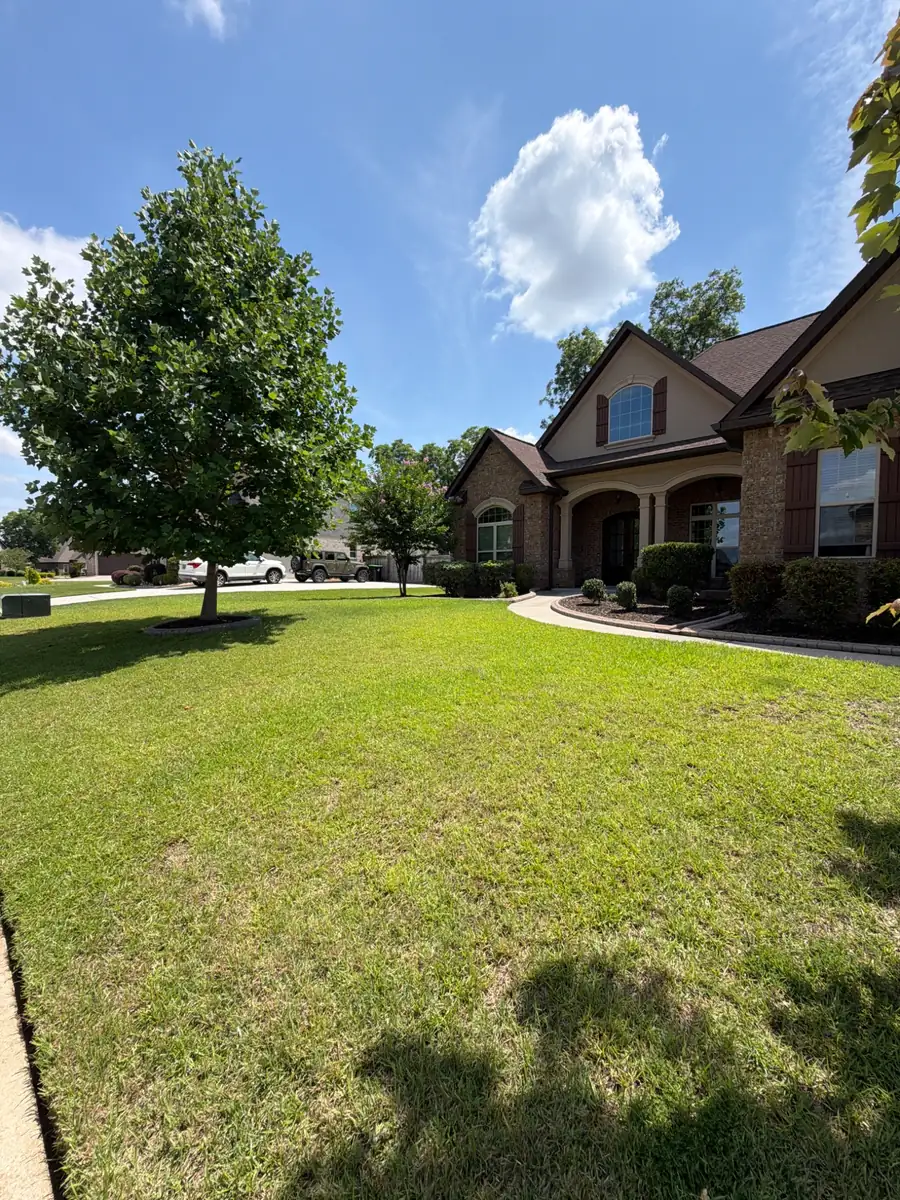
Bermuda Grass Water Requirements for Middle Georgia
Overwatering kills Bermuda grass just as fast as drought does. Here's how to water your Bermuda lawn the right way in Middle Georgia, every season of the year.
Bermuda grass needs 1 inch of water per week during the growing season, split across 2 to 3 deep sessions rather than daily shallow watering. Water in the early morning, between 4 a.m. and 9 a.m., so blades dry before evening. Run the catch-can test to learn what your system delivers, then scale back in fall as soil temperatures drop.
How Much Water Does Bermuda Grass Actually Need
Bermuda grass needs 1 inch of water per week during the growing season, delivered in two to three deep sessions, not daily shallow watering. Delivery matters as much as volume. Shallow, frequent watering keeps moisture at the surface and trains roots to stay shallow. Shallow roots mean a lawn that wilts faster in a heat wave and demands more water over time.
Deep, infrequent watering pushes roots several inches into the soil. That depth is where Bermuda finds the moisture reserves that carry it through a week of 95-degree heat without rain. Get the depth right, and your lawn handles Middle Georgia summers without drama.
Bermuda is built for heat and handles Georgia summers better than most grass types in the region, but watering it wrong is one of the fastest ways to weaken it.
Target 1 inch of water per week during summer. Split across 2 to 3 sessions, not daily.
Use a tuna can or rain gauge to measure how much your sprinkler delivers in a set time.
Water in the early morning, between 4 a.m. and 9 a.m., so blades dry before evening.
Avoid watering after noon. Heat-of-day evaporation wastes a significant portion of what you apply.
Check actual rainfall before running your irrigation system. An inch of rain this week means skip a cycle.
Watering Schedule by Season, Not One Size Fits All
Bermuda grass doesn't need the same amount of water in May that it needs in August. Adjusting your schedule to match the season saves water, prevents disease, and keeps your lawn from getting stressed in both directions.
Spring (March through May) is when Bermuda wakes up and starts pushing new growth. Soil temperatures are rising but haven't hit peak levels yet. One to two waterings per week, each delivering about a half inch, is enough. Let the lawn tell you when it needs more. The blades take on a slight blue-green hue before visible wilting starts.
Summer (June through August) is when Middle Georgia turns brutal. Highs regularly clear 95°F, and stretches without meaningful rain are common. Bermuda needs the full inch per week during this stretch, delivered across two to three sessions. Soil in Macon and Warner Robins often has a significant clay component. Check that water is actually penetrating rather than running off. If you see runoff, split each session into two shorter cycles with a 30-minute break in between.
Fall (September through November) is when you back off. As temperatures drop and nights cool, Bermuda's water demand drops with them. One watering per week is usually sufficient through September and into early October. By mid-November, Bermuda is heading into dormancy and needs no supplemental irrigation.
Bermuda Grass Watering Schedule by Season: Middle Georgia
| Season | Frequency | Amount Per Session | Weekly Total |
|---|---|---|---|
| Spring (Mar–May) | 1–2x per week | 0.5 inches | 0.5–1 inch |
| Summer (Jun–Aug) | 2–3x per week | 0.33–0.5 inches | 1 inch |
| Early Fall (Sep–Oct) | 1x per week | 0.5–0.75 inches | 0.5–0.75 inch |
| Late Fall / Winter (Nov–Feb) | None needed | None | 0 inches |
Does Bermuda Grass Need to Be Watered Every Day
No, and daily watering is one of the most common mistakes we see in Middle Georgia lawns. Watering every day keeps the top inch of soil constantly moist, which creates ideal conditions for disease, shallow roots, and weed germination.
Bermuda thrives on the wet-dry cycle. The grass draws down moisture, the soil dries out slightly, and then you water again. That cycle pushes roots deeper between sessions. Daily watering breaks the cycle. Roots stay near the surface where the soil is always wet, and the lawn ends up more dependent on irrigation, not less.
Two to three times per week in peak summer is the target. Each session should wet the soil to a depth of 4 to 6 inches. To check: push a screwdriver into the soil after watering. If it slides in 6 inches without much resistance, you've watered enough.
Is 20 Minutes Long Enough to Water Your Lawn
It depends entirely on your sprinkler system and head type. Twenty minutes might deliver 0.2 inches with some rotary heads and close to 0.5 inches with high-output spray heads. There is no universal answer. You have to measure.
The catch-can test gives you a real number in about 20 minutes. Set four to six empty tuna cans around your lawn in a grid pattern. Run your irrigation for 20 minutes, then measure the water depth in each can and average them. That number is what your system delivers in 20 minutes. Multiply or divide to figure out how long you need to run it to hit your target.
For most rotary sprinkler systems, hitting 0.5 inches per zone typically takes 30 to 45 minutes. Pop-up spray heads often get there in 15 to 20 minutes. If you're on a well with lower pressure, runtimes run longer. The math matters. Guessing leads to either overwatering or underwatering, and Bermuda doesn't forgive either for long.
Run the catch-can test once a season. Pressure and head wear change output over time.
If your system has multiple zones, test each one separately. Output varies zone to zone.
Clay soil absorbs water slowly. If you see runoff before 20 minutes, split the runtime into two shorter cycles.
A cycle-and-soak approach (run 10 minutes, wait 30, run 10 more) improves absorption on slopes and clay.
How Long Can Bermuda Go Without Water
Established Bermuda grass can survive 3 to 4 weeks without water by going dormant. The blades turn straw-brown, growth stops, and the grass shuts itself down to protect the crown and root system. This is a survival mechanism, not death. Healthy Bermuda lawns recover fully once rain or irrigation returns.
Newly established Bermuda, whether from sod, seed, or plugs installed within the last season, is a different story. New turf hasn't developed the deep root system that makes drought tolerance possible. Don't let new sod dry out completely during the first 6 to 8 weeks. Once it's fully knitted in and rooted deep, back off to the normal schedule.
A lawn that goes dormant repeatedly during the same growing season will come back thinner each time. Dormancy is a survival move, not a free pass. If your lawn struggles through drought stress every summer, it's worth evaluating your irrigation coverage and soil health. Compacted clay holds water poorly and dries out faster than amended soil.
Should You Water Bermuda Grass in October
October watering in Middle Georgia comes down to conditions. Early October in Macon and Warner Robins can still see temperatures in the upper 70s and low 80s, warm enough that Bermuda is still active and benefits from moisture. If you've had no meaningful rain and the lawn looks stressed, one deep watering per week is appropriate.
By mid to late October, soil temperatures are dropping and Bermuda is slowing down. Cut back to watering only if you see clear signs of drought stress, folded blades, blue-green tinting, or footprints that stay visible in the grass. Don't water on a set schedule just because the irrigation timer says so.
One thing to avoid in fall: keeping the lawn wet through consecutive nights. Fall is when large patch disease becomes a real threat in Georgia, and wet conditions at night create the environment it needs to take hold. Water in the morning, let the lawn dry out between cycles, and give your irrigation controller a hard look before October ends. Most Middle Georgia lawns need minimal to no irrigation from mid-October through February.
Check soil temperature before watering in fall. If it's consistently below 65°F, Bermuda is slowing and needs less water.
Use a rain gauge to track natural rainfall in October. You may not need to run your system at all.
Turn off automated irrigation systems by mid-October unless a dry spell forces otherwise.
Morning watering in fall reduces large patch disease risk by letting blades dry before nightfall.
What Bermuda Grass Tells You When Watering Is Off
The first sign of underwatering isn't brown grass. It's a blue-green or grayish tint to the blades. Bermuda also folds its leaf blades lengthwise when moisture-stressed. Walk across the lawn: if your footprints stay visible for more than a minute, the grass doesn't have enough turgor pressure to spring back. Time to water.
Overwatering looks different. You'll see yellowing blades, a spongy feel underfoot, or a persistent film of algae near shaded areas. Mushrooms or soft spots are another signal. Overwatered Bermuda is also more vulnerable to gray leaf spot and pythium blight, two diseases that spread quickly in warm, wet Middle Georgia summers.
Both problems are avoidable. The fix for underwatering is obvious. The fix for overwatering is discipline. Skip a cycle, let the lawn dry out, and resist the urge to water just because it's been a few days. Trust the grass to tell you what it needs, and adjust from there.
Key takeaways
What to Remember
Bermuda grass needs 1 inch of water per week in summer, split across 2 to 3 deep sessions, not daily shallow watering.
Twenty minutes of irrigation may or may not be enough. Run the catch-can test to know exactly what your system delivers.
Established Bermuda can survive 3 to 4 weeks without water by going dormant, but repeated dormancy thins the lawn over time.
In October, scale back to one watering per week or skip entirely, especially once nighttime temperatures consistently drop and soil cools.
Blue-green tinting and visible footprints are the first signs of drought stress. Catch them early and water before you see brown.
Daily watering creates shallow roots and disease pressure. The wet-dry cycle is what builds a tough, drought-resistant Bermuda lawn.
Common questions
Frequently Asked Questions
Does Bermuda grass need to be watered every day?
No. Daily watering keeps roots shallow and encourages disease. Water 2 to 3 times per week in summer, delivering enough each session to wet the soil 4 to 6 inches deep. That wet-dry cycle builds deep roots and a more resilient lawn. Consistent daily moisture at the surface is one of the fastest ways to weaken an otherwise tough Bermuda stand.
What is the 1/3 rule for Bermuda grass?
The 1/3 rule applies to mowing: never remove more than one-third of the blade height in a single mow. Bermuda in Middle Georgia performs best mowed at 1 to 1.5 inches. At that height, you should cut before the grass reaches 2 to 2.25 inches tall. Removing too much at once stresses the grass, slows recovery, and opens the canopy to weed pressure.
How long can Bermuda grass go without water?
Established Bermuda can go 3 to 4 weeks without water by entering dormancy. Blades turn brown but roots and crowns survive. New sod or recently seeded Bermuda doesn't have this resilience and needs consistent moisture for the first 6 to 8 weeks after installation. Repeated dormancy within the same growing season will thin the lawn over time.
Should I water Bermuda grass in October?
Early October in Middle Georgia may still warrant one watering per week if conditions are dry and temperatures remain warm. By mid to late October, Bermuda is slowing and needs little to no irrigation. Only water if you see clear stress signs, folded blades, blue-green tinting, or footprints that don't spring back. Always water in the morning to reduce large patch disease risk.
Is 20 minutes long enough to water your lawn?
It depends on your sprinkler system. Some heads deliver 0.5 inches in 20 minutes. Others barely reach 0.2 inches. Run the catch-can test. Place tuna cans across the lawn, run your system for 20 minutes, then measure and average the water collected. That number tells you exactly how long to run each zone to hit your target depth.
What is poor man's grass?
Bermuda grass is sometimes called poor man's grass because it spreads aggressively, requires fewer inputs than many other grass types, and thrives in tough conditions. In Middle Georgia's USDA Zone 8a climate, that resilience makes it one of the most practical choices for a full, durable lawn. It handles heat, drought, and heavy foot traffic better than most alternatives.
Keep reading
Related Resources
More in Lawn Tips
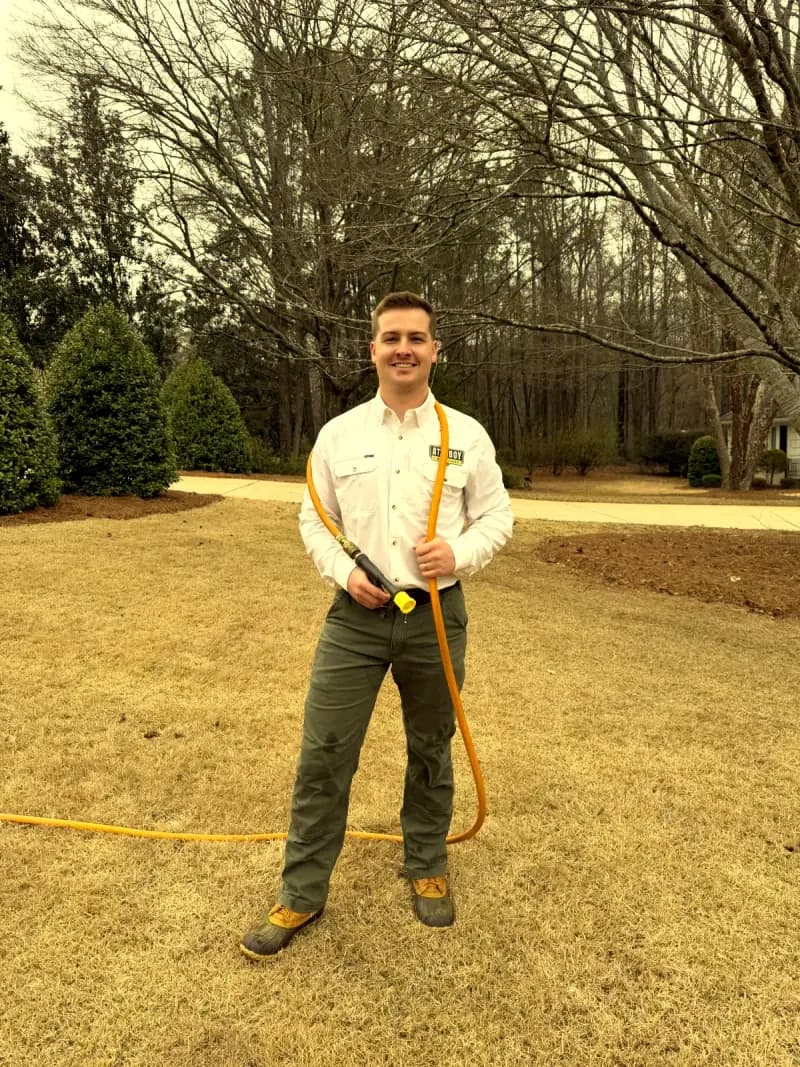
Written by Tyler Warnock
Founder and owner of Attaboy Lawn Care in Macon, Georgia. Licensed Georgia pesticide applicator (Cat. 24, #22324). Tyler treats lawns across Macon, Warner Robins, and the rest of Middle Georgia, and writes these guides from what the region’s bermuda, zoysia, and centipede yards actually do season to season.
Ready for results?
Get a Custom Quote for Your Lawn
Professional lawn care for Macon, Warner Robins, and Middle Georgia. No contracts, no obligation.