Dormant Bermuda Grass: A Middle Georgia Winter Calendar
Tan Bermuda in January is not dead Bermuda. Here is the soil temperature that triggers dormancy in Middle Georgia, how to check a stolon, and what we do month by month from September through spring green-up.
Bermuda in Middle Georgia goes dormant when soil temperature at the 4-inch depth drops into the 55 to 60F range, which here means roughly November through February. Tan turf is not dead turf. Tug a handful of blades and scratch a stolon: living grass holds in the soil and shows white inside. Stop fertilizing by mid-September, get fall pre-emergent down mid-September to mid-October, and scalp late February to early March.
What Actually Puts Bermuda to Sleep in Middle Georgia
Soil temperature runs this, not the calendar page. Bermuda goes dormant when soil temperature at the 4-inch depth drops into the 55 to 60F range, which in Macon and Warner Robins means roughly November through February. A hard frost can burn the blades to straw quickly. Underneath, the crown, stolons, and rhizomes stay alive, holding stored energy while the plant stops making chlorophyll and slows down.
That is the part homeowners miss when they look at a tan yard in December. Dormant Bermuda is doing what a warm-season grass is built to do. UGA Extension groups Bermuda with the other warm-season turf Georgia homeowners actually own in UGA Extension: Lawns in Georgia: Selection and Species, and all of them go off color once soil cools. Zoysia and centipede do the same thing on their own schedule.
Our job from September through March is not keeping the lawn green. It is sending the lawn into winter with deep roots and a clean seedbed, so spring green-up comes in even instead of patchy. Below is the Bermuda grass calendar we run on lawns across all 7 cities we serve, and the long version lives on our Bermuda grass care page.
Dormant season Bermuda calendar for Middle Georgia
| Window | What is happening | What we do |
|---|---|---|
| Early to mid-September | Growth slowing, nights cooling | Last nitrogen of the year goes down by mid-September |
| Mid-September to mid-October | Winter annual weed seed germinating | Fall pre-emergent application |
| November | First frost, blades turn straw | Final mow of the year, keep leaves cleared off |
| November through February | Soil at the 4-inch depth below 55 to 60F, Bermuda dormant | Spot-treat winter weeds, limit traffic on frosted turf |
| Late February to early March | Still dormant, before green-up | Scalp low and bag the clippings |
| Late February to mid-March | Before soil hits 55F at the 4-inch depth | Spring pre-emergent |
| Mid-March to early April | Soil reaches 65F, green-up begins | Hold the fertilizer, start mowing again |
| Mid-April to early May | 50 percent or more green coverage | First fertilization of the year |
September: Last Nitrogen and the Fall Pre-Emergent Window
Two things happen this month and both have hard edges. The last nitrogen of the year goes down by mid-September. The fall pre-emergent goes down between mid-September and mid-October. After mid-September we stop feeding Bermuda, because late nitrogen pushes tender growth that the first frost takes right back out.
The fall barrier is the application homeowners skip, and it is the reason one lawn looks clean in February while the lawn next door is a carpet of green weeds on tan grass. Poa annua, henbit, chickweed, and lawn burweed germinate in fall. Dormant turf has no canopy to hide them, so every winter annual stands out. Pre-emergent laid down in the right window stops them before they show. Tyler Warnock holds a Georgia commercial pesticide applicator license (Category 24, Ornamental and Turf Pest Control, license #22324) from the Georgia Department of Agriculture, and every application follows the product label.
Timing beats effort here. In late June our crews watched crabgrass break through Bermuda lawns across Macon and Warner Robins, except on the lawns where we had reapplied pre-emergent, and the second application is what held. Fall works the same way in reverse. A barrier that goes down on time in September does more than three rescue sprays in February.
Mark your last fertilizer application at mid-September and leave the bag in the garage after that.
Water in the fall pre-emergent after application so it settles into the soil surface instead of sitting on leaf blades.
Keep pets and kids off the lawn until it's dry.
If you overseed with ryegrass, know that pre-emergent and seed do not mix, and the ryegrass competes with Bermuda roots come March.
October: The Last Mows Before Frost Arrives
Keep mowing at 1 to 1.5 inches as long as the Bermuda is growing. Do not raise the height going into winter. A taller canopy shades the crown, traps moisture, and gives winter weeds a place to settle. Mow on your normal schedule until growth stops at the first frost, then put the mower away.
Leaves matter more than people expect in October. A wet mat of oak and pecan leaves sitting on dormant Bermuda blocks light and holds moisture against the crown all winter. Blow or mulch them off. Cut irrigation back sharply once temperatures drop, since Bermuda is no longer transpiring the way it did in August.
November Through February: Dormant, Not Dying
Dormant Bermuda needs little from you. Soil at the 4-inch depth sits below the 55 to 60F range, the grass is tan top to bottom, and there is no growth to feed or cut. Winter work is weed control, traffic control, and not panicking at the color. Most of what we do on a lawn in this stretch is spot-treating the winter annuals that got past the fall barrier.
Water dormant Bermuda sparingly. Roughly 1 inch every two to four weeks is enough, and only during an extended dry spell, since a long dry warm stretch can dry out crowns and rhizomes. Beyond that, leave it alone. In red clay, soggy dormant turf carries real risk, so err on the dry side.
Keep traffic off the lawn when it is frosted or frozen. Walking across frosted Bermuda crushes the crowns, and the footprints show up as dead tracks in April when everything around them greens up. We see it every spring on the path between the driveway and the mailbox.
Mowing is optional and rare. If the lawn went down tall, one clean cut at normal height tidies it. Otherwise there is nothing to cut.
Walk the lawn once a month in winter and look for patches of green weeds on tan turf. That is your map for the next treatment.
Stay off frosted grass. Wait until the frost melts before crossing the yard.
Clear pine straw, leaves, and anything stored on the lawn so the crown gets light on warm days.
Do not fertilize to force color in winter. Bermuda cannot use it, and the weeds can.
How to Tell Dormant Bermuda From Dead Bermuda
Pull test, then scratch test. Grab a handful of tan blades and tug. Dormant Bermuda holds because the crown and roots are alive, while dead turf lifts out in a mat. Then scratch a stolon with a thumbnail. White or cream inside means the runner is alive. Brown, brittle, and hollow means it is gone.
Pattern tells you nearly as much as the scratch test. Uniform tan across the whole yard in December is dormancy. Irregular brown patches inside a green lawn in July are a problem. In July and August we worked chinch bug cases in St. Augustine lawns in Barrington Hall, the Ingleside area, and Wesleyan Woods, and the damage showed up as spreading yellow-to-straw patches on the sunny, hot edges of the lawn. Nothing about that looks like winter dormancy.
Take a photo from the same spot every month, standing in the same place. Pictures from October, January, and April tell you more about your lawn than any article can, because you can see whether the tan is even and whether green returns where it left.
Late February to Early March: Scalp Before Green-Up
Scalping happens late February to early March, before Bermuda breaks dormancy. Drop the mower a notch or two below your normal 1 to 1.5 inches, bag the clippings, and haul off the tan canopy and loose thatch. Bare soil warms faster than a blanket of dead blades, so a scalped lawn greens up earlier and more evenly. Never scalp in April, when you would be cutting living tissue.
Spring pre-emergent goes down in the same general window, late February to mid-March, before soil reaches 55F at the 4-inch depth. That number matters because crabgrass germinates in the 53 to 58F range, and soil temperature is read at the 4-inch depth, not at the surface. The month-by-month windows in UGA Extension: Lawn Calendars for Georgia turfgrasses line up with what we see on the ground across Macon lawns.
Scalp on a dry day. Wet clippings clog the deck and leave windrows that smother green-up.
Bag or rake the debris. Leaving it in place defeats the purpose.
Go easier on shaded Bermuda. Shade already thins it, and it recovers slower.
Get the pre-emergent down before soil hits 55F, not after you see the first crabgrass.
Mid-March Through May: Green-Up and the First Feeding
Green-up starts when soil reaches 65F at the 4-inch depth, usually mid-March to early April in Middle Georgia. Bermuda comes back uneven. Sunny strips green first, while shaded areas and the north side of the house lag behind. Hold the fertilizer until the lawn is at least 50 percent green, which puts the first feeding mid-April to early May.
Feeding too early is a common spring mistake. Nitrogen on half-dormant Bermuda feeds weeds before the turf can use it. Wait for the color, then feed on schedule, about every 6 to 8 weeks through the season.
Thin spring turf is an open door. In July we watched spurge take over Macon lawns wherever the pre-emergent barrier was weak or missing, and it moved in fast on thin, sun-baked turf. The way to make Bermuda thicker is not seed. It is mowing low and often, feeding on time, and watering 1 inch a week deep and infrequent, 2 to 3 times a week rather than daily. Bermuda spreads by stolons and rhizomes, so give it light and it fills itself in. If you are weighing it against another grass for a shadier yard, our Bermuda versus Zoysia comparison lays out how the two behave.
When a Wet or Cold Year Slips the Schedule
Weather moves these windows every year, so we read soil temperature at the 4-inch depth from the UGA Weather Network rather than working off dates alone. That is the reading UGA Extension uses for crabgrass germination (53 to 58F) and spring nitrogen (65F). A warm spell in late February does not mean the soil is ready, and a cool April does not mean your Bermuda is dead. Soil warms unevenly across one property, too: a south-facing slope greens up well before the shaded strip on the north side of the house.
When the weather moves the window, we move with it. Pre-emergent gets reapplied when heavy rain or a long season shortens the barrier, the first feeding waits until the lawn is actually half green, and weed pressure gets handled as it shows up. That last part is written into the guarantee: "No More Weeds: If weeds come back between visits, or your lawn isn't improving, we come back and re-treat at no charge. If our tech spots weeds a regular application won't handle, we schedule a cleanup visit ourselves, at no charge."
Our core program is weed control and fertilization, 6 to 8 treatments a year, about every 6 to 8 weeks. Plans start at $39 a month, with no contract and no sign-up fee required, and you can cancel any time. Sign up and your lawn is treated within 24 hours. You get a text before the visit, a text when it is done with what we applied, and a treatment report after every visit.
Keep pets and kids off the lawn until it's dry. Call (478) 400-9897 or hit Get Quote and we reply within 24 hours.
Key takeaways
What to Remember
Bermuda goes dormant when soil temperature at the 4-inch depth drops into the 55 to 60F range, roughly November through February in Middle Georgia.
Stop fertilizing by mid-September and get fall pre-emergent down between mid-September and mid-October.
Dormant turf holds when you tug it and shows white inside a scratched stolon. Dead turf lifts out in a mat and the runners are hollow.
Scalp late February to early March, before green-up. Never in April.
Wait for 50 percent green coverage, usually mid-April to early May, before the first fertilizer application.
Mow Bermuda at 1 to 1.5 inches and water 1 inch a week deep and infrequent, 2 to 3 times a week, never daily.
Common questions
Frequently Asked Questions
What month does Bermuda grass go dormant?
In Macon, Warner Robins, and the rest of Middle Georgia, Bermuda usually goes dormant in November and stays down through February. The trigger is soil temperature at the 4-inch depth dropping into the 55 to 60F range, and the first hard frost finishes the job by turning the blades straw colored.
How can I tell if my Bermuda grass is dormant or dead?
Tug a handful of blades. Dormant Bermuda holds in the soil because the crown and roots are alive, while dead turf lifts out like a mat. Then scratch a stolon with your thumbnail. White or cream inside means alive, brown and hollow means dead. Uniform tan across the whole lawn in winter is dormancy, not damage.
How do you revive dormant Bermuda grass?
You cannot pull Bermuda out of dormancy early, and fertilizer will not force the color. Scalp late February to early March, get spring pre-emergent down before soil reaches 55F at the 4-inch depth, then wait for 50 percent or more green coverage before the first feeding in mid-April to early May. Mow at 1 to 1.5 inches once growth restarts.
Should you cut dormant Bermuda grass?
Mostly no. Bermuda is not growing in December and January, so there is nothing to cut. If the lawn went into winter tall, one clean cut at your normal 1 to 1.5 inch height tidies it up. The cut that matters is the scalp in late February to early March, right before green-up starts.
How long does it take dormant Bermuda to turn green again?
Green-up starts when soil reaches 65F at the 4-inch depth, usually mid-March to early April in Middle Georgia, and full color follows gradually. Sunny areas go first, while shade and north-facing strips lag behind. If an area is still tan in May while everything around it is green, that spot is worth a look rather than more waiting.
Can I throw Bermuda grass seed down on bare spots?
Broadcasting seed on top of the ground rarely works. Seed needs soil contact and warm soil, which means late spring at the earliest, and many hybrid Bermuda types do not come true from seed at all. On an established lawn the faster fix is helping the existing Bermuda spread with correct mowing, feeding, and watering, since it fills in by stolons and rhizomes.
Why do people say to put sugar on Bermuda grass?
Sugar does not feed grass. Grass makes its own sugar through photosynthesis, which is exactly what dormant Bermuda stops doing in winter. The claim circulates online, and we would not spend money on it. If your Bermuda is thin or off color in the growing season, a soil test and a correct fertilization schedule answer the question instead of guessing.
Keep reading
Related Resources
More in Pest & Disease Alerts
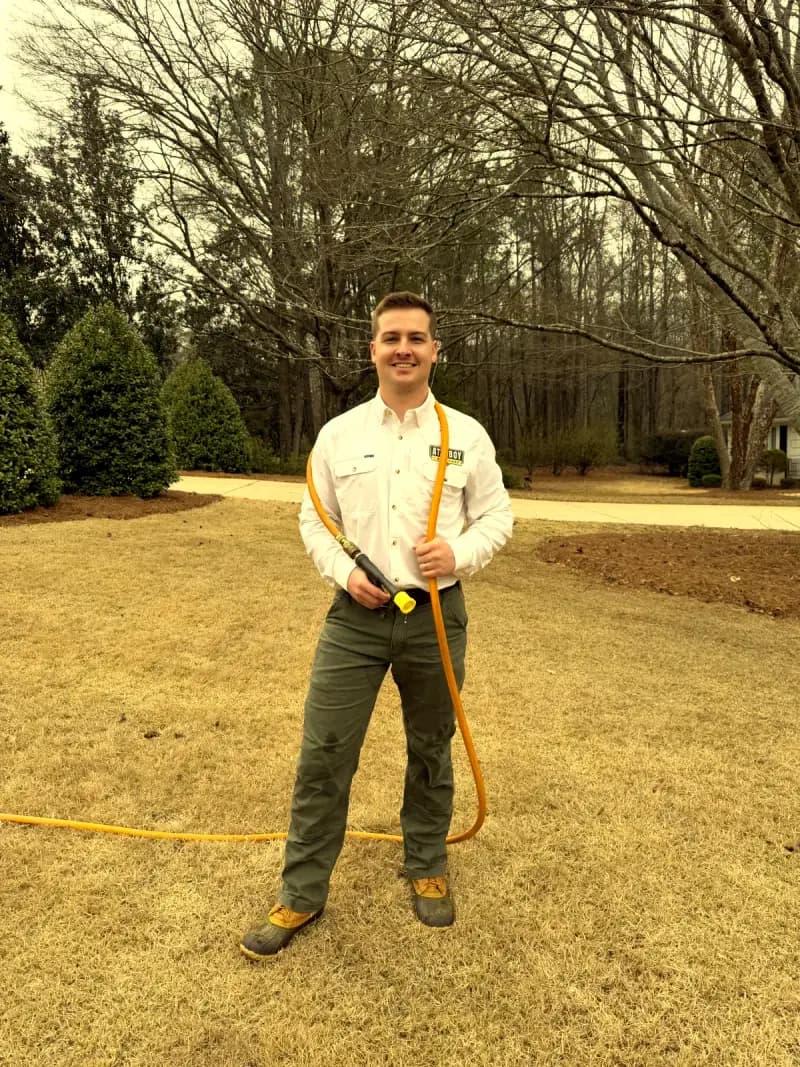
Written by Tyler Warnock
Founder and owner of Attaboy Lawn Care in Macon, Georgia. Licensed Georgia pesticide applicator (Cat. 24, #22324). Tyler treats lawns across Macon, Warner Robins, and the rest of Middle Georgia, and writes these guides from what the region’s bermuda, zoysia, and centipede yards actually do season to season.
Ready for results?
Get a Custom Quote for Your Lawn
Professional lawn care for Macon, Warner Robins, and Middle Georgia. No contracts, no obligation.