Nutsedge Killer: What Actually Works on Middle Georgia Lawns
Yellow-green shoots above your lawn may be nutsedge. Learn how to identify the plant, choose a treatment labeled for your grass, and manage regrowth.
Use a herbicide labeled for the nutsedge species and your lawn grass. Yellow and purple nutsedge are sedges, so a product chosen for crabgrass or broadleaf weeds may miss them. Treat young, actively growing plants, address excess moisture, and expect follow-up control.
The Yellow-Green Spikes Above Your Lawn
A patch that stands above the lawn soon after mowing may be nutsedge. Look for stiff leaves, a triangular stem and leaves arranged in three ranks. Color and height are clues, not a diagnosis: other weeds can grow faster than the surrounding turf.
Yellow and purple nutsedge are both sedges. Yellow nutsedge has pointed leaf tips and yellow-brown seedheads; purple nutsedge has blunter tips and purple-brown seedheads. Their underground tubers also differ. Confirm the species before choosing treatment. Clemson Extension’s nutsedge guide shows the identifying features.
Why the Same Patch Keeps Coming Back
Nutsedge survives below ground in tubers, often called nutlets, and underground stems called rhizomes. Removing the visible shoots does not necessarily remove that underground supply.
Excess irrigation and poor drainage favor nutsedge. Check leaking irrigation heads, downspouts and low areas that stay wet. Established plants can also persist under normal watering or dry conditions, so a patch does not prove the lawn is overwatered. UC Integrated Pest Management explains why fixing moisture alone will not remove an established infestation.
Infested soil and planting material can introduce tubers. Avoid moving soil from an affected patch into a clean area. Maintain dense turf with care suited to your grass and site; thin areas leave more room for weeds.
Check drainage and irrigation before adding more water.
Identify your lawn grass before choosing a herbicide.
Watch treated areas for regrowth instead of judging control by the first browned leaves.
Choose the Product by Its Label
A bottle labeled for lawn weeds is not automatically a nutsedge treatment. Check that its label covers the target sedge, your turf species and the place you intend to treat. A product suitable for Bermuda may have different directions or restrictions for centipedegrass or St. Augustinegrass.
University of Georgia Extension separates sedges from broadleaf and grassy weeds in Weed Control in Home Lawns. That distinction matters when a familiar weed killer leaves the same patch standing.
Follow the actual label for rate, timing, repeat applications, watering, temperature restrictions and re-entry. Do not transfer lawn directions to a flower bed: nearby ornamentals and the application site must also be allowed. Nonselective herbicides can injure desirable turf and plants.
Treat Active Growth, Then Recheck
Young, actively growing nutsedge is generally easier to manage than a mature patch with an established tuber supply. A calendar date alone cannot tell you whether a treatment is appropriate. Plant growth, weather, turf condition and the product label determine the timing.
Repeated treatment may be needed as more shoots emerge. The number of applications and the interval come from the label and observed regrowth, not a blanket promise that two or three sprays will finish every patch. Purdue’s sedge-control guidance explains the importance of plant age and follow-up control.
A standard crabgrass prevention program should not be assumed to control an established sedge patch. Some products have specific yellow-nutsedge uses, but that does not make every pre-emergent a nutsedge treatment. Our pre-emergent and post-emergent comparison explains the different jobs.
Should You Pull Nutsedge by Hand?
For a few young plants, careful removal can help. It often leaves tubers behind, so check the spot and remove new growth rather than expecting one pull to finish the job. Mature colonies are harder to manage this way.
It is inaccurate to say that every pull scatters new tubers or inevitably makes a patch larger. The practical problem is that shoots can break away while underground structures survive. Avoid moving infested soil, and use a control plan suited to the size and species of the infestation.
What We Would Check on Your Lawn
We would identify the weed, confirm the lawn grass and inspect the growing conditions before recommending treatment. A wet patch can need both weed control and a drainage or irrigation change. Attaboy provides turf treatments; irrigation repair and regrading are separate work.
Weed control and fertilization make up our Core program. If you want help with a recurring patch, use Get Quote or call (478) 400-9897. Tell us where it grows and what you have already applied. We serve Macon, Warner Robins and the surrounding approved Middle Georgia service area.
Keep pets and kids off treated turf until it is dry, and follow any additional directions for the product applied. More about our weed-control service.
Key takeaways
What to Remember
Yellow and purple nutsedge are both sedges; identify the plant before treating it.
Use a product labeled for the weed, turf species and application site.
Address excess moisture, but expect established tubers to need follow-up control.
Hand removal can help with a few young plants; watch for regrowth.
Common questions
Frequently Asked Questions
What kills nutsedge without killing my grass?
A selective product labeled for both the nutsedge species and your turf. Read the complete label: suitability and directions vary by grass, product and site.
Does pulling nutsedge make it worse?
Pulling can leave tubers behind, which allows regrowth. Careful, repeated removal can help small young infestations. It does not automatically scatter tubers or make every patch larger.
Why does nutsedge keep returning?
Underground tubers and rhizomes can survive after visible leaves are removed or treated. New shoots need follow-up attention, and excess moisture may continue to favor the weed.
Keep reading
Related Resources
More in Lawn Tips
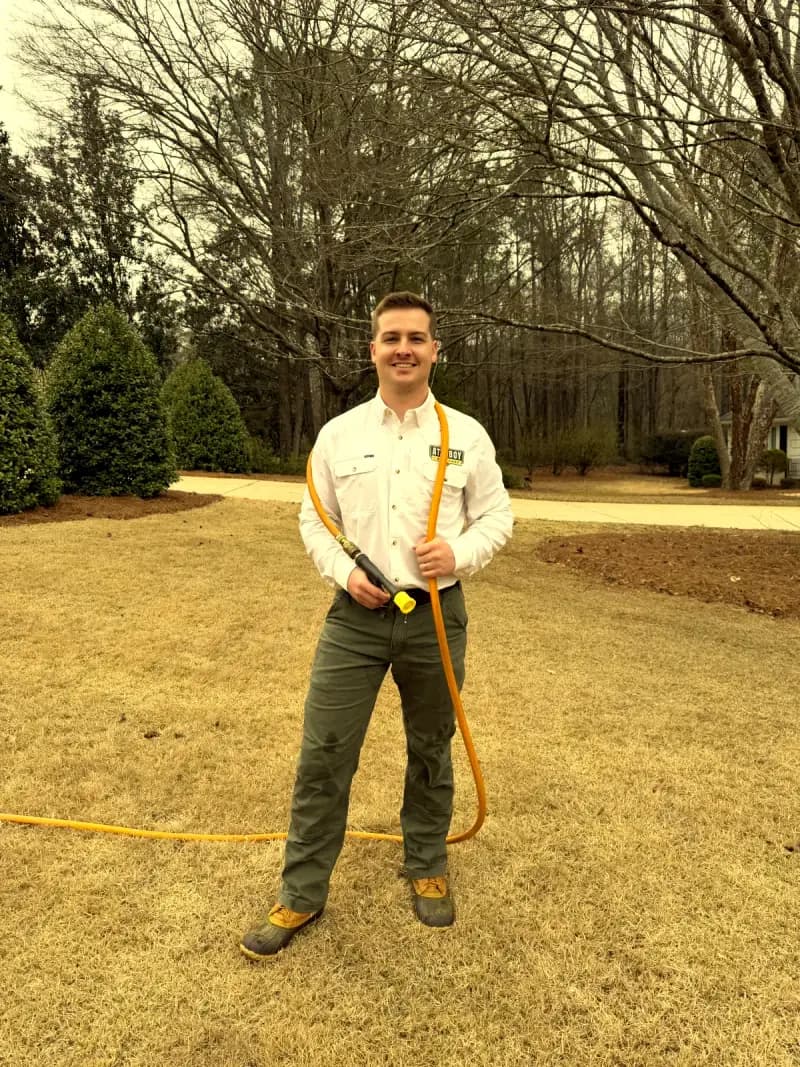
Written by Tyler Warnock
Founder and owner of Attaboy Lawn Care in Macon, Georgia. Licensed Georgia pesticide applicator (Cat. 24, #22324). Tyler treats lawns across Macon, Warner Robins, and the rest of Middle Georgia, and writes these guides from what the region’s bermuda, zoysia, and centipede yards actually do season to season.
Ready for results?
Get a Custom Quote for Your Lawn
Professional lawn care for Macon, Warner Robins, and Middle Georgia. No contracts, no obligation.