
How to Prepare Your Lawn for Summer in Georgia
Summer readiness starts in late spring. A few key steps in April and May make the difference between a lawn that survives and one that thrives.
In Middle Georgia, summer prep happens in late April to mid-May, before the heat arrives. Get spring fertilizer down while the grass is actively growing, treat breakthrough weeds and nutsedge, test every irrigation zone, raise mowing height by half an inch, and patch bare spots. We also watch for armyworms, chinch bugs, and grubs starting in May.
Why Late Spring Prep Matters
The work you do in April and May determines how your lawn handles June, July, and August. Middle Georgia summers bring triple-digit heat indexes, unpredictable rainfall, and peak weed and insect pressure all at once. A lawn that enters summer with strong roots, dense turf cover, and proper nutrition weathers these conditions. A lawn that limps into summer thin, underfed, or already fighting weeds will struggle from day one.
We see this pattern every year across Macon, Warner Robins, and the surrounding communities. The lawns that look great in August are the ones where homeowners (or their lawn care provider) put in the work during April and May. The lawns that turn brown, get overrun with nutsedge, or develop disease are almost always the ones where spring prep was skipped or delayed.
Step 1: Get Your Fertilization on Track
By late April, your warm-season grass should be fully green and actively growing. If you have not applied spring fertilizer yet, now is the time. A slow-release nitrogen fertilizer gives bermuda the sustained feeding it needs heading into the growing season. For centipede, keep nitrogen light and consider an iron supplement for color. The goal is building a strong, dense turf that handles summer stress.
The first fertilizer application of the season is the most important. It fuels the rapid growth period when bermuda and zoysia are filling in thin areas, thickening up, and building the canopy density that shades out weed seeds. A 16-4-8 slow-release blend works well for bermuda. For centipede, stick to 1 pound of nitrogen per 1,000 square feet or less and use iron for color improvement.
Timing matters. If you fertilize too early while the grass is still partially dormant, you feed weeds instead of the lawn. If you wait until June, you have missed the window when the grass can use that nutrition to build density. Late April to mid-May is the sweet spot for most Middle Georgia properties.
Step 2: Address Remaining Weeds
Pre-emergent should already be down, but post-emergent treatments target any breakthrough weeds. Nutsedge becomes a problem starting in May. It requires specific herbicides because standard broadleaf products do not work on it. Get existing weeds under control before summer heat limits your treatment options. Some herbicides can stress warm-season grass when applied in high temperatures.
This is also the time to deal with any lingering winter weeds before they go to seed. Henbit and chickweed that survived through spring are actively producing seeds right now. Every seed head that matures drops hundreds of seeds into your soil, creating next winter's weed crop. Pull them, spray them, or mow them before they seed out.
If you are seeing clover, dollarweed, or Virginia buttonweed, treat them now while the desirable grass is growing strong enough to fill in behind the dead weeds. Treating weeds in spring, when the lawn is actively growing, gives you the best results because the grass fills in the voids before new weeds can take hold.
Treat nutsedge with a sulfonylurea herbicide, not standard broadleaf products.
Apply post-emergent herbicides in the morning when temps are below 85 degrees.
Target remaining winter weeds before they go to seed.
Step 3: Check Your Irrigation System
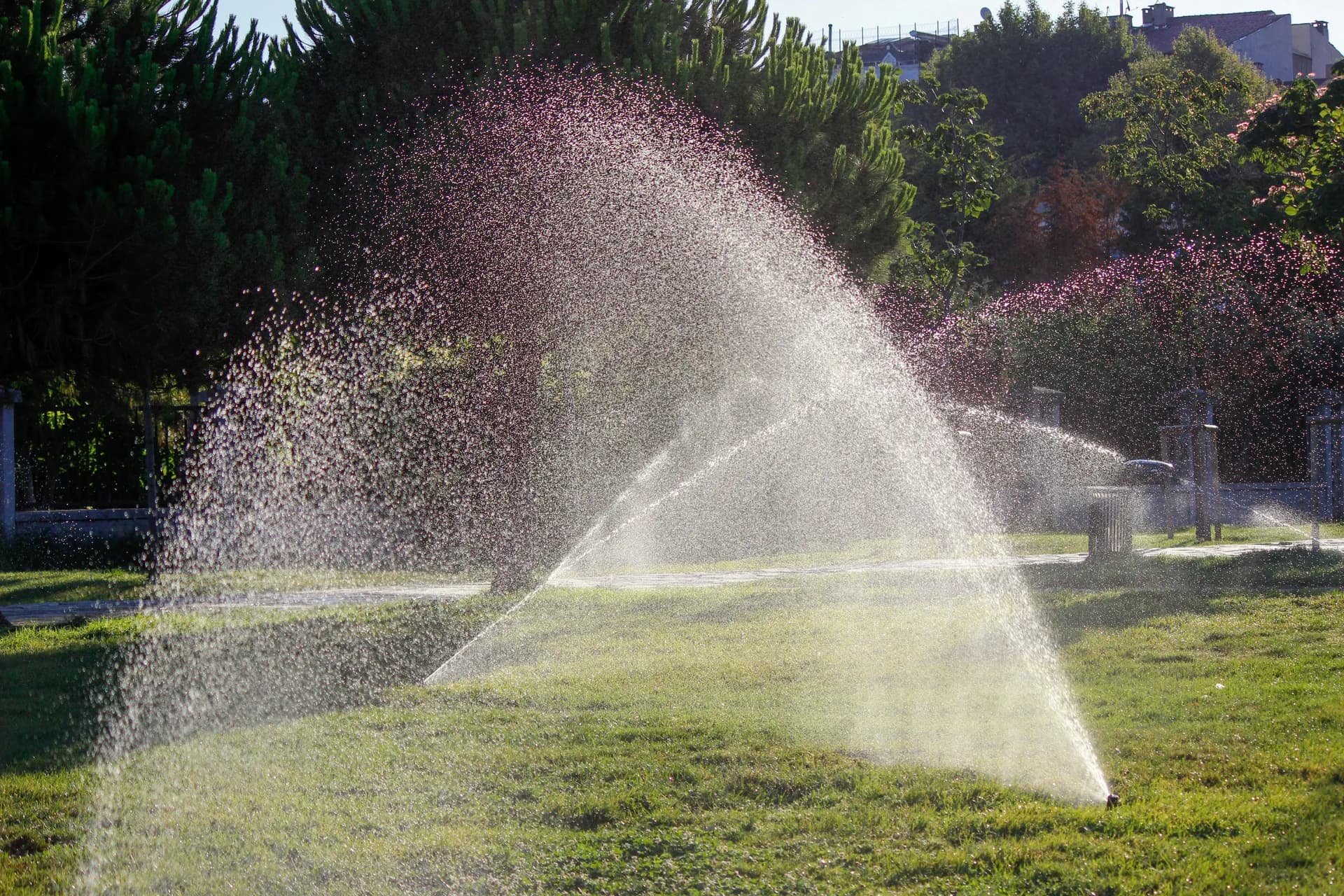
Before you need your irrigation system, make sure it works. Run each zone and check for clogged heads, misaligned sprinklers, and dry spots. Replace broken heads. Adjust coverage so water hits the lawn, not the sidewalk or house. A properly functioning irrigation system is your primary defense against summer drought stress.
Walk your property while each zone runs. Look for heads that are not popping up fully, spray patterns that have shifted, and dry corners where coverage does not overlap. Check your controller settings and update the schedule for summer watering: 2 to 3 days per week, early morning, delivering about half an inch per session. Fix problems now when parts are in stock and irrigation companies are not slammed with emergency calls.
Step 4: Raise the Mowing Height
As temperatures climb, raise your mowing height by half an inch. Taller grass shades the soil, reduces water evaporation, and keeps root temperatures lower. Sharpen your mower blades. Dull cuts cause browning at the tips and stress the plant. Plan to mow at least weekly during peak growth, May through August for bermuda.
For bermuda, move from 1.5 inches to 2 inches by late May. Zoysia should go from 2 inches to about 2.5 inches. Centipede and St. Augustine should be kept at 2.5 to 3 inches through summer. That extra half inch of blade height makes a measurable difference in soil temperature and moisture retention. It is the simplest change you can make with the biggest impact.
Step 5: Address Thin or Bare Areas
Late spring is the best time to patch thin areas and bare spots in warm-season lawns. The grass is actively growing and spreading, so sod plugs and patches establish quickly. Loosen the soil in bare areas, add a thin layer of compost, and install sod pieces cut to fit. Water the patches twice daily for 2 weeks to help roots establish.
Do not wait until summer to fix bare spots. Bare soil in July becomes a nutsedge farm by August. Any area that is not covered by desirable grass is an invitation for weeds. A dense, uniform lawn going into summer is your best defense against summer weed invasion.
Step 6: Plan for Pest Season
May is when insect pressure starts building in Middle Georgia. Armyworms, chinch bugs, and grubs all become active during late spring and summer. You do not need to treat preemptively for everything, but you should know what to watch for.
Check your lawn weekly for signs of insect activity: birds feeding heavily on the turf, irregular brown patches, or moths fluttering low over the grass at dusk. Early detection is the key to effective insect control. A small armyworm population treated quickly costs a fraction of what it takes to repair a lawn after a full-blown infestation. Insect control is available as an add-on to our core weed control and fertilization program.
Get Professional Help Before Summer Hits
If you are behind on spring lawn care or unsure where your lawn stands heading into summer, now is the time to act. Our core program covers weed control and fertilization, the two things that make the biggest difference for lawn health during summer. We also offer add-ons for soil conditioning, disease control, and insect control.
We serve Macon, Warner Robins, Byron, Bonaire, Centerville, Kathleen, and Bolingbroke. Get a quote. Tyler and our team will assess your lawn and build a plan that matches what your property actually needs.
Key takeaways
What to Remember
Late April to mid-May is the window for summer prep. Work done now determines how your lawn performs in July and August.
Get spring fertilizer down while the grass is actively growing and filling in. Late April is ideal for most warm-season grasses.
Treat breakthrough weeds before summer heat limits herbicide options. Nutsedge requires specific products.
Test your irrigation system before you need it. Fix problems now when parts are available.
Raise mowing height by half an inch as temperatures climb. Taller grass shades soil and holds moisture.
Fix bare spots in spring when grass is actively spreading. Bare soil in summer becomes weed habitat.
Common questions
Frequently Asked Questions
When should I start summer lawn prep in Georgia?
Start in late April to early May as nighttime temperatures stay consistently above 60 degrees. This is when warm-season grasses are actively growing and can handle increased treatment and fertilization.
Should I scalp my lawn before summer?
Only bermuda lawns benefit from a spring scalping, and only before the first green-up in early spring. Do not scalp zoysia, centipede, or St. Augustine as it damages their crown and causes lasting thinning.
What fertilizer should I use for summer prep?
A slow-release nitrogen blend like 16-4-8 works well for bermuda and zoysia. Centipede needs lighter nitrogen, around 1 pound per 1,000 square feet. Iron supplements add color without the growth surge of nitrogen.
How do I know if my lawn is ready for summer?
A summer-ready lawn is fully green, dense enough that you cannot see bare soil between grass blades, free of active weed problems, and on a consistent mowing schedule. If your lawn has thin spots, bare areas, or active weeds, address those before summer heat arrives.
Should I water more as summer approaches?
Increase watering as temperatures rise, but focus on depth over frequency. Two to three deep waterings per week beats daily light sprinkles. Transition to your summer watering schedule by late May.
Keep reading
Related Resources
More in How-To Guides
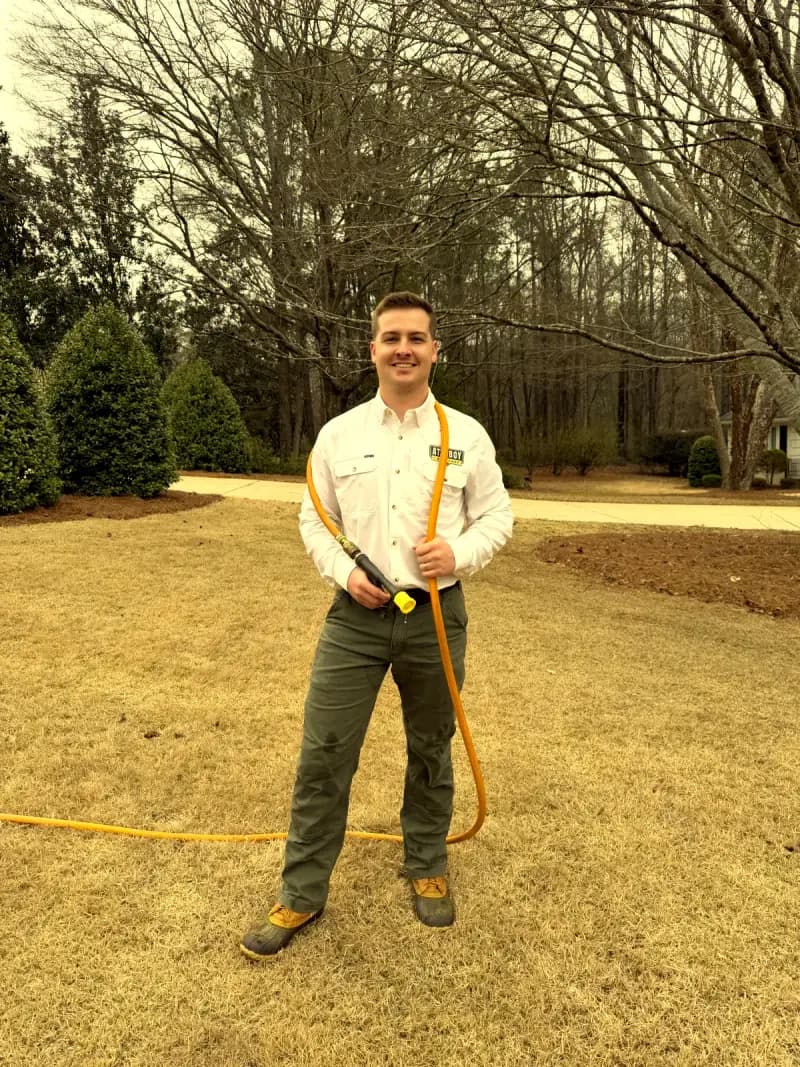
Written by Tyler Warnock
Founder and owner of Attaboy Lawn Care in Macon, Georgia. Licensed Georgia pesticide applicator (Cat. 24, #22324). Tyler treats lawns across Macon, Warner Robins, and the rest of Middle Georgia, and writes these guides from what the region’s bermuda, zoysia, and centipede yards actually do season to season.
Ready for results?
Get a Custom Quote for Your Lawn
Professional lawn care for Macon, Warner Robins, and Middle Georgia. No contracts, no obligation.