
The Complete Bermuda Grass Care Guide for Middle Georgia
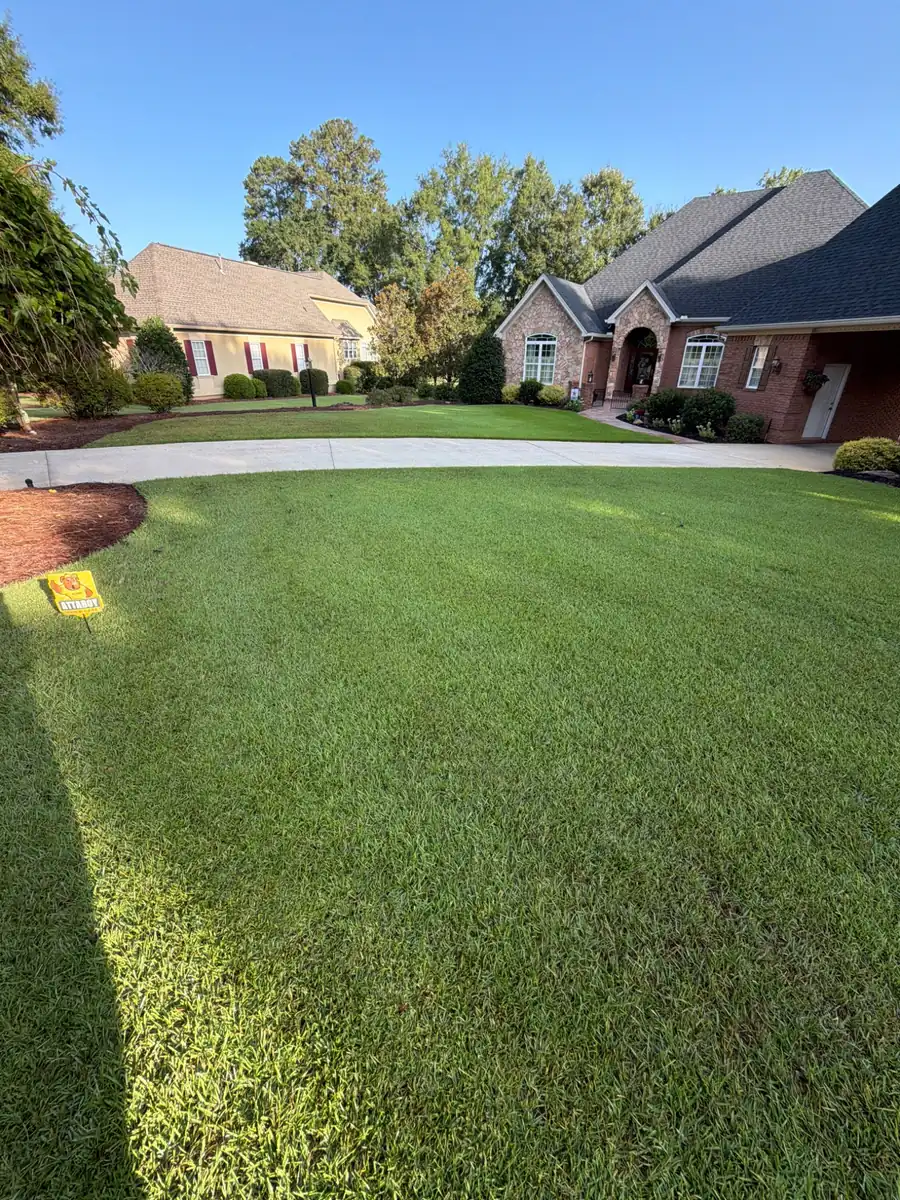
Bermuda grass is the workhorse of Middle Georgia lawns. Get the timing, inputs, and techniques right and it rewards you with a thick, green lawn all summer long. Here's everything you need to know.
Bermuda grass care in Middle Georgia comes down to timing. Wait for soil temps to hit 65°F and consistent green-up before you fertilize, then feed every six to eight weeks until mid-September. Mow at 1 to 1.5 inches every five to seven days in summer. Water 1 inch a week in two or three deep sessions. Apply pre-emergent before soil hits 55°F.
Why Bermuda Grass Dominates Middle Georgia Lawns
If you drive through Macon, Warner Robins, or Bonaire in July, almost every thick, dark-green lawn you see is Bermuda grass. There's a reason for that.
Bermuda is built for Georgia summers. It loves heat, tolerates drought once established, and bounces back from foot traffic faster than any other warm-season grass we work with. It spreads aggressively through both stolons and rhizomes, which means it fills in bare spots on its own when conditions are right.
The tradeoff? Bermuda is high-maintenance compared to centipede. It goes dormant and turns tan in winter, it needs regular fertilization during the growing season, and it requires more mowing than most homeowners expect. But when you manage it well, the results are hard to beat.
Bermuda Grass Seasonal Calendar for Georgia
Bermuda follows the sun and the soil temperature, not the calendar date. In Middle Georgia, soil temps typically hit the 65°F threshold, the point where Bermuda starts actively growing, sometime between mid-March and early April.
Knowing what to do and when is half the battle. The table below lays out the key tasks by season so nothing falls through the cracks.
One mistake we see constantly: homeowners fertilizing Bermuda in February because the weather feels warm. Fertilizing dormant or barely-waking Bermuda wastes money and can push growth that a late frost will damage. Wait for consistent green-up before applying nitrogen.
Bermuda Grass Care Calendar: Middle Georgia
| Season | Months | Key Tasks |
|---|---|---|
| Late Winter | Feb – early Mar | Scalp the lawn to 0.5–1 inch before green-up, rake or bag clippings |
| Early Spring | Mar – Apr | Apply pre-emergent before soil hits 55°F, wait for green-up before first fertilization |
| Late Spring | May | First nitrogen application, begin mowing schedule, spot-treat weeds |
| Summer | Jun – Aug | Fertilize every 6-8 weeks, water deeply 2-3x per week, mow at 1–1.5 inches |
| Early Fall | Sep – Oct | Final fertilization by mid-September, reduce watering, let growth slow naturally |
| Late Fall / Winter | Nov – Jan | Lawn dormant, no fertilization, minimal watering, treat for weeds if needed |
How to Fertilize Bermuda Grass the Right Way
Bermuda is a heavy feeder. During the growing season, roughly May through September in Georgia, it needs regular nitrogen to stay thick and green. Starve it and it thins out, turns yellow-green, and weeds move in fast.
A standard approach for homeowners: apply a balanced starter fertilizer at green-up, then switch to a nitrogen-forward fertilizer every six to eight weeks through the summer. Stop fertilizing by mid-September. Pushing growth late in the season leaves Bermuda vulnerable when temperatures drop.
Soil testing changes everything here. Georgia clay soils, especially around Macon and Byron, are often low in potassium and have pH issues that make fertilizer less effective. A soil test tells you what's actually missing so you're not just guessing. We offer soil conditioning as an add-on to our core program specifically because so many lawns in this area have pH and nutrient imbalances that no amount of fertilizer can fix on its own.
Don't apply nitrogen to dormant Bermuda. It feeds weeds, not your lawn
Use a slow-release nitrogen source during summer to avoid burning the turf
Soil test every 2-3 years to catch pH drift before it becomes a problem
Stop all fertilization by mid-September to harden the grass before first frost
Water lightly after dry fertilizer applications to activate and prevent burn
Mowing Bermuda Grass: Height, Frequency, and the Spring Scalp
Bermuda grass wants to be cut short. The ideal mowing height is 1 to 1.5 inches for most home lawns. Cut it at 3 inches like you would fescue and you'll get a thick thatch layer, poor color, and a spongy feel underfoot.
During peak summer growth, you may need to mow Bermuda every five to seven days. That surprises a lot of homeowners used to cutting every two weeks. If you let it get too tall between cuts and then take it back down to 1.5 inches, you're scalping it, removing too much green at once, which stresses the plant and opens the door to weeds and disease.
The spring scalp is different. In late February or early March, before green-up, mowing Bermuda down to about 0.5 to 1 inch removes dead thatch and lets sunlight hit the soil. It speeds up green-up and gives you a cleaner-looking lawn coming out of winter. Use a bag or rake up the clippings. Leaving a thick mat of dead material on the lawn blocks light and holds moisture against the crown.
Set mowing height between 1 and 1.5 inches during the growing season
Never remove more than one-third of the blade in a single mowing
Scalp the lawn in late winter, before green-up, to remove dead thatch
Keep mower blades sharp. Dull blades tear grass and create entry points for disease
Mow more frequently in summer to avoid shock-cutting an overgrown lawn
Watering Bermuda: Less Is More Once It's Established
Bermuda grass has a deep root system and handles drought better than most turf. But that doesn't mean you should ignore watering, especially in the first year after seeding or sodding.
Once established, Bermuda does best with deep, infrequent watering. Aim for about 1 inch of water per week during summer, delivered in two or three sessions rather than a little every day. Deep watering trains roots to go down. Shallow daily watering keeps roots near the surface and makes the lawn more vulnerable to drought stress.
Watch the lawn, not just the schedule. Bermuda tells you it's thirsty before it starts browning. The blades fold lengthwise and the color shifts from bright green to a dull blue-green. If you see that, water the same day. By the time Bermuda turns tan, it's already under serious stress.
During periods of extreme heat, which are common in Macon and Warner Robins through July and August, you may need to water three times a week. Adjust based on rainfall. After a solid inch of rain, skip your next scheduled cycle.
Weed Control in Bermuda Lawns: Pre-Emergent Timing Matters
Bermuda's aggressive spread is your best long-term weed defense. A thick, healthy stand of Bermuda crowds out most weeds on its own. But getting to that point takes consistent weed control, especially in the first few years or after any significant thinning.
Pre-emergent herbicide is the most important tool. Applied in early spring, before soil temperatures reach 55°F, which in Middle Georgia typically means late February to mid-March, it prevents crabgrass, goosegrass, and other summer annuals from germinating. Miss that window and you're playing catch-up all summer with post-emergent treatments.
A second pre-emergent in fall targets winter annuals like annual bluegrass and henbit. These are the weeds that germinate in fall and become visible problems by February. Apply the fall pre-emergent around mid-September to mid-October.
During the growing season, spot-treat broadleaf weeds with a three-way herbicide labeled for Bermuda. Avoid blanket applications of herbicides during extreme heat, above 90°F, as Bermuda can absorb the product through stress-opened pores and show temporary damage.
Diseases and Pests to Watch in Bermuda Lawns
Bermuda is tough, but it's not immune to problems. Knowing what to look for saves you from chasing the wrong fix.
Large patch is a fungal disease that shows up in spring and fall when soil temperatures are between 50°F and 70°F and conditions are wet. It creates circular tan or straw-colored patches that can grow several feet in diameter. Large patch is most damaging when it attacks Bermuda in fall right before dormancy. The lawn doesn't have time to recover. Preventative fungicide in October is worth considering if you've had problems before.
Dollar spot is another fungal disease common in under-fertilized Bermuda. Small, silver-dollar-sized spots that merge together are the telltale sign. Proper nitrogen levels during the growing season are your first line of defense.
On the insect side, armyworms are the biggest threat to Bermuda in Georgia. They can strip a lawn in 48 hours. A lush green yard on Monday can look like straw by Wednesday. Check for them in late summer and fall by watching for birds pecking at your lawn repeatedly. Grubs are a secondary concern, feeding on roots below the surface and causing patches that pull up like loose carpet.
We offer lawn disease control and insect control as add-ons to our core program for homeowners who want consistent monitoring and treatment, not just a reactive spray when something goes wrong.
Getting Bermuda Ready for Spring Right Now
If you're reading this in March or April, your Bermuda is either just waking up or about to. This is the most important window of the year.
Now is the time to scalp if you haven't already, apply your spring pre-emergent, and get a soil test if it's been more than two years. Hold off on fertilizing until you see 50% or more green coverage across the lawn. That's the sign the grass is actively growing and ready to use what you're giving it.
If you want someone else to handle it, that's what we're here for. Our weed control and fertilization program covers the full growing season, with flat monthly pricing, no contracts, and a free re-treatment guarantee if weeds come back between visits. We treat lawns in Macon, Warner Robins, Bonaire, Byron, Centerville, Kathleen, and Bolingbroke.
You can get a quote at attaboylawncare.com. First treatment happens within 24 hours of signing up.
Key takeaways
What to Remember
Don't fertilize Bermuda until you see consistent green-up. Soil temperature at 65°F is your trigger, not the calendar date
Mow Bermuda at 1 to 1.5 inches during the growing season and scalp it once in late winter before green-up
Apply pre-emergent herbicide in late February to mid-March to stop crabgrass before it starts. Missing this window costs you the whole season
Water deeply two to three times per week rather than shallow daily irrigation to build deep roots and drought resistance
Armyworms can strip a Bermuda lawn in 48 hours. Monitor in late summer and act immediately if you see feeding damage
Stop all nitrogen fertilization by mid-September to avoid pushing tender growth before the first frost
Common questions
Frequently Asked Questions
When should I fertilize Bermuda grass in Georgia?
Start fertilizing after you see consistent green-up across the lawn, typically mid-April to early May in Middle Georgia. The lawn needs to be actively growing to use nitrogen. Apply every six to eight weeks through summer and stop completely by mid-September. Fertilizing too late in fall pushes soft growth that's vulnerable to cold damage.
What is the best mowing height for Bermuda grass?
Keep Bermuda between 1 and 1.5 inches during the growing season. Mowing higher than 2 inches leads to thatch buildup and a spongy, thin-looking lawn. During peak summer growth, plan to mow every five to seven days. In late winter before green-up, scalp the lawn down to about 0.5 to 1 inch to remove dead material and speed up spring recovery.
How much water does Bermuda grass need per week?
Established Bermuda needs about 1 inch of water per week during summer. Split that into two or three deep watering sessions rather than a little every day. Deep, infrequent watering builds a stronger root system. During extreme heat or drought in July and August, increase to three sessions per week. Watch for blades folding lengthwise. That's Bermuda telling you it's thirsty before visible browning starts.
Why does Bermuda grass turn brown in winter?
Bermuda goes dormant when soil temperatures fall below 50°F, which happens every winter in Middle Georgia. The lawn turns tan or straw-colored but the roots are still alive. This is normal and expected. Dormant Bermuda doesn't need fertilizer or heavy watering. It will green back up in spring once soil temps rise above 65°F, usually sometime between late March and mid-April depending on the year.
What weeds are hardest to control in a Bermuda lawn?
Crabgrass and goosegrass are the biggest summer weed problems in Bermuda. Both germinate from seed in spring and spread fast. Pre-emergent herbicide applied before soil temperatures hit 55°F is the only reliable way to stop them. Post-emergent control is harder and less complete. In winter, annual bluegrass and henbit are common invaders. A fall pre-emergent applied in September to October handles those.
Can I overseed Bermuda grass in the fall?
You can overseed dormant Bermuda with annual ryegrass in fall for temporary winter color, but keep in mind that ryegrass competes with Bermuda's spring green-up and should be managed carefully. For permanent coverage improvements, seed or sod Bermuda in late spring or early summer when soil temps are consistently above 65°F. Seeding in fall gives Bermuda no chance to establish before dormancy.
Keep reading
Related Resources
More in How-To Guides
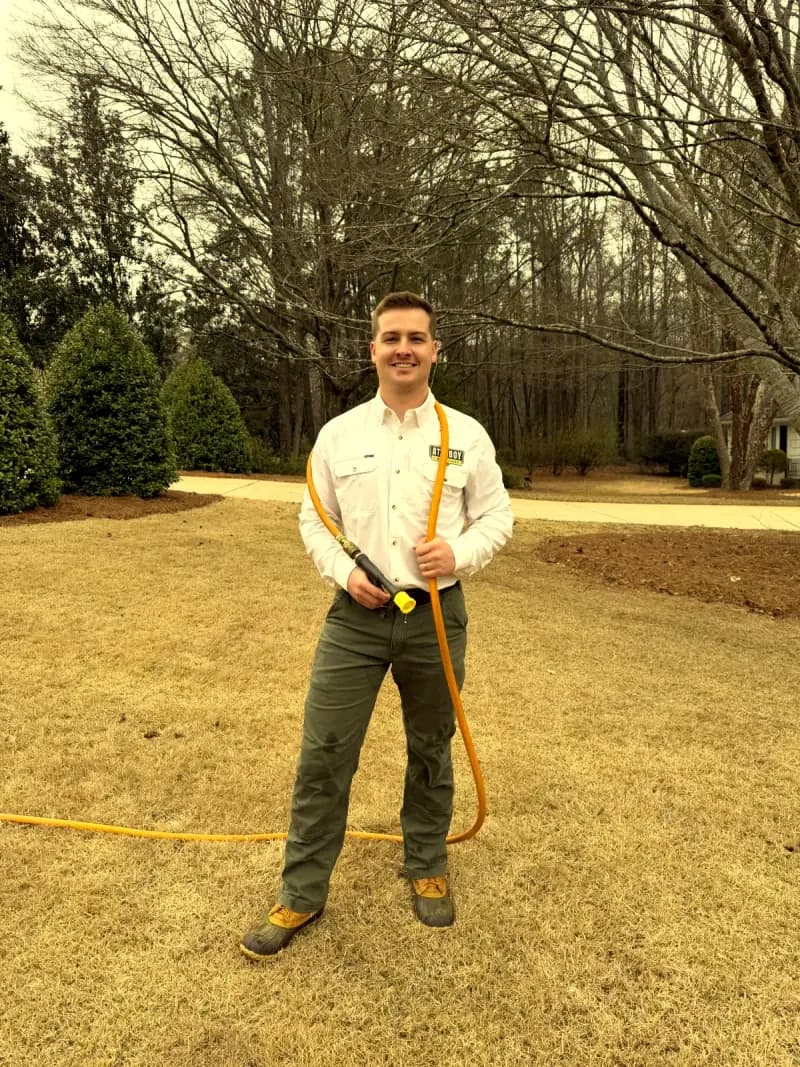
Written by Tyler Warnock
Founder and owner of Attaboy Lawn Care in Macon, Georgia. Licensed Georgia pesticide applicator (Cat. 24, #22324). Tyler treats lawns across Macon, Warner Robins, and the rest of Middle Georgia, and writes these guides from what the region’s bermuda, zoysia, and centipede yards actually do season to season.
Ready for results?
Get a Custom Quote for Your Lawn
Professional lawn care for Macon, Warner Robins, and Middle Georgia. No contracts, no obligation.