Best Time to Fertilize Your Lawn in Georgia
Fertilizer timing matters more than fertilizer brand. Here is when to feed your Middle Georgia lawn for the best results throughout the year.
The best time to fertilize a Middle Georgia lawn is once the grass is fully green and actively growing. For bermuda, that means mid-April. Centipede and St. Augustine wait until late April or May. Feed every 6 to 8 weeks with slow-release nitrogen, stop nitrogen by mid-September, and finish with a potassium-heavy blend in early October.
Why Timing Matters More Than Product
The most common fertilization mistake in Georgia is applying at the wrong time. Fertilizing dormant grass feeds weeds. Fertilizing during drought stresses the plant. Fertilizing too late in fall pushes tender growth that freezes. Even the best fertilizer applied at the wrong time does more harm than good. Your grass type and the season dictate everything.
We see this constantly in Macon and Warner Robins. A homeowner picks up a bag of fertilizer in March because the calendar says spring, but the lawn is still mostly brown. That nitrogen goes straight to henbit and chickweed while the dormant grass cannot absorb any of it. Two months later, the weeds are thriving and the lawn is no better off.
The short answer is: let the grass tell you when it is ready. Green, actively growing turf can use fertilizer. Brown, dormant turf cannot. That simple rule prevents most fertilization mistakes.
Monthly Fertilization Calendar
This calendar covers all four common warm-season grasses in Middle Georgia. Not every grass type needs attention every month. The key is knowing which months apply to your lawn.
Middle Georgia Fertilization Calendar by Grass Type
| Month | Bermuda | Zoysia | Centipede | St. Augustine |
|---|---|---|---|---|
| January to March | None (dormant) | None (dormant) | None (dormant) | None (dormant) |
| April | First fertilizer once fully green | First fertilizer once fully green | Wait until late April or May | Wait until late April or May |
| May | Second application if needed | Monitor, fertilize if thin | First light application | First application |
| June | Slow-release nitrogen | Slow-release nitrogen | Iron supplement for color | Light nitrogen or iron |
| July | Light nitrogen or iron | Iron supplement | None | None or light iron |
| August | Light application | None | None | None |
| September | Potassium-heavy fall blend | Potassium-heavy fall blend | Potassium only if soil test calls for it | Potassium-heavy fall blend |
| October to December | None (preparing for dormancy) | None | None | None |
Bermuda Grass Fertilization Schedule
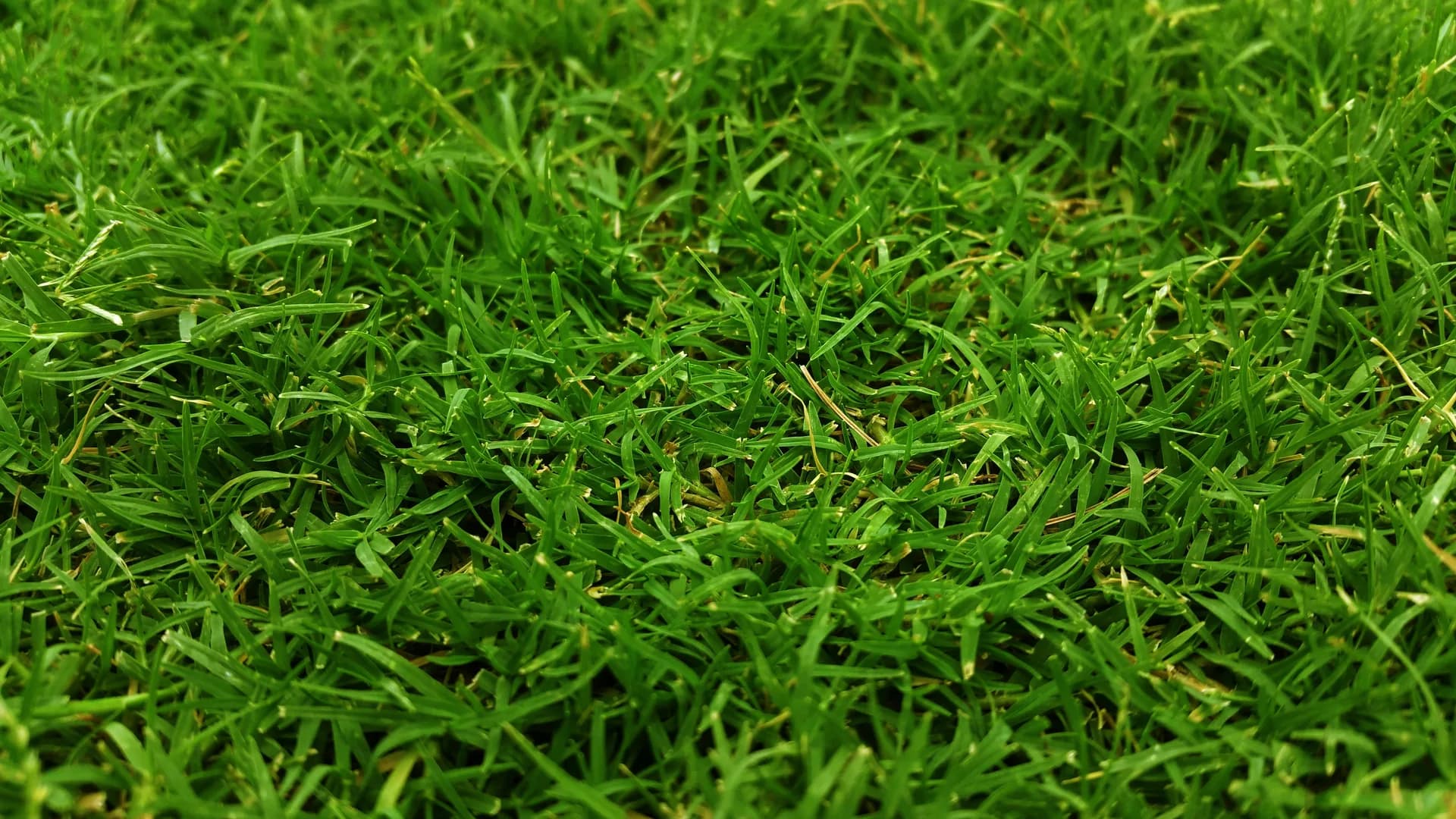
Bermuda is the most common grass in Middle Georgia and responds well to nitrogen. Start fertilizing in mid-April once the lawn is fully green. Apply every 6 to 8 weeks through September. Use a slow-release nitrogen source to avoid burn and reduce surge growth. Bermuda can handle 3 to 4 pounds of nitrogen per 1,000 square feet over the entire growing season.
The first application is the most important. It kicks off the growing season and helps bermuda thicken before weed seeds get a foothold. A 16-4-8 or similar slow-release blend works well for this round. Spread it evenly with a calibrated broadcast spreader, then water it in within 24 hours.
In June and July, switch to lighter applications or iron supplements. Heavy nitrogen during peak heat forces the lawn to grow fast when it should be conserving energy. Iron gives you the dark green color without the growth surge. If your lawn is already thick and healthy, you can skip the July application entirely.
Mid-April: first application once lawn is fully green.
Early June: second application with slow-release nitrogen.
Late July: light application or iron supplement during peak heat.
Early September: fall application with higher potassium.
Centipede and St. Augustine Timing
Centipede and St. Augustine need far less nitrogen than bermuda. Over-fertilizing centipede is one of the fastest ways to damage it. Start feeding centipede in late April or early May and limit total nitrogen to 1 to 2 pounds per 1,000 square feet for the entire season. St. Augustine can handle slightly more but still needs a lighter touch than bermuda.
Centipede responds better to iron than to nitrogen for color improvement. An iron-only application in June gives centipede a darker green without the thatch buildup and disease risk that excess nitrogen creates. If your centipede lawn looks pale, reach for iron before reaching for fertilizer.
St. Augustine in Middle Georgia grows more actively than centipede and can handle 2 to 3 applications per season. Start in late April, add a light round in June, and finish with a potassium application in September. Avoid nitrogen after September because St. Augustine is the least cold-hardy option and late growth makes freeze damage worse.
Centipede: 1 to 2 lbs nitrogen per 1,000 sq ft per year maximum.
St. Augustine: 2 to 3 lbs nitrogen per 1,000 sq ft per year.
Both types benefit from iron supplements for color without excess growth.
Zoysia Fertilization
Zoysia falls between bermuda and centipede in terms of nitrogen needs. It can handle 2 to 3 pounds of nitrogen per 1,000 square feet per year, spread across 2 to 3 applications during the growing season. Zoysia greens up later than bermuda in spring, so do not rush the first application. Wait until the lawn is at least 80 percent green before fertilizing.
Zoysia responds especially well to potassium in the fall application. The extra potassium strengthens cell walls and improves cold hardiness, which matters in Middle Georgia where occasional cold snaps can damage warm-season turf. A 15-0-15 or similar fall blend works well for the September application.
When to Stop Fertilizing in Fall
Stop applying nitrogen 4 to 6 weeks before the first expected frost in your area. For Middle Georgia, that means the last nitrogen application should be no later than mid-September. A final potassium-heavy application in early October hardens the grass for winter without promoting new growth.
The reason for this cutoff is straightforward. Nitrogen pushes new leaf growth. New growth is tender and vulnerable to frost. If you fertilize in October and a hard freeze hits in November, the new growth dies back and weakens the plant heading into winter. Potassium does not cause new growth, which is why it is safe to apply later in the season.
Common Fertilization Mistakes
Besides poor timing, the most common mistakes we see are uneven application and wrong product selection. A broadcast spreader that is not calibrated properly lays down stripes of heavy and light coverage. You end up with dark green stripes where you applied too much and pale stripes where you missed. Calibrate your spreader before every application, or hire a professional who does this daily.
Product selection matters too. Quick-release nitrogen gives you a fast green-up that fades in 2 to 3 weeks, followed by a growth surge that means extra mowing. Slow-release nitrogen feeds the lawn gradually over 6 to 8 weeks with consistent color and growth. Slow-release costs more per bag but delivers better results with fewer applications.
One more mistake worth mentioning: fertilizing during drought. If your lawn is brown from heat stress and you throw down nitrogen, you are adding salt stress on top of water stress. Water the lawn back to health first, then fertilize once it is actively growing again.
Key takeaways
What to Remember
Do not fertilize until your lawn is fully green and actively growing. For bermuda, that is mid-April in Middle Georgia.
Bermuda can handle 3 to 4 lbs of nitrogen per 1,000 sq ft per year. Centipede needs only 1 to 2 lbs.
Stop nitrogen applications by mid-September. A potassium-heavy fall blend in early October is safe.
Iron supplements provide green color without the growth surge and disease risk of nitrogen.
Slow-release fertilizer outperforms quick-release for consistent color and fewer applications.
Never fertilize during drought. Water the lawn back to health first.
Common questions
Frequently Asked Questions
Can I fertilize my lawn in winter?
No. Warm-season grasses are dormant in winter and cannot absorb nutrients. Winter fertilization feeds weeds and wastes product.
What happens if I fertilize too early in spring?
Fertilizing before your grass is actively growing feeds cool-season weeds and can cause nutrient runoff. Wait until the lawn is fully green before applying.
How do I know if my lawn needs fertilizer?
Pale color during active growth, slow fill-in of thin areas, and poor recovery from mowing are signs your lawn needs nutrients. A soil test confirms exactly what is missing.
Is liquid or granular fertilizer better?
Both work. Granular slow-release is more common for lawns because it feeds the grass over 6 to 8 weeks. Liquid provides faster results but needs more frequent application. Professional programs often use both.
Can I fertilize and apply weed killer at the same time?
Yes, many professional and consumer products combine fertilizer with pre-emergent or post-emergent herbicide. These "weed and feed" products work, but the timing must match both the fertilizer schedule and the weed control window.
Keep reading
Related Resources
More in Seasonal
Written by Tyler Warnock
Founder and owner of Attaboy Lawn Care in Macon, Georgia. Licensed Georgia pesticide applicator (Cat. 24, #22324). Tyler treats lawns across Macon, Warner Robins, and the rest of Middle Georgia, and writes these guides from what the region’s bermuda, zoysia, and centipede yards actually do season to season.
Ready for results?
Get a Custom Quote for Your Lawn
Professional lawn care for Macon, Warner Robins, and Middle Georgia. No contracts, no obligation.