Complete Lawn Care Guide for Warner Robins
Warner Robins lawns deal with sandy-clay soil, fire ant pressure, and summer heat. Here is a complete guide tailored to Houston County conditions.
Warner Robins lawns need year-round care built around sandy-clay soil, fire ant pressure, and summer heat. The soil dries faster than Macon clay, so irrigate a day or two sooner during dry spells. We treat every 6 to 8 weeks, use broadcast bait plus mound treatment for fire ants, and aerate compacted yards.
Warner Robins Soil and Climate
Warner Robins sits in Houston County where the soil transitions from heavy red clay to sandy-clay mixes. This transition zone drains slightly better than pure Bibb County clay but still compacts under foot traffic and heavy rain. The area falls in USDA Zone 8a with the same hot summers as Macon but slightly sandier soil that dries out faster during drought. Average annual rainfall is about 47 inches.
The soil composition varies across Houston County. Neighborhoods closer to Robins Air Force Base and along Highway 96 tend to have sandier mixes. Areas closer to the Bibb County line lean heavier toward pure clay. This matters for watering schedules and aeration timing because sandy-clay dries out faster than heavy clay, and your lawn will show drought stress sooner.
Summer temperatures regularly exceed 95 degrees in Warner Robins. Combined with the sandy-clay soil that dries out quickly, July and August are the highest-stress months for local lawns. The flip side is that Warner Robins winters are mild enough for warm-season grasses to perform well. Hard freezes happen, but they are short-lived and rarely cause lasting damage to established turf.
Seasonal Treatment Calendar for Warner Robins
Warner Robins lawns need year-round treatment because weeds and pests do not take seasons off. The exact timing shifts slightly from year to year based on weather, but the pattern stays consistent. Here is the calendar we follow for Houston County properties.
Year-Round Lawn Care Calendar for Warner Robins
| Season | Months | Key Treatments |
|---|---|---|
| Early Spring | Late Feb to March | First pre-emergent, fire ant broadcast bait, irrigation check |
| Late Spring | April to May | First fertilizer, second pre-emergent, post-emergent weed control, fire ant mound treatment |
| Summer | June to August | Slow-release fertilizer, insect monitoring, armyworm watch, consistent irrigation |
| Early Fall | September to October | Fall pre-emergent, core aeration, potassium fertilizer, fire ant fall broadcast |
| Late Fall | November | Lower mowing height, final weed treatments, reduce irrigation |
| Winter | December to February | Spot-treat winter weeds, lime if needed, plan for spring |
Fire Ants and Houston County
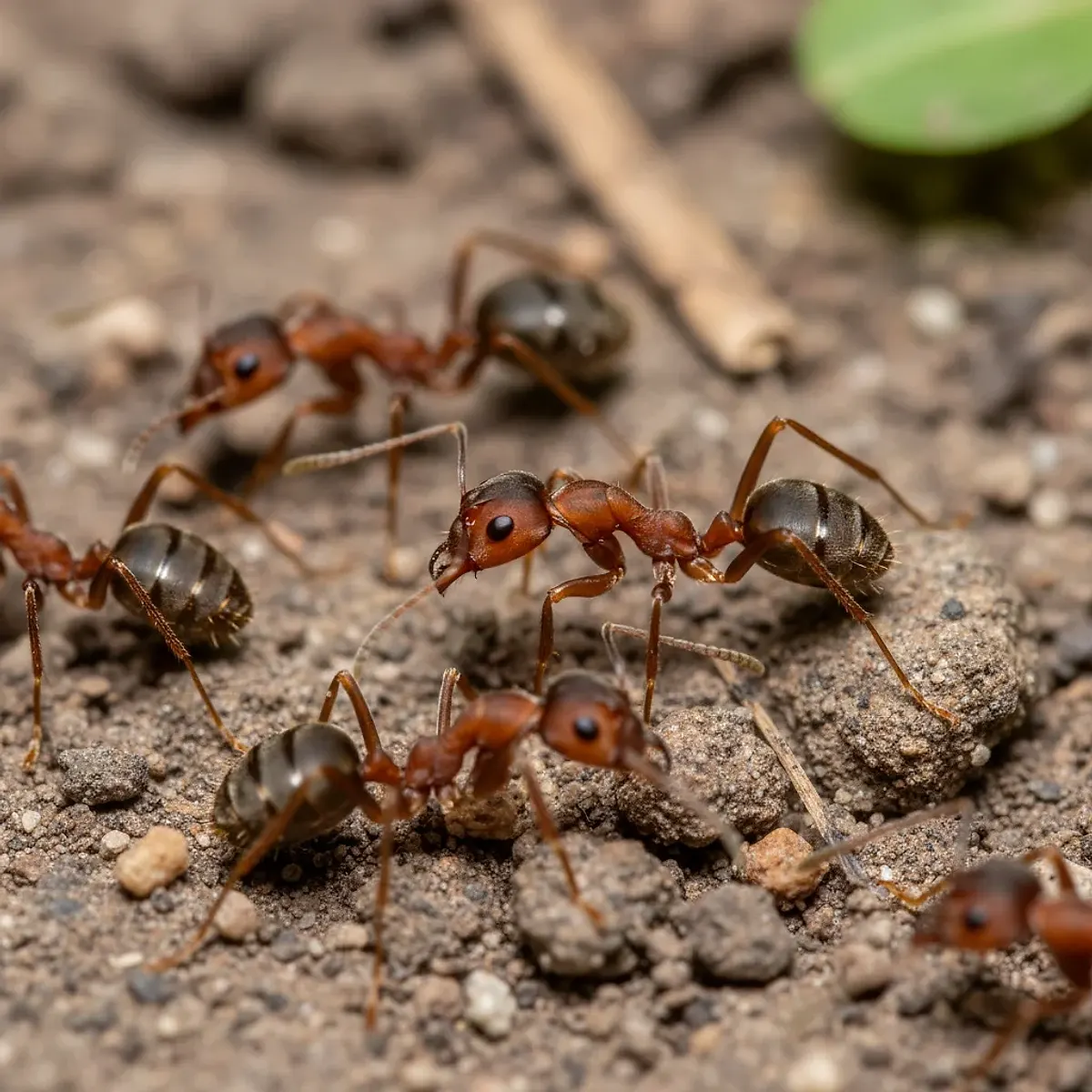
Houston County is a fire ant hotspot. The sandy-clay transition soil is ideal habitat for fire ant colonies. Warner Robins neighborhoods see heavy mound activity from March through November. A single mound treatment approach does not work here. Yard-wide broadcast bait combined with individual mound treatment is the only reliable strategy for long-term control.
Fire ants are more than a nuisance. Their mounds damage mower blades and create uneven turf. They attack anyone who steps on a mound, which is a real hazard for kids and pets playing in the yard. In Houston County, fire ant colonies can reach populations of 200,000 or more per mound, and a single property can have dozens of active mounds.
The most effective control strategy uses a two-step approach. First, broadcast a slow-acting bait across the entire lawn in spring and fall. The foraging ants carry the bait back to the colony and it works through the entire population over 2 to 4 weeks. Second, treat individual mounds with a fast-acting contact insecticide for immediate relief. This combination knocks down existing mounds while preventing new colony establishment.
Sandy-clay soil is ideal fire ant habitat. Plan on ongoing treatment, not a one-time fix.
Yard-wide broadcast bait is the foundation. Individual mound treatment alone does not control the population.
Peak fire ant activity: March through May and September through November.
Professional control provides better coverage than consumer products.
Neighborhoods and Common Challenges
From the established neighborhoods near Robins Air Force Base to newer developments in Bonaire and Kathleen, Warner Robins lawns face similar challenges with some variation. Newer construction homes often have heavily compacted subsoil from grading, requiring more aggressive aeration and soil conditioning. Older neighborhoods may have mature tree canopy that creates shade challenges for bermuda.
The newer subdivisions south of Highway 96 and in the Bonaire area are where we see the most compaction problems. Builders bring in minimal topsoil over a heavily compressed clay base. Within 2 to 3 years, the thin topsoil compacts down and lawns start thinning. These properties benefit most from aggressive core aeration, sometimes twice a year for the first few seasons.
Centerville and Kathleen lawns share similar conditions with the rest of Houston County but tend to be slightly more rural with larger lot sizes. Bigger lots mean more turf to treat but also more room for soil variation within a single property. We often find that the front yard and backyard on larger lots have noticeably different soil types and sun exposure, which means different treatment approaches for each zone.
Best Grass Types for Warner Robins
Bermuda dominates Warner Robins lawns and performs well in the sandy-clay soil. It handles the heat, tolerates the traffic from active military families, and recovers quickly from the occasional drought stress that comes with fast-draining soil. For yards with full sun exposure, bermuda is the default recommendation.
Shaded yards near mature tree lines need a different approach. Zoysia handles moderate shade and produces a dense, attractive turf. St. Augustine works in the heaviest shade but comes with chinch bug risk that needs monitoring. Centipede is popular in lower-maintenance yards around Kathleen and rural Houston County.
Watering for Sandy-Clay Soil
Warner Robins soil dries out faster than pure Macon clay because the sandy component allows water to pass through more quickly. This is a double-edged sword. Drainage is better, which means less pooling and fewer fungal issues. But it also means your lawn loses moisture faster during dry spells.
During summer, Warner Robins lawns often need irrigation a day or two sooner than Macon lawns after a rain. Watch for the footprint test: if your footprints stay visible in the grass 30 minutes after walking on it, the lawn needs water. Do not wait until the grass starts turning gray-blue, because recovery from that level of stress takes longer.
Set your irrigation to water deeply, about half an inch per session, 2 to 3 times per week during dry periods. Early morning watering (before 9 AM) minimizes evaporation and keeps blades dry overnight. On sandy-clay soil, split the watering into two shorter cycles to reduce runoff and improve absorption.
Professional Lawn Care in Warner Robins
Attaboy Lawn Care serves all of Warner Robins and surrounding Houston County communities including Bonaire, Centerville, and Kathleen. Every treatment plan starts with your specific soil conditions, grass type, and yard challenges. The core program includes weed control and fertilization. Add-ons for soil conditioning, disease control, insect control, fire ant treatment, and core aeration are available based on what your lawn actually needs.
We handle the timing, the products, and the application rates so you do not have to track the calendar or store chemicals in your garage. Get a quote and we will have your first treatment down within 24 hours of signing up. No contracts required.
Key takeaways
What to Remember
Warner Robins sandy-clay soil dries out faster than Macon clay. Plan on irrigating a day or two sooner during dry spells.
Fire ants are a year-round problem in Houston County. A two-step approach (broadcast bait plus mound treatment) is the only reliable strategy.
Newer subdivisions in Bonaire and south Houston County often have severe compaction from construction. Core aeration twice a year makes a noticeable difference.
Bermuda is the best fit for most Warner Robins yards. Use zoysia or St. Augustine for shaded areas.
Year-round treatment every 6 to 8 weeks keeps Warner Robins lawns ahead of weeds in every season.
Common questions
Frequently Asked Questions
What makes Warner Robins lawns different?
Warner Robins sits on Houston County sandy-clay soil that dries out faster than Macon clay and compacts easily. Fire ant pressure is also heavier than in other parts of Middle Georgia due to the soil composition.
How often should lawns be treated in Warner Robins?
A year-round program with treatments every 6 to 8 weeks delivers the best results. Warm-season grasses in Warner Robins grow actively from April through October, but winter weed control is also needed.
Does Attaboy serve Bonaire and Kathleen?
Yes. We serve all of Warner Robins and surrounding Houston County communities including Bonaire, Centerville, Kathleen, and Byron. Every property gets a customized treatment plan based on its specific conditions.
How do I get rid of fire ants in my Warner Robins yard?
A two-step approach works best: broadcast a slow-acting bait across the entire yard in spring and fall, then treat individual mounds with a fast-acting insecticide. Single-mound treatment alone does not control the population long-term.
Keep reading
Related Resources
More in Local Guides
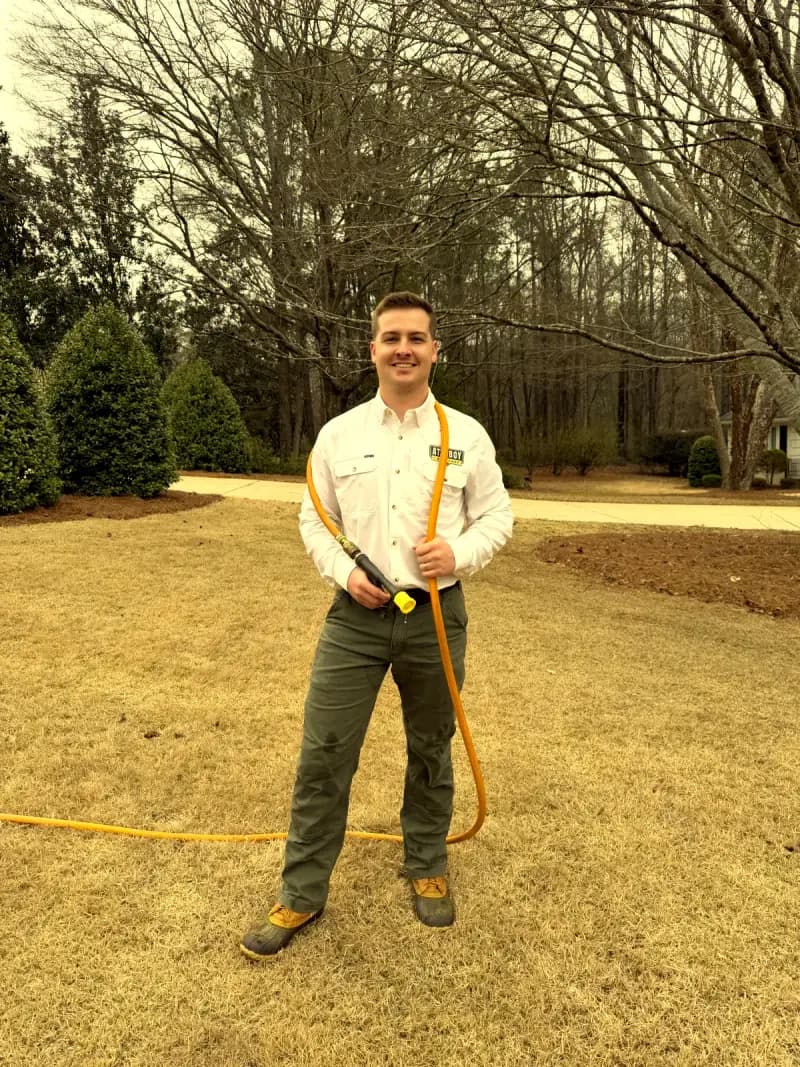
Written by Tyler Warnock
Founder and owner of Attaboy Lawn Care in Macon, Georgia. Licensed Georgia pesticide applicator (Cat. 24, #22324). Tyler treats lawns across Macon, Warner Robins, and the rest of Middle Georgia, and writes these guides from what the region’s bermuda, zoysia, and centipede yards actually do season to season.
Ready for results?
Get a Custom Quote for Your Lawn
Professional lawn care for Macon, Warner Robins, and Middle Georgia. No contracts, no obligation.