Best Grass Type for Middle Georgia
Not all grass types thrive in Middle Georgia. Here is an honest comparison of bermuda, zoysia, centipede, and St. Augustine for our specific conditions.
Not all grass types thrive in Middle Georgia. Here is an honest comparison of bermuda, zoysia, centipede, and St. Augustine for our specific conditions.
How to Choose the Right Grass
Choosing a grass type is not about what looks best on the internet. It is about matching the grass to your property, your lifestyle, and the reality of Middle Georgia conditions. Sun exposure is the biggest factor. Traffic level matters next. Then maintenance commitment. Get those three right and your lawn has a real chance of thriving.
We treat lawns across Macon, Warner Robins, Byron, Bonaire, Centerville, and Kathleen. Every week we see lawns struggling because someone installed the wrong grass for their yard. Bermuda in heavy shade. Centipede being fed like bermuda. St. Augustine in a yard where kids play football every afternoon. The grass type sets the ceiling on how good your lawn can look, no matter what else you do.
Side-by-Side Grass Comparison
The table below gives you a quick reference for the four warm-season grasses that work in Middle Georgia. Each has strengths and trade-offs. There is no single best grass, only the best grass for your specific yard.
Middle Georgia Grass Type Comparison
| Feature | Bermuda | Zoysia | Centipede | St. Augustine |
|---|---|---|---|---|
| Sun requirement | 6+ hours full sun | 4 to 6 hours | 4 to 6 hours | 3 to 4 hours minimum |
| Mowing height | 1 to 2 inches | 1.5 to 2.5 inches | 1.5 to 2 inches | 3 to 4 inches |
| Nitrogen per year | 3 to 4 lbs / 1,000 sq ft | 2 to 3 lbs / 1,000 sq ft | 1 to 2 lbs / 1,000 sq ft | 2 to 3 lbs / 1,000 sq ft |
| Traffic tolerance | Excellent | Good | Poor | Poor |
| Drought tolerance | Very good | Good | Moderate | Moderate |
| Recovery speed | Fast | Slow | Slow | Moderate |
| Cold hardiness | Good | Very good | Moderate | Poor |
| Maintenance level | High | Medium | Low | Medium |
Bermuda Grass: The Workhorse
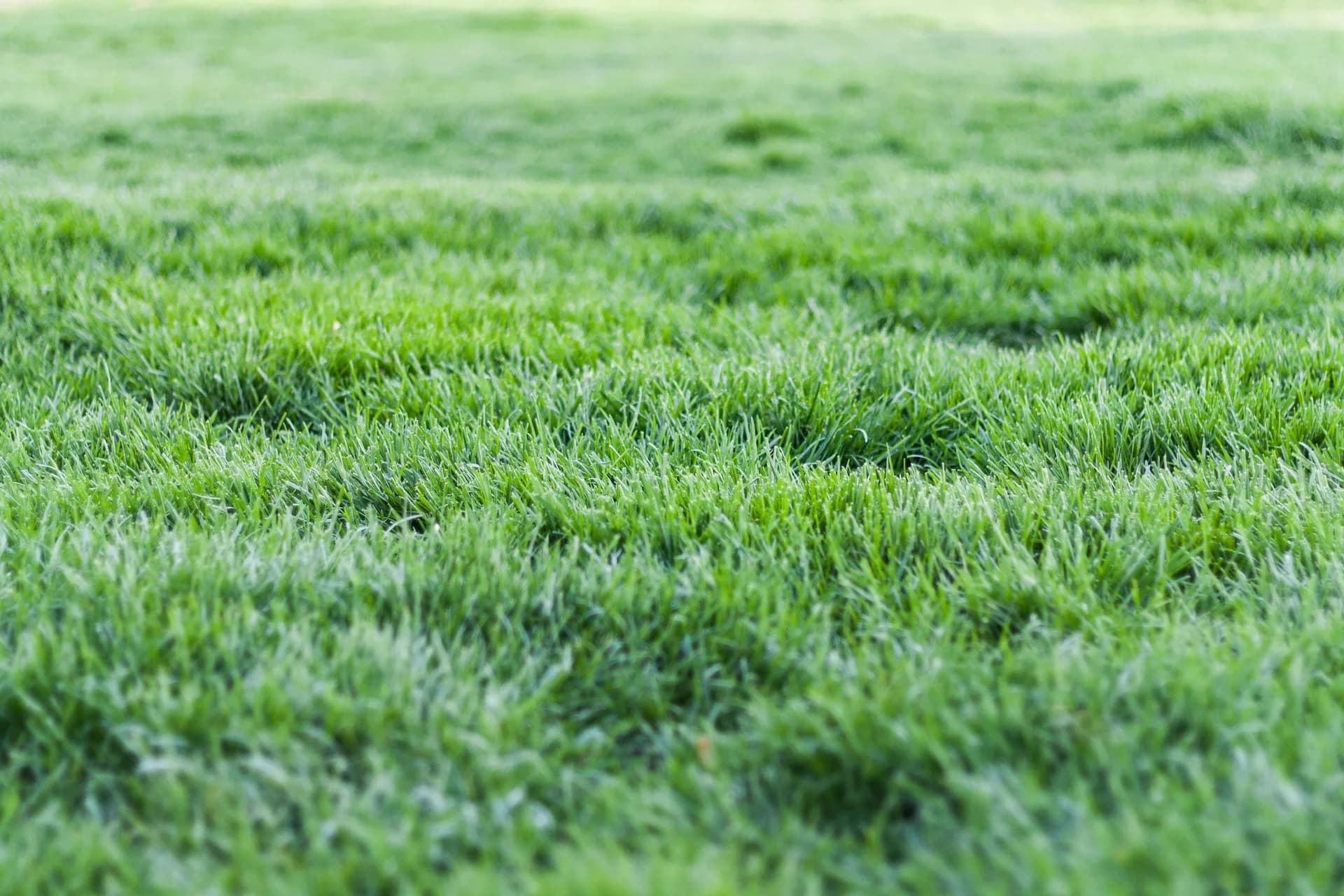
Bermuda is the most common lawn grass in Middle Georgia for good reason. It handles heat, recovers from damage quickly, tolerates heavy foot traffic, and produces a dense turf when properly maintained. The downside: bermuda needs full sun (at least 6 hours), requires more mowing than other types, and goes dormant in winter. It also needs more nitrogen than centipede or St. Augustine.
In Bibb and Houston County, we see bermuda in about 70 percent of the yards we treat. It tolerates the red clay soil well and spreads aggressively through stolons and rhizomes, which means it fills in damage faster than any other option. For families with kids, dogs, or regular yard activity, bermuda is the most forgiving choice.
The main complaint about bermuda is mowing frequency. During peak summer growth (June through August), bermuda needs cutting every 5 to 7 days. Skip a week and you are removing too much blade height in one pass, which stresses the plant. If you are not willing to mow often or hire it out, bermuda will look ragged.
Best for: full-sun yards with active families.
Mowing height: 1.5 to 2 inches during active growth.
Nitrogen needs: 3 to 4 lbs per 1,000 sq ft per year.
Weaknesses: shade intolerance, winter dormancy, high mowing frequency.
Zoysia Grass: The Premium Option
Zoysia produces a thick, carpet-like lawn with better shade tolerance than bermuda. It handles Middle Georgia heat well and has moderate drought tolerance. Zoysia is slower to establish than bermuda and slower to recover from damage. It costs more to install and requires specific mowing heights. For homeowners willing to invest in a premium lawn, zoysia delivers a beautiful result.
The texture of zoysia sets it apart. Where bermuda is wiry and aggressive, zoysia is dense and soft underfoot. Varieties like Emerald and Zeon produce some of the best-looking lawns in the Macon area. The trade-off is patience. A zoysia lawn takes 2 to 3 growing seasons to fill in completely from plugs. Sod installation is faster but costs more upfront.
Zoysia handles partial shade better than bermuda, making it a good fit for yards with scattered tree cover. It still needs at least 4 hours of direct sun to perform well. In deep shade under mature oaks, zoysia will thin out over time just like bermuda. For those situations, St. Augustine is the better call.
Best for: partial shade to full sun with lower traffic.
Mowing height: 1.5 to 2.5 inches depending on variety.
Nitrogen needs: 2 to 3 lbs per 1,000 sq ft per year.
Weaknesses: slow to establish, slow recovery from damage.
Centipede Grass: Low Maintenance
Centipede is the lowest-maintenance warm-season grass in Middle Georgia. It needs less nitrogen, less mowing, and tolerates acidic soil well, which is common here. The trade-off is that centipede is less durable than bermuda, recovers slowly from damage, and is sensitive to over-fertilization. It goes dormant earlier in fall and greens up later in spring.
We call centipede the "lazy man's grass" in a good way. If you want a decent lawn without spending every weekend on it, centipede is your answer. It grows slowly enough that you can mow every 10 to 14 days during peak season. It naturally stays shorter than bermuda. The pale green color is lighter than bermuda, which some homeowners prefer and others do not.
The biggest risk with centipede is killing it with kindness. Over-fertilization is the number one reason centipede lawns decline in Middle Georgia. Homeowners see a neighbor's dark green bermuda and pile on nitrogen. Centipede responds to excess nitrogen by building thatch, losing cold tolerance, and becoming susceptible to large patch disease. Keep nitrogen under 2 pounds per 1,000 square feet per year total.
Best for: homeowners who want minimal upkeep.
Mowing height: 1.5 to 2 inches.
Nitrogen needs: 1 to 2 lbs per 1,000 sq ft per year maximum.
Weaknesses: slow recovery, sensitive to over-fertilization, less traffic tolerance.
St. Augustine Grass: Shade Champion
St. Augustine has the best shade tolerance of any warm-season grass available in Middle Georgia. If your yard has significant tree cover, St. Augustine may be the only option that thrives. It produces a coarse-textured, attractive lawn with good density. The downsides: it is not cold-hardy enough for our occasional deep freezes, it is vulnerable to chinch bugs, and it does not tolerate heavy foot traffic well.
In the Macon area, St. Augustine works well under live oaks, magnolias, and other large shade trees. The Floratam variety is popular for its vigor, but it has the least cold tolerance. Palmetto and Raleigh handle cold better and are safer choices for Middle Georgia where winter temps occasionally dip into the teens.
Chinch bugs are the primary pest threat for St. Augustine in our area. These tiny insects suck moisture from grass blades, causing yellow patches that turn brown and die. If you choose St. Augustine, plan on monitoring for chinch bugs every summer and treating at the first sign of activity. Professional insect control programs catch infestations before they cause serious damage.
Best for: shaded yards under tree canopy.
Mowing height: 3 to 4 inches.
Nitrogen needs: 2 to 3 lbs per 1,000 sq ft per year.
Weaknesses: cold sensitivity, chinch bug vulnerability, limited traffic tolerance.
What About Mixed Grass Yards
Some yards have conditions that call for more than one grass type. A front yard in full sun might need bermuda, while the backyard under mature pines calls for St. Augustine or zoysia. This approach works as long as you treat each area according to its grass type.
The maintenance challenge with mixed yards is that each grass has different fertilization rates, mowing heights, and watering needs. Bermuda wants nitrogen and low mowing. Centipede wants minimal nitrogen and moderate height. Applying the same treatment across both areas guarantees at least one of them will suffer. Professional lawn care programs account for this by treating zones differently.
Getting the Right Grass Established
If you are installing new grass or converting an existing lawn, timing and method matter. Bermuda establishes from seed, sod, or plugs. Spring and early summer are the best installation windows. Zoysia and St. Augustine should be installed as sod or plugs since they do not establish reliably from seed in Middle Georgia. Centipede can be seeded but is slow to fill in.
Soil preparation makes or breaks a new lawn. For Middle Georgia clay, loosen the top 4 to 6 inches and incorporate organic matter before laying sod. A soil test tells you what pH corrections are needed before installation. Skipping soil prep is the most expensive shortcut you can take because poor establishment leads to thin turf, weed invasion, and re-doing the whole project later.
Attaboy Lawn Care does not install sod, but we work with new lawns regularly. Our weed control and fertilization programs start once the grass is established, typically 6 to 8 weeks after installation. We customize the treatment schedule for your specific grass type and soil conditions.
Key takeaways
What to Remember
Bermuda is the best choice for full-sun yards with active families and heavy foot traffic.
Centipede needs the least maintenance but cannot handle over-fertilization. Keep nitrogen under 2 lbs per 1,000 sq ft per year.
St. Augustine is the only warm-season grass that performs well in heavy shade under tree canopy.
Zoysia offers a premium look and better shade tolerance than bermuda, but it establishes slowly.
Match the grass to your sun exposure, traffic level, and maintenance commitment, not to what looks best on the internet.
Soil preparation before installation is the single biggest factor in long-term lawn success.
Common questions
Frequently Asked Questions
Can I mix grass types in my yard?
You can have different grass types in different areas, like bermuda in full sun and St. Augustine in shade. But mixing them in the same area creates maintenance headaches because each type has different mowing, fertilization, and watering requirements.
Which grass is best for clay soil?
All four types grow in clay soil, but bermuda and centipede are the most tolerant of compacted clay conditions. Soil conditioning through core aeration and amendments helps any grass type perform better in heavy Middle Georgia clay.
What is the cheapest grass to install in Georgia?
Bermuda seed is the lowest-cost option for full-sun areas. Centipede seed is also affordable but slow to establish. Sod for any grass type runs $0.30 to $0.80 per square foot for material, plus installation labor.
How do I know what grass I have?
Bermuda has fine, wiry blades and spreads by runners on the soil surface. Centipede has medium-width blades with a pale green color. Zoysia feels thick and carpet-like. St. Augustine has the widest blades and a coarse texture. Your county extension office can confirm the identification for free.
Can bermuda grass grow in shade?
Bermuda needs at least 6 hours of direct sunlight per day. In partial shade (4 to 5 hours), it will thin out over time. In heavy shade, bermuda will not survive. For shaded areas, switch to zoysia (moderate shade) or St. Augustine (heavy shade).
Keep reading
Related Resources
More in Lawn Tips
Ready for results?
Get a Custom Quote for Your Lawn
Professional lawn care for Macon, Warner Robins, and Middle Georgia. No contracts, no obligation.