
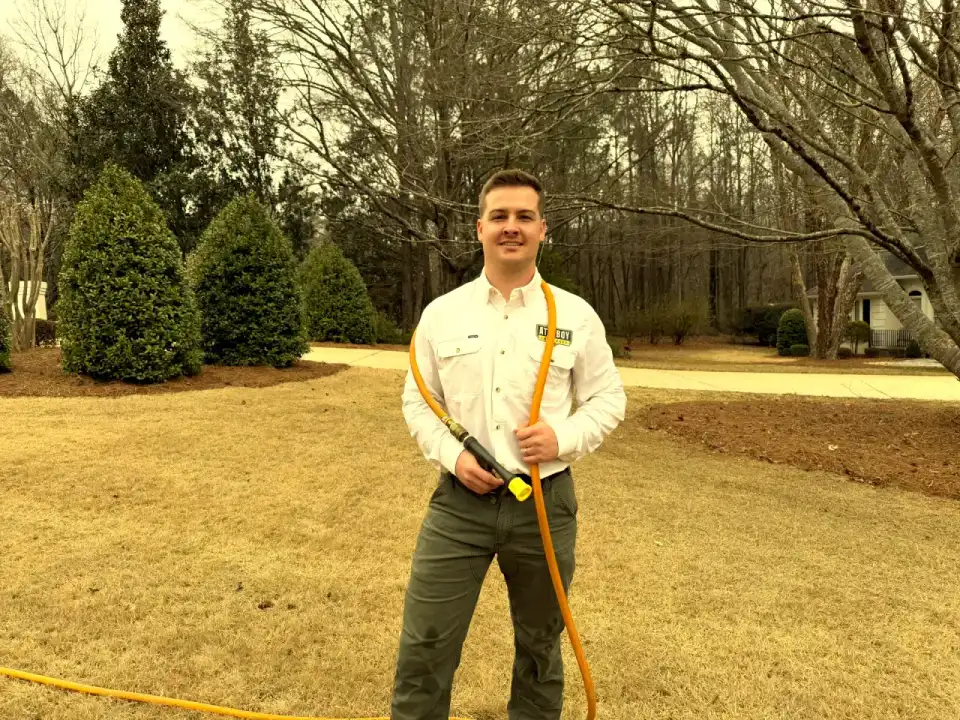
How to Water Your Lawn in Georgia
Proper watering is the single most impactful thing you can do for your lawn. Learn the right schedule, depth, and timing for Middle Georgia conditions.
Overview
What You Will Learn
Watering sounds simple, but most Georgia homeowners either water too much, too little, or at the wrong time of day. Middle Georgia sits on heavy clay soils that drain slowly, and our warm-season grasses have specific moisture needs that change throughout the year. This guide covers everything you need to know to water your lawn correctly, from timing and frequency to seasonal adjustments and signs of overwatering.
Why Morning Watering Matters
The best time to water your lawn in Middle Georgia is early morning, between 5:00 a.m. and 9:00 a.m. Morning watering allows grass blades to dry before evening, which is critical for preventing fungal diseases like large patch and dollar spot. When you water at night, moisture sits on the leaf surface for hours in the warm, humid Georgia air. That combination of warmth and prolonged moisture creates the perfect environment for disease. Evening watering is the single biggest watering mistake homeowners make in our area.
Set your irrigation timer to start before sunrise for maximum absorption.
Avoid watering between 10 a.m. and 4 p.m. Heat causes excessive evaporation.
If you must water later in the day, finish by 4 p.m. so blades dry before dark.
How Much Water Your Lawn Actually Needs
Most warm-season grasses in Middle Georgia need about 1 to 1.25 inches of water per week during the growing season (April through October). That includes rainfall. During the cooler months from November through March, bermuda and zoysia go dormant and need little to no supplemental watering. Centipede has slightly lower water needs year-round and can tolerate short dry spells better than bermuda. The key is deep, infrequent watering, not light daily sprinkles. You want water to penetrate 4 to 6 inches into the soil to encourage deep root growth.
Place a tuna can or rain gauge on your lawn to measure sprinkler output.
Water 2 to 3 times per week rather than every day.
Each session should deliver about 0.5 inches of water.
Dealing with Georgia Clay Soils
Middle Georgia's clay-heavy soils are both a blessing and a challenge. Clay retains moisture well, which means your lawn holds water longer than sandy soils. But clay also drains slowly, so applying too much water at once causes runoff. Water slides off the surface instead of soaking in. If you see water pooling or running down the driveway during irrigation, you are applying water faster than the clay can absorb it. The fix is a cycle-and-soak approach: run your sprinklers for 10 to 15 minutes, let the water soak in for 30 minutes, then run them again.
Use the cycle-and-soak method to prevent runoff on clay soils.
Aeration helps clay soils absorb water more efficiently.
Avoid watering on back-to-back days. Clay holds moisture longer than you think.
Seasonal Watering Adjustments
Your watering schedule should change with the seasons. In spring, warm-season grasses are coming out of dormancy and need moderate moisture to green up, about 0.75 inches per week. Summer is peak demand: 1 to 1.25 inches per week, split across two to three sessions. As fall arrives and temperatures drop, reduce frequency to once or twice per week. In winter, dormant bermuda and zoysia typically survive on rainfall alone. If you have centipede or St. Augustine, provide occasional deep watering during extended dry spells in winter. These grasses are slightly less drought-tolerant during their semi-dormant period.
Reduce irrigation by 25 percent in October as growth slows.
Turn off irrigation entirely for bermuda and zoysia from December through February unless drought conditions persist.
Resume watering in early spring when you see the first green growth.
Key takeaways
What to Remember
Water in the early morning (5 a.m. to 9 a.m.) to prevent disease.
Aim for 1 to 1.25 inches per week during the growing season, including rainfall.
Water deeply and infrequently, 2 to 3 times per week, not daily.
Use cycle-and-soak on clay soils to prevent runoff.
Adjust your schedule seasonally. Dormant lawns need little to no irrigation.
Overwatering causes more problems than underwatering in Middle Georgia.
Common questions
Frequently Asked Questions
How often should I water my lawn in Georgia during summer?
Two to three times per week is ideal for most warm-season grasses in Middle Georgia during summer. Each session should deliver about half an inch of water. Avoid daily watering. It encourages shallow roots and fungal disease.
Can I water my lawn at night in Georgia?
Night watering is not recommended. Moisture sitting on grass blades overnight in Georgia's warm, humid conditions creates ideal conditions for fungal diseases like large patch and dollar spot. Always water in the early morning.
How do I know if I am overwatering my lawn?
Signs of overwatering include spongy turf that leaves footprints, excessive thatch buildup, fungal patches, yellowing grass, and standing water after irrigation. If your soil feels wet 2 inches below the surface, skip the next watering.
Should I water my lawn in winter in Georgia?
Bermuda and zoysia go dormant in winter and rarely need supplemental watering. Centipede and St. Augustine are semi-dormant and may benefit from occasional deep watering during extended dry periods. In most winters, rainfall is sufficient.
Does clay soil affect how I should water my lawn?
Yes. Clay soils in Middle Georgia drain slowly and are prone to runoff. Use the cycle-and-soak method: water for 10 to 15 minutes, let it soak in for 30 minutes, then water again. This prevents pooling and ensures deep penetration.
Keep learning
Related Guides and Services
Professional results
Professional Lawn Care from Attaboy
Let us handle the science. You enjoy the lawn. Get a custom quote. No contracts, no commitments.