
Hunting Billbugs: Identification and Treatment in Georgia
Billbugs hollow out grass stems from the inside, and the damage is easy to misdiagnose. Learn the stem-break test and how we stop them.
Pest profile
What Are Hunting Billbugs?
Hunting billbugs are weevils whose larvae bore into grass stems and crowns, then move into the root zone as they grow. They’re often overlooked because the damage mimics drought or disease. Billbugs are a significant pest of zoysia in Middle Georgia, though they’ll attack bermuda and centipede too. By the time most homeowners notice the damage, the larvae have already done their worst.
Identification
How to Identify Hunting Billbugs
Adults are dark brown to black weevils about 3/8 inch long with a pronounced snout (bill)
Larvae are white, legless grubs with a brown head capsule, found inside stems and in the soil
Adults walk slowly and play dead when disturbed, often found on sidewalks and driveways in spring
Frass (fine, sawdust-like excrement) visible inside hollowed-out grass stems
Adults cannot fly. They walk from neighboring areas, often crossing pavement
Damage signs
How Hunting Billbugs Damage Your Lawn
Damage Signs
Yellowing and browning patches that look like drought stress or disease
Grass stems easily break at the soil line when tugged. Stems are hollowed out from larval feeding
Fine, sawdust-like frass inside grass stems when pulled apart
Damage concentrated in sunny areas, often near sidewalks or driveways where adults enter the lawn
Detection Methods
The stem-break test: tug on browning grass. If stems break easily at the soil line and are hollowed out inside with sawdust-like frass, that’s billbug damage.
Look for slow-moving dark weevils on sidewalks and driveways in May to June. Adults walk across pavement to reach turf.
Split browning grass stems lengthwise and look for white, legless larvae or frass packed inside.
Check sunny areas bordering hardscape first. Billbugs concentrate where adults enter the lawn from paved surfaces.
Treatment
How We Treat Hunting Billbugs
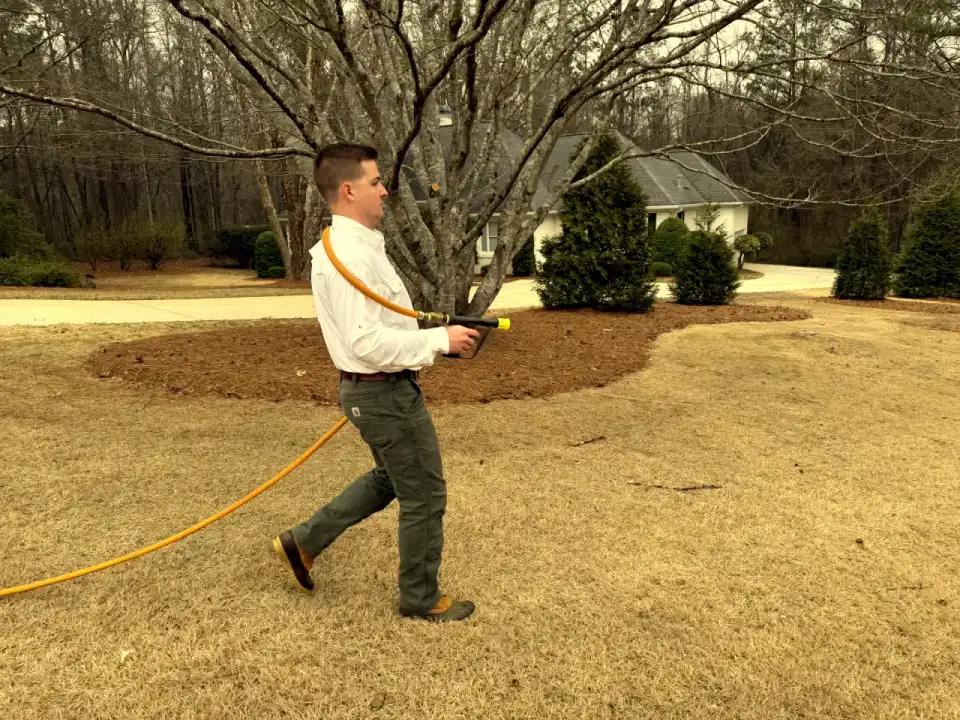
We target adult billbugs in spring (May to June) as they migrate from overwintering sites into the lawn. A preventive insecticide applied to the turf perimeter and high-traffic adult entry points intercepts them before they lay eggs. For active larval damage, a systemic insecticide that reaches the root zone kills larvae already feeding in the stems and soil. Recovery depends on the severity. Zoysia is slow to fill in damaged areas.
Urgency level
Emergency or Routine Treatment?
Billbug damage is routine and gradual. It unfolds over weeks, not days. The challenge is diagnosis. Most people assume it’s drought or disease. If you’ve been watering consistently and brown patches keep spreading, billbugs should be on the suspect list. Preventive treatment in spring is more effective than curative treatment after damage appears.
Affected grasses
Grass Types Vulnerable to Hunting Billbugs
Why Attaboy
Professional Hunting Billbugs Treatment from Attaboy
Common questions
Frequently Asked Questions About Hunting Billbugs
What are those dark beetles walking across my driveway?
If they’re about 3/8 inch long with a pronounced snout and play dead when you touch them, those are billbug adults. They’re walking to your lawn to lay eggs. That’s actually the best time to treat, before the larvae hatch.
Why does my grass break off at the base when I pull it?
Billbug larvae bore into grass stems and hollow them out from the inside. When you tug on the grass, it snaps at the soil line. Split the stem open. If you see sawdust-like material inside, it’s billbugs.
Why is billbug damage often misdiagnosed?
Billbug damage looks almost identical to drought stress or disease. The grass turns brown in irregular patches, and there’s no obvious pest activity on the surface. The larvae are hidden inside the stems and in the soil. The stem-break test is the giveaway.
Related pests
Other Pests Active in the Same Season
Take action
Stop Hunting Billbugs Before the Damage Spreads
Every day you wait is another day pests feed on your lawn. Get professional insect control backed by our free re-treatment guarantee.