Fall Armyworms: Emergency Treatment in Georgia
Fall armyworms move fast. A healthy lawn can be destroyed in under 48 hours. Learn how to detect them early and why same-day treatment matters.
Pest profile
What Are Fall Armyworms?
Fall armyworms are caterpillars that can destroy an entire lawn in 24 to 48 hours. They migrate into Middle Georgia from the Gulf Coast each summer, arriving in massive numbers that devour grass blades down to the soil. Armyworm outbreaks are unpredictable and devastating. A lawn that looks fine on Monday can be brown by Wednesday.
Identification
How to Identify Fall Armyworms
Green, brown, or dark gray caterpillars up to 1.5 inches long
Distinct inverted Y-shaped marking on the head capsule
Feed in large groups, moving across the lawn like an advancing army
Most active in early morning and late evening. Hide in thatch during midday heat
Adult moths are gray-brown with a wingspan of about 1.5 inches, active at dusk
Damage signs
How Fall Armyworms Damage Your Lawn
Damage Signs
Grass blades eaten down to bare stems, giving the lawn a scalped or straw-like look
Damage appears as rapidly expanding brown patches, often within a single day
Entire lawn can be consumed in 24 to 48 hours during severe outbreaks
Damage starts at lawn edges or near trees and spreads inward in a wave pattern
Detection Methods
The soapy water flush test: mix 2 tablespoons of dish soap in a gallon of water and pour it over a 4-square-foot area. Armyworms surface within minutes.
Check the lawn at dawn or dusk when caterpillars are actively feeding on the surface.
Look for birds massing on the lawn. Flocks of starlings or grackles feeding in one area is a red flag.
Examine grass blades for chewing damage: ragged edges and transparent leaf windows are early signs before full defoliation.
Treatment
How We Treat Fall Armyworms
We apply a fast-acting contact insecticide that kills armyworms on contact within hours. For active outbreaks, speed is everything. We treat same-day or next-day. Bermuda and zoysia typically recover from armyworm damage within 2 to 3 weeks since the root system is usually intact. Centipede recovers slower. We monitor for second-wave infestations, which are common in September to October.
Urgency level
Emergency or Routine Treatment?
Armyworms are a genuine emergency. They can destroy a lawn in under 48 hours, and waiting even a day can mean the difference between minor damage and total loss. If you suspect armyworms, call us immediately. We prioritize armyworm calls because timing matters more than with any other lawn pest in Middle Georgia.
Affected grasses
Grass Types Vulnerable to Fall Armyworms
Why Attaboy
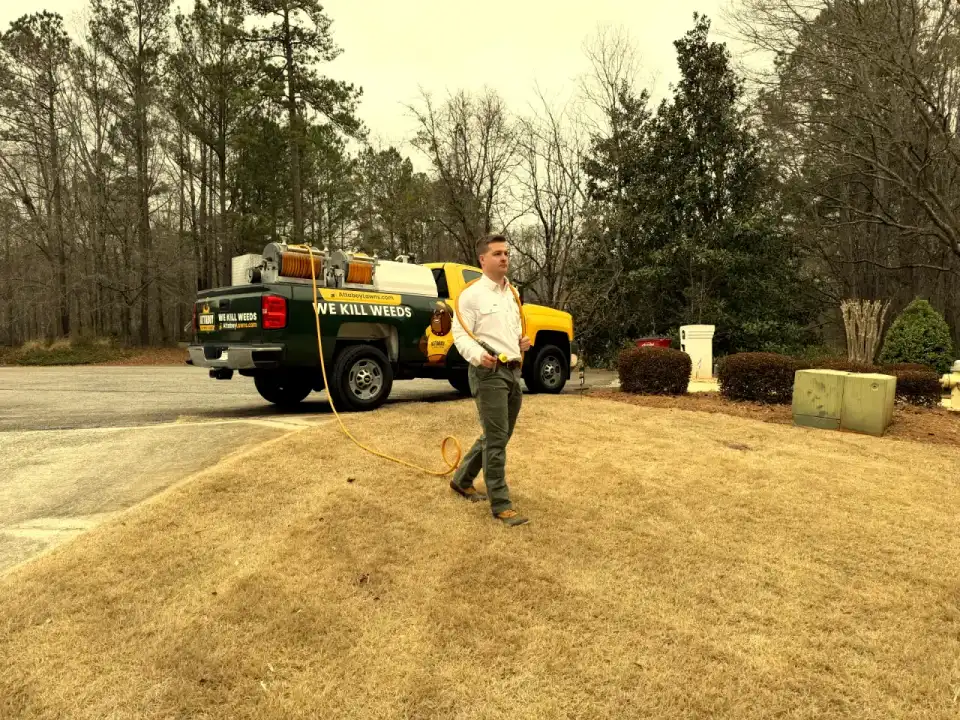
Professional Fall Armyworms Treatment from Attaboy
Common questions
Frequently Asked Questions About Fall Armyworms
How do I know if I have armyworms?
Mix 2 tablespoons of dish soap in a gallon of water and pour it over a suspect area. If armyworms are present, they’ll crawl to the surface within minutes. Check at dawn or dusk when they’re most active.
Can my lawn recover from armyworm damage?
Usually, yes. Armyworms eat the blades but leave the roots intact. Bermuda and zoysia bounce back within a few weeks. Centipede is slower. The key is stopping the damage fast before it reaches the crowns.
Why did my neighbor’s lawn get hit but not mine?
Armyworms migrate in waves and can hit one property while skipping another. That said, if your neighbor has them, monitor your lawn closely. They spread fast.
Do armyworms come back every year?
Not necessarily. Adult moths migrate from the Gulf Coast, and outbreaks depend on weather patterns. Some years are bad, others are quiet. There’s no reliable way to prevent them. Fast detection and treatment is the strategy.
Related pests
Other Pests Active in the Same Season
Take action
Stop Fall Armyworms Before the Damage Spreads
Every day you wait is another day pests feed on your lawn. Get professional insect control backed by our free re-treatment guarantee.