
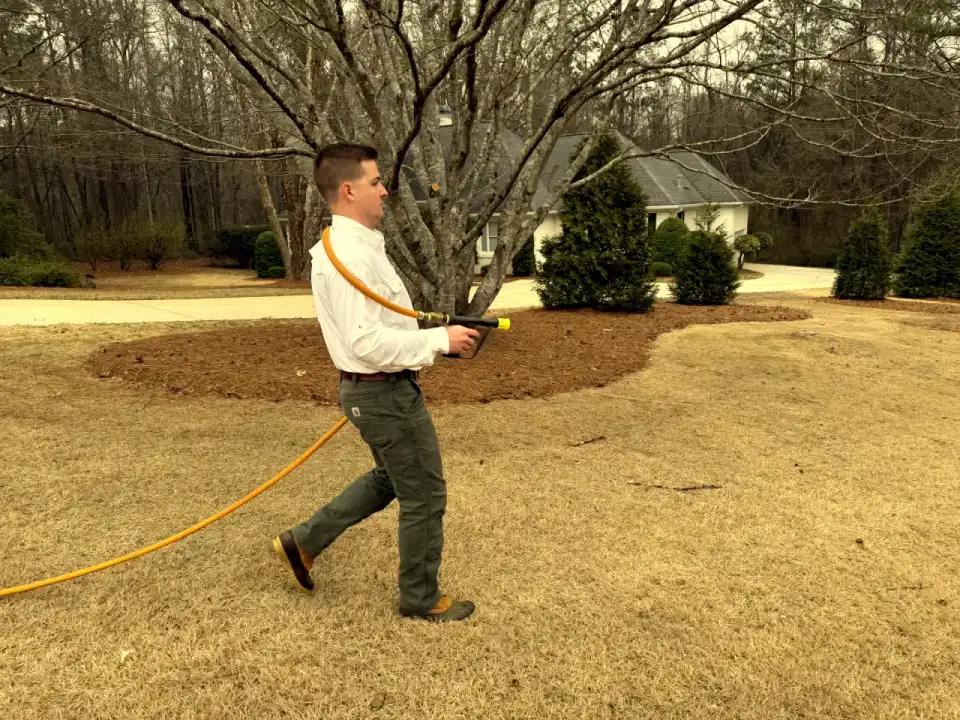
Why Is Your Lawn Brown in the Middle of Summer?
Summer is when warm-season grass should look its best. If yours is browning, something needs attention, and we can help you find the cause.
Symptom overview
What This Looks Like
A warm-season lawn turning brown in the middle of summer is a red flag. Bermuda, zoysia, and centipede should be at their greenest in July and August. If yours is browning, something is wrong.
Possible causes
What Could Be Causing This
Drought Stress
Middle Georgia summers regularly hit 95°F+ with stretches of no rain. Without supplemental irrigation, even drought-tolerant bermuda will go into a protective brown dormancy. The turf isn’t dead (it’s conserving water), but prolonged drought stress weakens it.
Chinch Bug Damage
Chinch bugs thrive in hot, dry conditions and feed heavily in July and August. Damage starts in sunny areas near driveways, sidewalks, and the street, then spreads inward. St. Augustine is the most vulnerable, but all warm-season grasses can be affected.
Learn moreDollar Spot
Dollar spot thrives in warm, humid summer conditions, especially in lawns with low nitrogen. Small straw-colored spots merge into larger brown areas. Most common in bermuda and zoysia.
Learn morePythium Blight
Pythium moves fast in hot, humid conditions and can brown out large sections of lawn in just a few days. Look for a greasy, dark appearance and cottony white fungal growth in the morning.
Learn moreIrrigation System Failure
A broken sprinkler head, clogged zone, or controller malfunction can leave sections of the lawn without water. The browning follows the irrigation zone boundaries perfectly, a straight-line pattern that doesn’t match natural causes.
Diagnose it
Narrow Down the Cause
Does the browning follow the edges of your property or sunny areas near hardscape?
This pattern is typical of chinch bugs, which prefer hot, sunny areas near concrete and asphalt. Part the grass at the border of green and brown to look for small black-and-white insects.
Random or widespread browning is more consistent with drought stress or disease.
Has it rained less than 1 inch in the past two weeks?
Drought stress is the most likely cause. Resume watering at 1 inch per week and the lawn should recover within 2 to 3 weeks.
If moisture is adequate, look at pest or disease pressure. Healthy summer lawns shouldn’t be browning with adequate water.
Did the browning happen in just a few days?
Rapid browning in summer points to pythium blight or armyworms. Both can devastate a lawn in 48 to 72 hours. This needs immediate professional attention.
Gradual browning over weeks is more typical of drought stress, chinch bugs, or slow-moving disease.
Still not sure? A professional lawn assessment takes the guesswork out of it.
Get QuoteSeasonal timing
When This Is Most Common
Summer browning in Middle Georgia (June to August) should not be happening in a healthy, irrigated warm-season lawn. Warm-season grasses peak in summer. If your lawn is brown in July, the cause is almost always drought, chinch bugs, or disease, not dormancy.
Common questions
Frequently Asked Questions
Is my lawn dead or just dormant from heat?
Warm-season grasses can go into a protective summer dormancy during extreme drought, but it’s not like winter dormancy. The grass turns brown to conserve water. If the crowns are still alive (tug on the grass. If it resists, it’s alive), it’ll recover with water.
How much should I water my lawn in a Georgia summer?
About 1 to 1.5 inches per week, applied in 2 to 3 deep sessions rather than daily light watering. Water early in the morning (before 10 AM) to minimize evaporation and reduce disease risk.
Can summer brown-out be prevented?
Proper irrigation, a strong fertilization program, and proactive pest monitoring prevent most summer browning. We track conditions throughout the season and adjust treatments as needed to keep your lawn healthy through the heat.
Related problems
Other Lawn Problems to Consider
Take action
Stop Guessing and Start Fixing
Every lawn problem has a solution. Get a professional diagnosis and targeted treatment plan from Attaboy Lawn Care.