Your Winter Lawn Isn’t Dead. It’s Dormant
Every warm-season lawn in Middle Georgia turns brown in winter. It’s not a problem. It’s biology. Here’s what to expect and what not to worry about.
Symptom overview
What This Looks Like
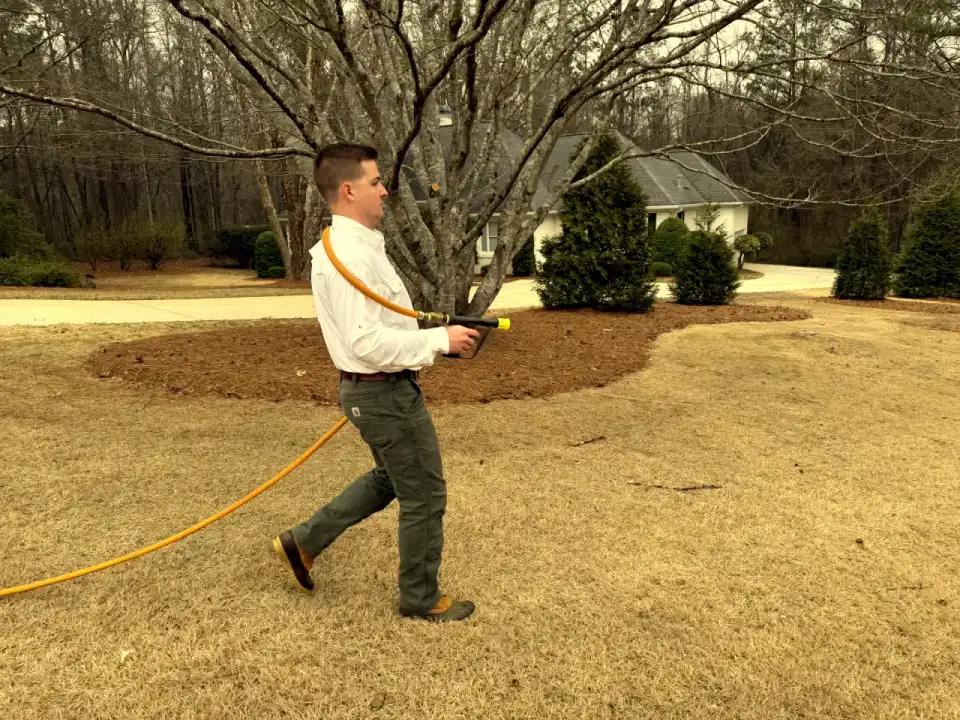
If your warm-season lawn looks brown and dead in winter, take a deep breath. This is completely normal. Bermuda, zoysia, centipede, and St. Augustine all go dormant when temperatures drop below 55°F. Your grass isn’t dead. It’s sleeping.
Possible causes
What Could Be Causing This
Normal Winter Dormancy
All warm-season grasses in Middle Georgia go dormant in winter. The grass stops growing, the green blades die back, and the lawn turns brown or straw-colored. This is a survival mechanism, not a problem. The roots and crowns are alive underground, waiting for spring warmth.
Cool-Season Weed Encroachment
While your lawn is dormant, cool-season weeds like henbit, chickweed, and poa annua take advantage of the lack of competition. You may see patches of green weeds growing among the brown dormant grass. These are weeds, not your lawn greening up.
Learn moreLate-Season Large Patch Damage
Large patch is active in fall (September to November) and can damage grass as it enters dormancy. Areas hit by large patch may appear worse than normal dormancy and can be slow to recover in spring.
Learn moreWinter Desiccation
In unusually dry winters with freezing winds, dormant grass can dry out to the point of damage. This is rare in Middle Georgia but can affect exposed areas on slopes or near foundations where reflected heat and wind are intense.
Diagnose it
Narrow Down the Cause
Is the entire lawn uniformly brown?
This is textbook winter dormancy. Every warm-season grass in Middle Georgia does this. Your lawn is healthy and will green up when soil temperatures reach 65°F in spring.
If some areas are significantly more brown or thin than others, late-season disease or fall pest damage may have compounded the dormancy appearance.
Do you see green patches among the brown grass?
Those green patches are almost certainly cool-season weeds (henbit, chickweed, poa annua, clover), not your lawn recovering early. A winter pre-emergent application prevents these.
A uniformly brown lawn with no green is exactly what dormancy should look like. No action is needed.
Did your lawn look thin or diseased before it went dormant in fall?
Pre-existing issues from fall will still be there in spring. Plan to address any disease or thin areas early in the growing season before weeds fill the gaps.
A lawn that looked healthy going into dormancy will almost certainly come back healthy in spring. No winter action is needed.
Still not sure? A professional lawn assessment takes the guesswork out of it.
Get QuoteSeasonal timing
When This Is Most Common
Winter dormancy in Middle Georgia typically begins in November and lasts through mid-March. Bermuda goes the most brown. Zoysia holds a straw color longer. Centipede and St. Augustine show intermediate dormancy. Green-up begins when soil temperatures consistently reach 65°F, usually mid-April in this area.
Common questions
Frequently Asked Questions
Is my lawn dead or just dormant?
If it’s winter in Middle Georgia and your warm-season lawn is brown, it’s dormant, not dead. This is completely normal. The roots and growing points are alive underground. Your lawn will green up in spring once soil temperatures warm. If you’re unsure, tug on the grass. Dormant grass resists pulling because the roots are healthy.
Should I water my lawn in winter?
Generally, no. Dormant warm-season grass needs very little water. Middle Georgia usually gets enough winter rainfall. Only water if there’s been an extended dry spell (3+ weeks with no rain) to prevent desiccation, and even then, a light watering once every 2 to 3 weeks is sufficient.
Can I overseed with ryegrass for winter color?
You can, but we generally don’t recommend it for most homeowners. Winter ryegrass competes with your warm-season turf in spring, potentially delaying green-up and causing thin spots. It also requires mowing, watering, and fertilizing all winter. Most homeowners are better off accepting dormancy.
When will my lawn green up in spring?
In Middle Georgia, bermuda and zoysia typically start showing green in mid-to-late April. Centipede and St. Augustine may take until early May. Full green-up usually happens by mid-May. The timing depends on spring temperatures. A warm March can push it earlier.
Related problems
Other Lawn Problems to Consider
Take action
Stop Guessing and Start Fixing
Every lawn problem has a solution. Get a professional diagnosis and targeted treatment plan from Attaboy Lawn Care.